
Miners in Burkina Faso: Gold Production, Key Mines & Trends in 2025
Miners in Burkina Faso play a vital role in the country’s booming gold mining industry. Discover key insights about mining companies, gold mine ownership, artisanal and industrial miners, and the economic impact of mining in Burkina Faso. Learn about the main industries, gold resources, and the future of mining in this West African nation.
Burkina Faso, a landlocked nation in West Africa, has rapidly emerged as one of Africa’s leading gold producers. Mining—especially gold mining—has transformed the country’s economy, providing jobs, driving exports, and attracting both local and foreign investment.
However, the sector faces complex challenges, including security risks, policy shifts, and debates over resource ownership. This article delves into the landscape of mining in Burkina Faso, exploring the lives of gold miners, the major mining companies, the evolving ownership structure of gold mines, and the broader role of mining in the national economy.
Mining in Burkina Faso: An Overview
The Rise of Gold Mining
Mining in Burkina Faso has experienced exponential growth over the past two decades. The discovery of gold-rich Birimian greenstone belts has attracted global attention, and the country is now Africa’s fourth-largest gold producer, with over 57 tons of gold produced in 2023. The sector includes both industrial-scale operations and a vast network of artisanal and small-scale miners.
Key Minerals
Gold: The dominant mineral, accounting for nearly three-quarters of export earnings.
Other Minerals: Zinc, manganese, copper, and rare earth elements are also present, though gold remains the primary focus.
Mining’s Economic Impact
Mining is a cornerstone of Burkina Faso’s economy, contributing significantly to GDP and government revenue.
The sector has attracted substantial foreign direct investment, particularly in gold mining.
Gold Miners in Burkina Faso
Industrial vs. Artisanal Mining
- Industrial Miners: Work in large-scale, mechanized mines operated by multinational companies or, increasingly, by the state.
- Artisanal Miners: Thousands of Burkinabè work in small-scale, informal mines, often using rudimentary methods. Artisanal mining produced over 8 tons of gold in 2024 alone.
Working Conditions and Social Impact
- Artisanal mining provides livelihoods but is associated with harsh conditions, child labor, and environmental challenges.
- Industrial mines offer more regulated environments but have faced criticism over land rights, displacement, and local benefit-sharing.
Security and Safety
- Security risks, including attacks by armed groups, have disrupted mining operations and endangered miners, particularly in remote regions.
Mining Companies in Burkina Faso
Major Mining Companies (2025)
| Mine Name | Location | Major Owners/Operators | Status |
|---|---|---|---|
| Essakane | Oudalan | IAMGOLD (Canada), Govt of Burkina Faso | Operating |
| Houndé | Tuy | Endeavour Mining (Canada), Govt | Operating |
| Bouly | Kadiogo | Nord Gold SE, Govt | Operating |
| Karma | Yatenga | Nere Mining, Govt | Operating |
| Bissa | Sanmatenga | Nord Gold SE, Govt | Operating |
| Wahgnion | Southwest | SOPAMIB (state-owned, since 2024) | Nationalized |
| Boungou | Southeast | SOPAMIB (state-owned, since 2024) | Nationalized |
| Bomboré | Central | Orezone Gold Corp (Canada) | Operating |
| Sanbrado | Central | West African Resources Ltd (Australia) | Operating |
- SOPAMIB: The state-owned mining company, Société de Participation Minière du Burkina, is rapidly expanding its portfolio through nationalization.
- Foreign Companies: Canadian, Australian, and Russian firms remain active but face growing state intervention and operational risks.
Who Owns the Gold Mines in Burkina Faso?
- The Shift Toward State Ownership
In 2025, Burkina Faso completed the nationalization of five major gold mining assets, transferring them from foreign companies (notably Endeavour Mining and Lilium) to SOPAMIB. - The government’s policy is to maximize national benefit and reduce foreign dependency, mirroring trends in neighboring Mali and Niger.
- The state now owns and operates key mines, including Wahgnion and Boungou, and holds stakes in others alongside foreign partners.
Foreign Investment and Partnerships
- Despite nationalization, several mines remain under joint ownership between the government and foreign companies (e.g., IAMGOLD, Nord Gold SE, Endeavour Mining).
- New partnerships with Russian firms have increased as Western companies exit due to security and regulatory challenges.
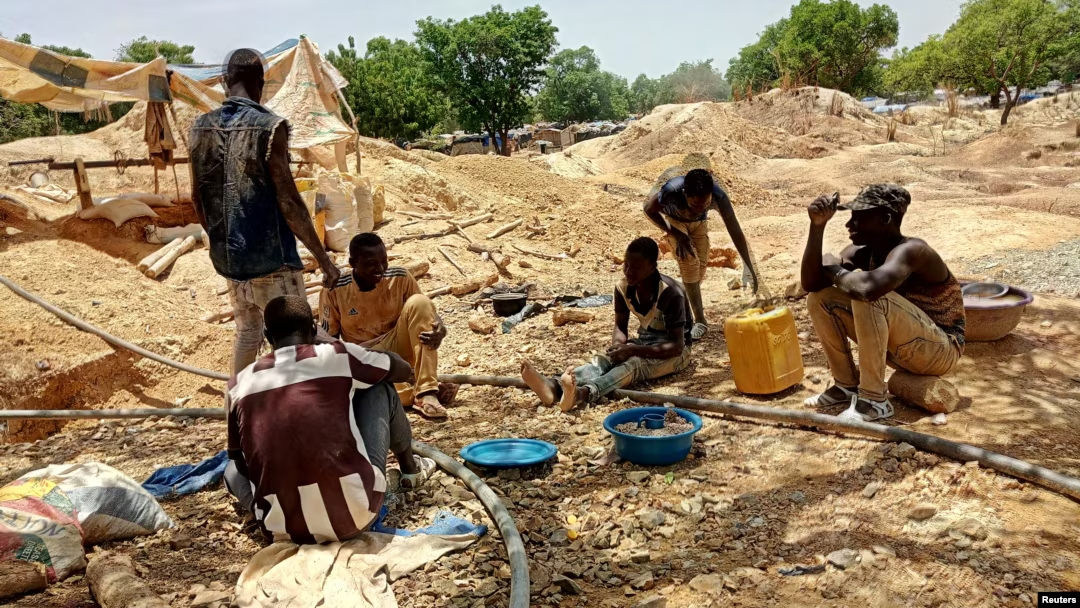
Does Burkina Faso Have Mines?
Yes, Burkina Faso has a robust mining sector. The country hosts 17 industrial-scale gold mines as of 2023, along with hundreds of artisanal mining sites.
Mines are spread across the northern, western, southwestern, and central regions, with significant operations in Oudalan, Tuy, Kadiogo, Yatenga, Sanmatenga, and more.
Is Gold Found in Burkina Faso?
Gold is abundantly found in Burkina Faso. The nation sits atop the Birimian greenstone belts, some of West Africa’s richest gold-bearing geological formations.
Gold mining is the mainstay of the country’s extractive industries, with output exceeding 57 tons in 2023.
What is the Main Industry in Burkina Faso?
Key Sectors
- Agriculture: Employs nearly three-quarters of the workforce, with cotton as the main cash crop.
- Mining: The fastest-growing sector, led by gold mining, which now accounts for the majority of export earnings and a significant portion of government revenue.
- Other Industries: Agro-processing, textiles, and services contribute to the economy but are dwarfed by agriculture and mining.
Mining’s Role
- Mining, particularly gold mining, is the main industry driving export growth, foreign investment, and fiscal revenues in Burkina Faso.
- The sector’s growth has transformed the country into a regional economic player, despite ongoing challenges.
The Future of Mining in Burkina Faso
Trends and Challenges
Nationalization: The government is expected to continue nationalizing key mining assets to boost state revenues and local benefits.
Security: Ongoing conflict and insecurity remain significant risks for miners and companies.
Sustainability: Environmental and social impacts, including land degradation and child labor, require urgent attention.
Economic Diversification: While gold dominates, efforts are underway to develop other minerals and value-added industries.
Frequently Asked Questions
Who are the main gold miners in Burkina Faso?
Both industrial miners (employed by multinational or state-owned companies) and artisanal miners (small-scale, often informal) are active. Major companies include IAMGOLD, Endeavour Mining, Nord Gold SE, and SOPAMIB.
Are all gold mines in Burkina Faso owned by the state?
Not all, but the state has rapidly increased its ownership through SOPAMIB, particularly since 2024. Joint ventures with foreign companies still exist.
Is gold mining legal in Burkina Faso?
Industrial mining is highly regulated. Artisanal mining is legal but often informal, with ongoing efforts to formalize and regulate the sector.
How important is gold mining to Burkina Faso’s economy?
Gold mining is vital, providing most export earnings, significant tax revenue, and thousands of jobs.
What is the main industry driving Burkina Faso’s economy today?
- Agriculture: is the main industry driving Burkina Faso’s economy today, which employs nearly three-quarters of the workforce and contributes around 16–18.5% of the country’s GDP. Cotton is the primary cash crop and a significant export earner, alongside other crops like groundnuts, shea nuts, sesame, millet, sorghum, maize, and rice. Despite its dominance, agriculture faces challenges such as climate change, limited irrigation, and traditional farming methods.
- Gold mining: also has become a crucial sector, rapidly growing to become one of Africa’s top gold producers and accounting for nearly three-quarters of Burkina Faso’s export earnings. Mining attracts substantial foreign investment and contributes significantly to government revenue, making it a key driver of economic growth and diversification.
In summary, Burkina Faso’s economy is primarily based on agriculture, with mining—especially gold mining—playing an increasingly vital role in export earnings and economic development
Does Burkina Faso have active mines and what are their main production sites?
Yes, Burkina Faso has numerous active mines, making it one of Africa’s fastest-growing gold producers and the continent’s fourth-largest gold producer as of 2025. The country hosts 17 industrial-scale gold mines along with hundreds of artisanal mining sites, with gold being the dominant mineral resource driving its mining sector.
Main Production Sites and Mines in Burkina Faso
- Essakane Mine: Located in the Oudalan province, it is the largest gold mine in Burkina Faso, operated by Canadian company IAMGOLD.
- Houndé Mine: Situated in Tuy province, operated by Endeavour Mining (Canada).
- Sanbrado Mine: Operated by West African Resources, located in the central region, producing over 190,000 ounces annually.
- Kiaka Mine: A new gold mine expected to start production in 2025, also operated by West African Resources, with an annual capacity of around 234,000 ounces.
- Bouly Mine: Operated by Nord Gold SE, located in Kadiogo province.
- Wahgnion Mine: Formerly operated by Endeavour Mining, now nationalized and managed by the state-owned company SOPAMIB.
- Boungou Mine: Another nationalized asset now under SOPAMIB’s control.
- Mana Mine: Owned by Fortuna Silver Mines, located in the eastern part of the country.
- Bomboré Mine: Near completion, operated by Orezone Gold Corporation, expected to boost production.
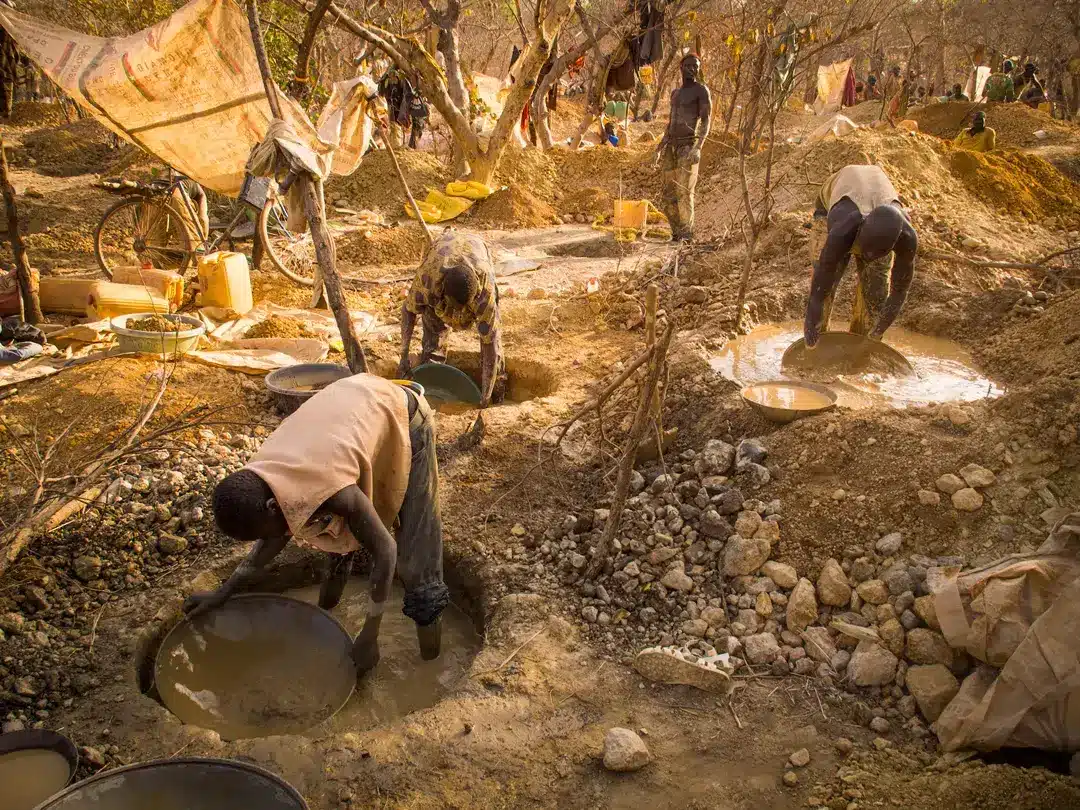
Artisanal Mining
There are approximately 800 active artisanal mining sites across Burkina Faso, employing hundreds of thousands of miners. Artisanal gold mining produces a significant portion of the country’s gold output, sometimes even surpassing industrial production in certain years.
Other Minerals
Besides gold, Burkina Faso also has deposits of zinc, copper, manganese, phosphate, and limestone, with manganese deposits in the northeast (Tambao) being notable but underexploited due to infrastructure challenges.
How do mining companies operate within Burkina Faso’s evolving regulatory environment?
Mining companies operating in Burkina Faso’s evolving regulatory environment must navigate a landscape marked by increased state participation, stricter local content requirements, and enhanced oversight aimed at ensuring that mining benefits more directly support the Burkinabè population.
Since the enactment of the new Mining Code in 2024 and the establishment of the state-owned mining company SOPAMIB, mining firms face a regulatory framework that emphasizes greater government control and involvement in mining ventures.
Key aspects of this environment include:
- State Ownership and Nationalization:
The government, through SOPAMIB, has begun nationalizing key industrial mines, such as the Boungou and Wahgnion gold mines previously owned by foreign companies. This shift means mining companies now often operate as joint ventures with the state or under increased government oversight.
- Local Content and Ownership Requirements:
The new Mining Code mandates that mining companies must reserve a portion of their share capital for local Burkinabè investors and prioritize local expertise and supplier integration. Semi-mechanized mining permits are reserved exclusively for companies fully owned by Burkinabè nationals.
- Formalization and Regulation of Artisanal Mining:
Mining companies are encouraged to collaborate with the government in formalizing artisanal mining, which remains a significant part of the sector. This includes adhering to environmental, health, and safety regulations, and supporting local development initiatives.
- Environmental and Social Compliance:
Companies must conduct environmental impact assessments, implement rehabilitation plans, and engage with local communities through consultation frameworks. Compliance with the environmental code and corporate social responsibility (CSR) obligations is strictly enforced.
- Administrative and Fiscal Controls:
Mining firms are subject to enhanced customs, tax, and export regulations, including the use of one-stop shops to streamline administrative procedures. The government monitors mining activities closely to limit fraud and ensure proper tax payments.
- Security and Political Risks:
Ongoing security challenges in Burkina Faso affect mining operations, requiring companies to adapt risk management strategies and maintain close cooperation with government authorities.
In summary, mining companies in Burkina Faso operate within a regulatory framework that increasingly prioritizes national sovereignty over mineral resources, local participation, and sustainable development.
While this environment presents challenges such as tighter government control and security risks, it also offers opportunities for companies willing to engage constructively with the state and local communities to ensure long-term, mutually beneficial mining operations
Burkina Faso’s mining sector is vibrant and expanding, centered mainly on gold production from both industrial and artisanal mines.
The country’s main gold production sites include Essakane, Houndé, Sanbrado, Kiaka (upcoming), Bouly, Wahgnion, and others, making it a key player in Africa’s gold mining industry.
Mining, and gold mining in particular, is at the heart of Burkina Faso’s economy in 2025. The sector’s rapid growth has brought prosperity and challenges, from job creation to environmental and security concerns.
The government’s assertive move to nationalize key gold mines marks a new era of resource control, aiming to ensure that the wealth beneath Burkina Faso’s soil benefits its people. As the country navigates the complexities of ownership, investment, and sustainability, the story of its miners—both industrial and artisanal—remains central to its national identity and economic future.
You can also read about Uganda gold mines Here, Another African rising Gold Producer in 2025.