Factors Affecting Gold Prices Globally in 2025: Key Drivers and Trends
Factors Affecting Gold Prices Globally. Investor interest in gold has reached a fever pitch, with the metal recently surging to a record high of $3,673.95 per troy ounce as of September 9, 2025.
This rally reflects a staggering 38% gain year-to-date, fueled by soaring central bank demand, mounting expectations of U.S. interest-rate cuts, and heightened geopolitical uncertainty. Reuters+1.
For investors—whether building a safe-haven hedge or diversifying their portfolios—understanding the forces behind gold’s price movements has never been more critical.
This guide explores the key global factors shaping gold prices, backed by the latest data and emerging trends.
We’ll unpack how monetary policy shifts, currency fluctuations, central bank activity, inflation dynamics, geopolitical tensions, and supply-demand fundamentals each contribute—often in overlapping ways—to gold’s evolving valuation.
Thesis Statement
This guide explores the key global factors affecting gold prices, backed by data and trends.
What You’ll Find in This Guide
To help you navigate the content efficiently, here’s a quick roadmap:
| Section | Focus |
|---|---|
| 1. Monetary Policy & Interest Rates | How central banks, especially the U.S. Fed, influence gold via rate expectations and real yields. |
| 2. Currency Movements | The impact of the U.S. dollar’s strength or weakness on gold demand worldwide. |
| 3. Central Bank Purchases & ETFs | Trends in institutional acquisitions—from sovereign reserves to fund inflows. |
| 4. Inflation & Macroeconomic Pressures | Why gold thrives when inflation rises or real returns fall. |
| 5. Geopolitical & Financial Market Risks | How wars, policy risks, and market stress elevate gold’s safe-haven appeal. |
| 6. Supply & Demand Fundamentals | Mining output, recycling, and consumer demand dynamics. |
| 7. Forecasts & Market Sentiment | Analyst outlooks and model-driven projections. |
By laying out the strategic interplay of these factors, this guide equips you with a comprehensive lens through which to assess gold’s price trajectory—and to make more informed investment decisions.
Understanding Gold as a Global Asset
Gold has long been recognized as a global asset and a safe store of value, evolving from a universal medium of exchange to a financial hedge against uncertainty.
Historically, under the Bretton Woods Agreement (1944–1971), gold served as the backbone of the U.S. dollar and global currency stability, until the U.S. abandoned the gold standard in 1971, allowing gold to trade freely as a commodity.
Since then, gold has become more dynamic and accessible, particularly with the rise of exchange-traded funds (ETFs) in the early 2000s, which enabled investors worldwide to gain exposure to the metal as easily as equities, boosting both demand and liquidity.
Today, gold prices fluctuate globally because of interconnected market forces that cut across monetary policy, supply, demand, and investor psychology.
The main drivers include:
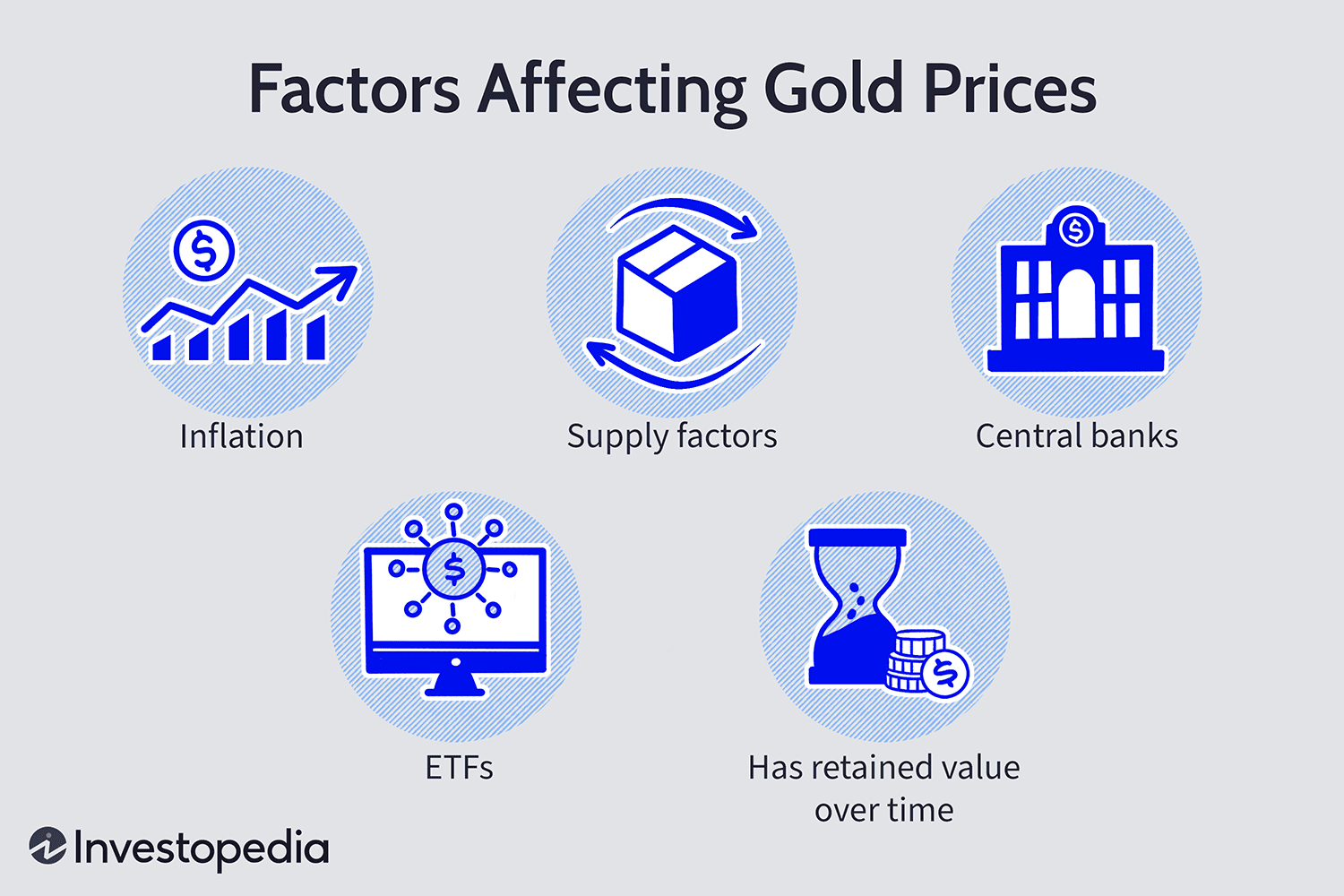
1. Currency Movements – Gold is priced in U.S. dollars, so any fluctuation in dollar strength directly affects its value across global markets.
2. Central Bank Policies & Interest Rates – Lower real interest rates increase the attractiveness of holding gold since it carries no yield.
3. Inflation Trends – Rising consumer prices push investors toward gold as a time-tested hedge against inflation.
4. Geopolitical Events – Wars, trade disputes, and financial crises consistently boost safe-haven demand.
5. Physical Market Fundamentals – Mining production levels, recycling flows, and consumer demand in major hubs such as India and China shape the balance of supply and demand.
This combination of macroeconomic, political, and cultural forces ensures that gold remains a unique, globally interconnected asset, constantly repriced across borders as investors seek long-term stability and protection in uncertain times.
For a comprehensive understanding of the Europe Gold Market Outlook 2025, explore the latest gold market trends, delve into the factors affecting gold prices globally, learn about the impact of the US dollar on gold prices, examine gold demand in China and India, and stay updated with Dubai gold market trends to make well-informed investment decisions.
Top Factors Affecting Gold Prices Globally
Gold’s role as a global asset means its price is shaped by multiple interrelated drivers, from macroeconomic conditions to geopolitical events.
Understanding these factors allows investors to anticipate price movements and build smarter strategies.
Below is a quick-scan table summarizing the main forces driving gold in 2025.
Table: Key Factors Impacting Gold Prices in 2025
| Factor | Impact on Gold Prices | Key 2025 Driver Example |
|---|---|---|
| Inflation | Positive (Hedge) | Global CPI projected at 3.5% |
| Interest Rates | Negative (Inverse) | U.S. Federal Reserve cuts to 4% |
| Geopolitical Tensions | Positive (Safe-Haven) | U.S. Elections & Middle East conflicts |
| Supply & Demand | Variable | Central Bank Buying (+Demand) |
| USD Strength | Negative | Dollar Index (DXY) fluctuations |
Inflation and Gold Prices
Definition & Explanation
Inflation erodes the purchasing power of fiat currencies, driving investors toward hard assets like gold that preserve value.
Gold has historically served as a hedge because its supply grows slowly compared to expanding money supply and rising consumer prices.
Examples & Data
-
In the 1970s stagflation era, U.S. inflation averaged above 7% annually while gold surged more than 300%.
-
In 2021–2022, record-high inflation above 8% in major economies pushed gold above $2,000/oz.
2025 Implications
Global CPI is projected to average 3.5%, with emerging markets facing higher pressures due to currency depreciation.
This keeps investment demand for gold strong, particularly in regions like Africa, India, and Latin America, where inflation-linked instability drives household savings into physical gold.
Interest Rates and Monetary Policy
Definition & Explanation
Gold does not yield interest or dividends, making it less attractive compared to bonds when rates are high. However, lower interest rates reduce opportunity cost, boosting gold’s appeal.
Examples & Data
-
Historically, gold has an inverse correlation with real yields. For instance, when U.S. 10-year Treasury yields dropped in 2020 during the pandemic, gold soared to $2,070/oz.
-
In 2025, the U.S. Federal Reserve has cut rates to 4%, down from 5.5% in 2023, signaling easier monetary policy.
2025 Implications
Rate cuts make non-yielding assets like gold more competitive. Investors anticipate stronger flows into gold ETFs and central bank reserves, pushing prices higher.
Geopolitical Tensions
Definition & Explanation
Gold is widely regarded as a safe-haven asset, meaning its value rises during times of political, military, or financial instability.
Examples & Data
-
During the Russia-Ukraine conflict (2022–2023), gold climbed above $2,000/oz multiple times as investors fled to safety.
-
The 2024 coup in Niger saw African gold demand spike regionally, as local currencies weakened.
2025 Implications
Upcoming U.S. elections, escalating Middle East tensions, and global trade disputes are likely to intensify demand for safe-haven assets.
Central banks in Asia and Africa are also stockpiling gold to diversify away from the U.S. dollar, reinforcing its geopolitical role.
Supply and Demand Fundamentals
Definition & Explanation
Like any commodity, gold prices respond to supply constraints and demand surges. The market is shaped by mining production, recycling, jewelry demand, investment flows, and central bank buying.
Examples & Data
-
Global mine production averages 3,600 tons annually, but output has plateaued in recent years due to declining ore grades.
-
In 2023, central banks purchased a record 1,082 tons of gold, the highest in modern history.
2025 Implications
Supply remains constrained by rising extraction costs and stricter environmental regulations. On the demand side, strong central bank buying—particularly by China, India, and African economies—will continue to support prices. ETF inflows are also expected to rebound if interest rates remain low.
U.S. Dollar Strength
Definition & Explanation
Because gold is priced in U.S. dollars, the currency’s strength directly impacts its value. A stronger dollar makes gold more expensive for foreign buyers, reducing demand, while a weaker dollar boosts demand globally.
Examples & Data
-
The Dollar Index (DXY) reached 114 in 2022, putting pressure on gold prices, which dipped below $1,650/oz.
-
When the DXY fell to 101 in mid-2023, gold rallied above $2,050/oz.
2025 Implications
The U.S. dollar is expected to remain volatile due to Fed rate cuts, debt concerns, and trade imbalances. A weakening trend in the DXY would act as a tailwind for gold prices, making it more affordable for emerging-market buyers.
Conclusion of Section
By analyzing these five major drivers—inflation, interest rates, geopolitical tensions, supply and demand fundamentals, and U.S. dollar strength—it becomes clear that gold prices are shaped by a complex interplay of economic and political forces.
In 2025, with inflation pressures, rate cuts, geopolitical uncertainty, and strong central bank buying, gold is poised to remain a critical asset for investors seeking stability and long-term value preservation.
For a comprehensive understanding of the Europe Gold Market Outlook 2025, explore the latest gold market trends, delve into the factors affecting gold prices globally, learn about the impact of the US dollar on gold prices, examine gold demand in China and India, and stay updated with Dubai gold market trends to make well-informed investment decisions.

How These Factors Influence Gold Price Forecasts
Gold price forecasts are shaped by the same forces that drive its day-to-day movements—inflation, interest rates, dollar strength, geopolitical risks, and supply-demand dynamics—but the time horizon makes a critical difference.
1. Short-Term Movements
In the short term, gold reacts sharply to market news and monetary policy updates. A surprise U.S. Federal Reserve rate cut or sudden geopolitical crisis can push prices up or down within hours.
Traders rely heavily on technical analysis and charting tools such as TradingView, MetaTrader, or Bloomberg Terminals, where live candlestick charts, moving averages, and RSI indicators provide immediate insights into market sentiment.
2. Long-Term Trends
Over longer horizons, structural drivers dominate. Persistent central bank accumulation, global inflationary cycles, and declining mine output create a foundation for upward momentum.
Long-term investors monitor macro indicators such as global CPI levels, real yields, and multi-year central bank purchase reports. Platforms like the World Gold Council dashboards and IMF statistics provide valuable datasets for these forecasts.
3. Bullish 2025 Scenario
Gold could climb well above $2,700/oz if the U.S. Federal Reserve cuts rates to around 4%, central banks maintain strong gold reserves, and geopolitical tensions (e.g., U.S. elections, Middle East conflicts) escalate. A weakening U.S. dollar would further strengthen demand, particularly from emerging markets.
4. Bearish 2025 Scenario
Gold may stay capped near $2,400/oz if inflation eases significantly, the U.S. economy recovers faster than expected, or ETF inflows slow down as investors shift back into equities and bonds.
5. Balanced Outlook
Ultimately, gold’s 2025 trajectory reflects a balance between short-term volatility and long-term structural demand.
For investors, the best approach is to combine real-time trading tools with macro-level awareness, ensuring they are positioned to capture bullish opportunities while managing bearish risks.
What are the factors affecting global gold prices?
Global gold prices are influenced by multiple factors including inflation, currency strength, interest rates, geopolitical tensions, and central bank policies. Economic instability or crises increase gold demand as a safe-haven asset.
The U.S. dollar’s value has an inverse effect: a weaker dollar usually boosts gold prices. Supply-side factors like mining output, recycling rates, and market speculation also impact prices.
Additionally, investor behavior, ETFs, and global demand from jewelry and industry affect price movements. Seasonal trends and government regulations in major gold-producing countries can further sway global gold rates.
Why is the gold price rising?
Gold prices rise due to heightened economic uncertainty, inflation fears, and weakening currency values. Investors often turn to gold as a hedge against market volatility or geopolitical crises. Low or negative real interest rates reduce the opportunity cost of holding non-yielding assets like gold, pushing demand higher.
Increased central bank gold purchases, stock market fluctuations, and rising demand from jewelry and industrial sectors also contribute.
Additionally, supply constraints from mining challenges or geopolitical disruptions can tighten availability. These combined factors create upward pressure, making gold a preferred asset for preserving wealth during uncertain economic periods.
What is the gold price prediction for 2025?
Gold price forecasts for 2025 suggest moderate to strong growth, driven by inflationary pressures, global economic uncertainty, and ongoing geopolitical tensions.
Analysts expect XAU/USD to trend between $3,657–$3,700 per ounce, influenced by U.S. interest rate policies, currency fluctuations, and central bank purchases. Emerging markets’ demand, particularly in Asia and Africa, could further support prices.
While short-term volatility is likely, gold remains a preferred safe-haven asset. Investors should monitor macroeconomic indicators, energy prices, and global debt levels, as these factors can accelerate or dampen gold’s upward trajectory in 2025.
What factors affect XAU/USD prices?
XAU/USD prices are primarily affected by the U.S. dollar strength, interest rates, and inflation trends. A weaker dollar makes gold cheaper for other currencies, boosting demand. Central bank policies, especially in the U.S., influence both rates and market sentiment.
Geopolitical risks, financial crises, and market volatility increase safe-haven buying. Supply-side factors like mining output and gold recycling also matter. Investor behavior in futures, ETFs, and large funds can amplify movements.
Additionally, macroeconomic indicators, trade deficits, and global liquidity conditions influence XAU/USD, making it sensitive to both short-term news and long-term economic trends.
For a comprehensive understanding of the Europe Gold Market Outlook 2025, explore the latest gold market trends, delve into the factors affecting gold prices globally, learn about the impact of the US dollar on gold prices, examine gold demand in China and India, and stay updated with Dubai gold market trends to make well-informed investment decisions.
Frequently Asked Questions
1. Does inflation always raise gold prices?
Not always. While gold is often seen as an inflation hedge, prices also depend on interest rates, currency strength, and investor sentiment. High inflation usually boosts gold, but strong dollar gains can offset this.
2. How does war affect gold?
War and geopolitical crises usually push gold higher because it is considered a safe-haven asset. Investors move money from risky assets into gold during uncertainty.
3. Do interest rates affect gold prices?
Yes. Rising interest rates make bonds and cash more attractive, often lowering gold demand. Falling rates reduce the opportunity cost of holding gold, pushing prices higher.
4. How does the U.S. dollar impact gold?
Gold is priced in dollars. A weaker dollar makes gold cheaper for other currencies, increasing demand. A stronger dollar typically pressures gold prices lower.
5. Does central bank buying influence gold prices?
Yes. When central banks accumulate gold, it signals confidence in gold as a reserve asset, often driving prices higher globally.
6. Can gold prices fall even during inflation?
Yes, if interest rates rise faster than inflation or if investor demand shifts to other assets.
Conclusion
Gold remains one of the most reliable assets for investors seeking stability in uncertain times. Its price is influenced by a mix of short-term and long-term forces—ranging from inflation, interest rates, and dollar strength to geopolitical risks, central bank buying, and supply-demand dynamics.
In the short run, gold reacts sharply to market news, policy updates, and sudden crises. Over the long term, however, structural trends such as declining mine production and consistent central bank accumulation form the foundation for sustained upward momentum.
Looking ahead to 2025, investors should prepare for both bullish and bearish scenarios. Rate cuts, geopolitical tensions, and a weaker U.S. dollar could push gold well above $3,657/oz, while lower inflation and stronger economic recovery may cap prices closer to $3,400/oz. Because of this uncertainty, no single forecast is guaranteed.
The smartest strategy is diversification. Allocating a portion of your portfolio to gold can protect wealth, hedge against inflation, and balance risk exposure across asset classes.
Gold’s role in a portfolio isn’t about predicting every short-term move—it’s about ensuring long-term financial resilience.
👉 What factor do you think will dominate in 2025—interest rates, inflation, or geopolitics? Comment below and join the discussion.
Author Bio
Written by Gold Buyers Africa Limited, CFA, with over 10 years of experience in commodities trading, gold investment advisory, and African mineral markets. Gold Buyers Africa Limited is a trusted company in sourcing, refining, and exporting high-quality gold across global markets, serving investors in USA, UK, UAE, and Asia.