Uganda Gold Market 2026: Trends & how to Investments
The gold market in Uganda has emerged as a powerhouse in East Africa’s economy, driving unprecedented growth through surging exports and strategic investments.
In 2025, Uganda’s gold exports soared to a record $5.8 billion, cementing gold as the nation’s top commodity and contributing nearly 44% to total export earnings, a sharp rise from previous years.
This remarkable performance underscores the sector’s economic significance, transforming Uganda from a minor player into one of Africa’s fastest-rising gold exporters.
As global demand for gold intensifies amid geopolitical tensions and inflationary pressures, the Uganda gold market offers lucrative opportunities for investors, traders, and local stakeholders alike.
This comprehensive guide delves into the trends, opportunities, and challenges shaping the gold industry in Uganda, providing insights for those looking to navigate this dynamic landscape.
The gold market in Uganda is not just about extraction; it encompasses refining, trading, and exporting, with a focus on value addition to maximize returns.
With domestic production ramping up through large-scale projects and artisanal mining, the sector has attracted foreign investment, particularly from China and the Middle East.
However, this growth is intertwined with regulatory reforms aimed at curbing illegal trade and ensuring ethical sourcing.
For investors eyeing the Uganda gold prices and market trends, understanding the interplay between local policies and global influences is crucial.
As of January 2026, gold prices in Uganda hover around 16,207,993 UGX per ounce on average, reflecting global highs of approximately $4,600 per ounce driven by safe-haven demand.
This positions Uganda as a competitive hub for gold trading in the region.
To illustrate the sector’s vitality, consider the following key statistics from recent reports:
| Metric | Value (2025) | Source |
|---|---|---|
| Gold Exports | $5.8 billion | Bank of Uganda |
| Annual Production | Approximately 3,200 kg (with increases from new mines) | USGS and Ministry of Energy |
| Global Export Rank | 26th (rising rapidly) | OEC and Trade Observatories |
| Major Export Destination | UAE (over 35% of exports) | PACEID Report |
| Refined Gold Purity Standard | 99.9% | Industry Standards |
These figures highlight how the gold market in Uganda has evolved into a cornerstone of national revenue, surpassing traditional exports like coffee and cocoa.
As we explore further, this article will trace the historical roots, current dynamics, key players, regulatory frameworks, investment avenues, risks, and future projections for the Uganda gold sector.
Whether you’re an investor seeking high returns or a trader monitoring gold prices in Uganda, the opportunities here are as abundant as the challenges are surmountable, promising a golden era for those prepared to engage strategically.
Historical Overview of Uganda’s Gold Sector
The gold market in Uganda has deep historical roots that trace back to pre-colonial times, when indigenous communities in regions like Karamoja and Mubende engaged in small-scale extraction using rudimentary tools.
During the colonial era under British rule, gold mining gained formal recognition, with early explorations in the 1920s revealing significant deposits in the Busia and Buhweju districts.
However, production remained limited due to a focus on other commodities like copper and tin, and post-independence turmoil in the 1970s further stalled development.
It wasn’t until the 1990s that artisanal mining resurfaced as a livelihood for rural populations, driven by economic liberalization policies under President Yoweri Museveni.
This period marked a shift toward informal operations, with thousands of miners flocking to gold-rich areas, but lacking regulation led to environmental degradation and exploitation.
The turning point came in the early 2000s with government initiatives to formalize the sector, including the establishment of the Directorate of Geological Survey and Mines.
By 2011, Uganda gold exports began surging, rising from a modest $10 million to $514 million by 2018, fueled by increased global prices and cross-border trade from neighboring Democratic Republic of Congo (DRC).
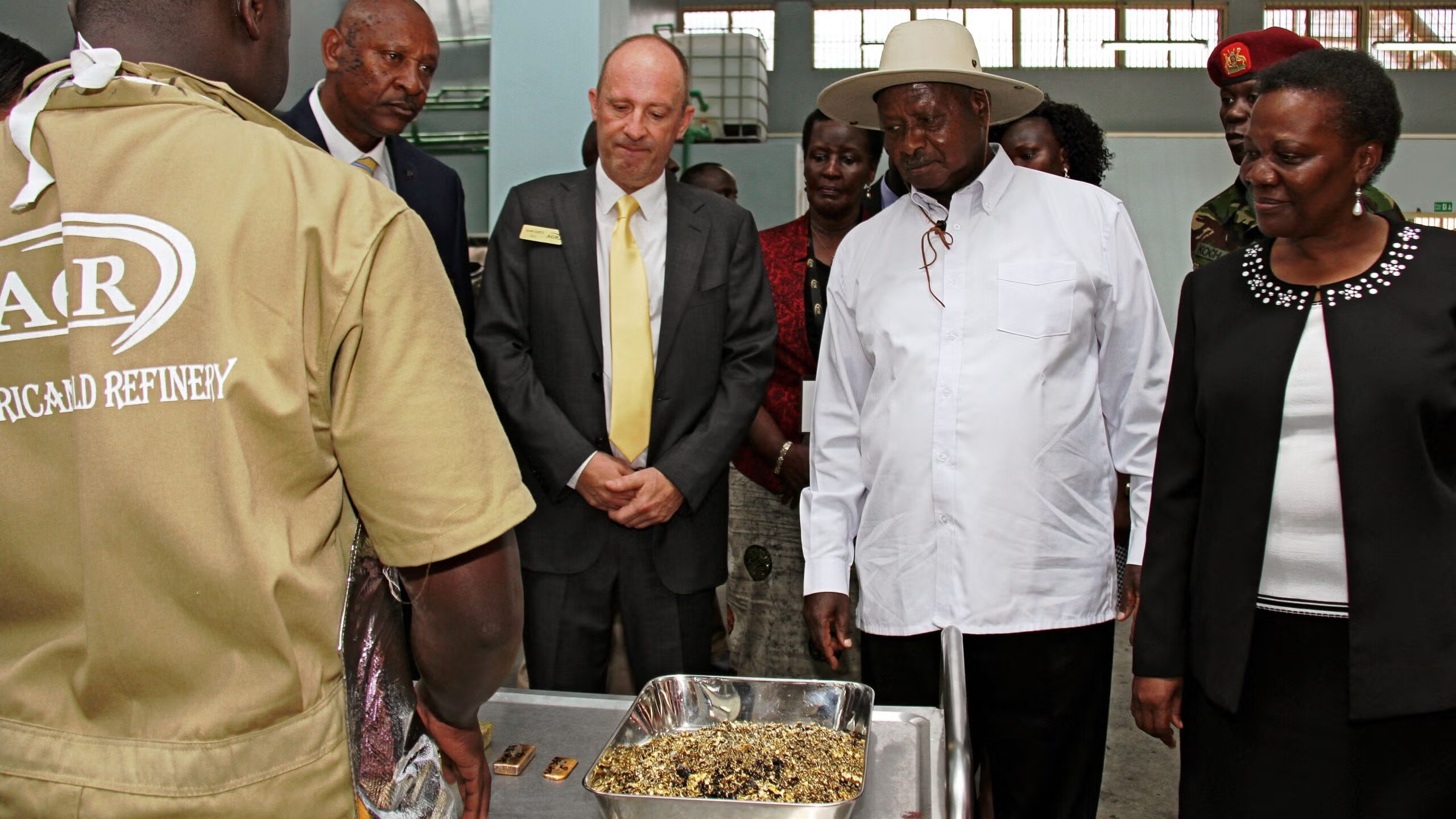
A landmark event was the opening of the African Gold Refinery in 2017, Uganda’s first major refining facility, which aimed to process local and imported ore into export-grade bullion.
This facility, along with subsequent discoveries like the 31 million tonnes of gold ore in 2022—valued at an estimated $12 trillion—catapulted the sector into the spotlight.
Colonial influences had prioritized export-oriented extraction, but post-independence growth emphasized local empowerment, though challenges like smuggling persisted.
The post-2011 surge was amplified by policy reforms, such as the Mining Act of 2003 and its amendments, which encouraged foreign investment while mandating value addition.
By 2020, artisanal and small-scale mining (ASM) accounted for over 90% of production, employing hundreds of thousands and contributing to poverty alleviation in remote areas.
However, this growth wasn’t without setbacks; environmental concerns, child labor issues, and illicit trade—estimated to involve 95% of DRC gold smuggled through Uganda—drew international scrutiny.
Key events like the commissioning of the Wagagai Gold Mine in 2025, a $250 million Chinese-backed project, represent a pivot toward large-scale, industrialized mining, blending historical artisanal roots with modern efficiency.
Today, this historical trajectory informs the gold industry in Uganda, where lessons from the past—such as the need for sustainable practices—guide future expansions, ensuring the sector’s resilience amid global market fluctuations.

Current State of the Gold Market in Uganda
As of January 2026, the gold market in Uganda is thriving, characterized by robust production, escalating exports, and fluctuating gold prices in Uganda influenced by both domestic and international factors.
Domestic gold production stood at approximately 3,200 kg in 2023, with projections for increases in 2025-2026 thanks to operational expansions at key sites.
In July 2025 alone, exports reached 5,736 kg, contributing to the annual tally of $5.8 billion, a figure that includes both locally mined and re-exported gold from regional sources.
Current Uganda gold prices reflect global trends, with 1 ounce trading at around 16,207,993 UGX, up from previous months due to geopolitical uncertainties pushing international prices to $4,600 per ounce.
Major production regions include Karamoja in the northeast, known for its artisanal hubs like Moroto; Mubende and Kassanda in central Uganda, home to large-scale operations; and Busia in the east, where the Wagagai mine dominates.
Artisanal mining still prevails, employing over 200,000 people and producing the bulk of output, but large-scale ventures like Wagagai—processing 5,000 tons of ore daily to yield 1.2 tonnes annually—are shifting the balance toward industrialization.
This duality highlights the sector’s diversity: ASM offers quick yields but faces safety and environmental risks, while large-scale mining ensures higher efficiency and compliance.
Global influences play a pivotal role, with rising demand from central banks and investors amid economic instability boosting Uganda gold exports.
For instance, gold’s status as a safe-haven asset has amplified prices, benefiting Uganda’s position as a regional hub. Subsection on global impacts:
The 2026 gold price surge to $4,600/oz stems from ongoing conflicts and inflation, directly elevating local valuations and export revenues.
Domestically, refineries enforce 99.9% purity standards, enhancing market competitiveness. Overall, the current state positions the gold market in Uganda for sustained growth, though vulnerabilities like smuggling and price volatility require vigilant management.
Key Players and Stakeholders
In the gold market in Uganda, a diverse array of players and stakeholders drives operations, from government bodies to private enterprises and international investors.
Leading refineries include Eurogold Refinery, founded by Benard Feni, which achieves 99.9% purity and has expanded with Dubai offices to tap global markets.
Simba Gold Refinery, under Michael Robinson, focuses on exporting refined bullion since 2024, contributing to value addition. Kibali Gold Mining, led by David Ushindi, operates cross-border with DRC, enhancing production efficiency.
The government, through the Ministry of Energy and Mineral Development, regulates licensing and promotes ethical practices, while the Bank of Uganda bolsters reserves via domestic purchases.
Miners like AUC Mining (Moses Masagazi and Gertrude Njuba) in Mubende provide employment in key belts, and Rusla Mining (Allan Agumya) advocates for responsible mining. Foreign firms, such as Wagagai Mining (Chinese-owned), exemplify large-scale investment.
Here’s a list of top players and their impacts:
- Eurogold Refinery (Benard Feni): Pioneers local refining, exports to Dubai, focuses on ethical sourcing and community development.
- Wagagai Gold Mine: Produces 1.2 tonnes annually, creates 3,000 jobs, boosts foreign exchange.
- AUC Mining: Operates in productive regions, employs locals despite past disputes.
- Simba Gold Refinery: Enhances export quality, integrates into global chains.
- Kibali Gold Mining: Strengthens regional ties, improves efficiency.
These stakeholders collectively propel the Uganda gold sector toward sustainability and growth.

Regulations and Legal Framework
Navigating the gold market in Uganda requires adherence to a robust legal framework designed to promote transparency, curb illicit trade, and ensure ethical practices.
The Mining and Minerals Act of 2022, along with the 2023 Licensing Regulations, mandates licenses for all activities: mining, dealing, and refining.
Export taxes stand at $200 per kilogram, with royalties waived on domestically produced gold to encourage local processing. Importers must secure a $270 permit, provide proof of origin royalties, and meet 99.9% purity standards.
Anti-smuggling laws target the illegal influx from DRC, where 95% of gold is reportedly routed through Uganda, requiring traceability certificates.
Challenges persist, including weak enforcement leading to fraud and environmental lapses, prompting calls for mineral buying centers.
For buyers and sellers, compliance involves:
- Obtaining licenses from the Ministry.
- Ensuring chain-of-custody documentation.
- Paying taxes via Uganda Revenue Authority.
Ethical sourcing tips: Partner with certified refineries and conduct due diligence to align with international standards like EITI recommendations.
These measures aim to formalize the Uganda gold industry, fostering investor confidence while addressing illicit trade.
Investment Opportunities and How to Enter the Market
The gold market in Uganda presents compelling investment opportunities in 2026, fueled by rising global demand, record-high prices around $4,668 per ounce (as of January 2026), and Uganda’s strategic position as a regional refining and export hub.
With domestic production stable at approximately 3,200 kg annually (primarily from artisanal and small-scale operations in Mubende, Busia, and Karamoja), and new large-scale projects like the Wagagai mine ramping up, investors can capitalize on high returns amid strong international appetite for ethically sourced gold.
However, the sector carries inherent risks and rewards that demand careful navigation.
Key investment options include:
1. Buying bullion:
Purchasing physical gold bars or coins offers direct exposure to price appreciation.
Rewards include tangible asset ownership, inflation hedging, and potential for substantial gains as global prices climb—analysts project averages above $4,700–$5,000/oz in 2026.
Risks involve storage costs, theft, liquidity challenges during downturns, and local premiums (typically 2–5% over spot).
2. Mining investments:
Direct or joint-venture stakes in exploration, artisanal sites, or large-scale operations (e.g., partnering with firms like Wagagai or AUC Mining) promise high upside through production scaling and export revenues.
Rewards stem from Uganda’s untapped reserves and government incentives for value addition, but risks include regulatory hurdles, environmental compliance, operational volatility, and capital intensity.
3. Trading:
Buying and selling gold (physical or via platforms) leverages short-term price fluctuations for quick profits.
Rewards include flexibility and lower entry barriers, especially with refineries producing 99.9% purity bars for export.
Risks encompass market volatility, currency fluctuations (UGX vs. USD), and exposure to smuggling-related disruptions.
Overall, high returns are possible amid booming global demand and Uganda’s export surge to $5.8 billion in 2025, but volatility from geopolitical events, USD strength, and local illicit trade can lead to sharp corrections. Diversification and due diligence mitigate these.
Compared to regional markets, Uganda lags in scale but offers unique advantages.
Tanzania, for instance, produces significantly more—around 50–55 tonnes annually (with major mines like Geita and North Mara contributing robustly)—making it Africa’s third-largest producer after Ghana and South Africa.
This higher output supports stronger industrial mining ecosystems and export stability, though Tanzania faces similar regulatory and smuggling challenges.
Uganda’s edge lies in its refining infrastructure (e.g., African Gold Refinery and Eurogold) and lower entry costs for investors, positioning it as an emerging hub for value-added trade rather than raw volume.
How to Buy Gold in Uganda: Step-by-Step Guide
Buying gold in Uganda requires caution to ensure authenticity, legality, and value—especially in Kampala, the primary trading center.
1. Research and Verify Dealers:
Start with licensed entities regulated by the Ministry of Energy and Mineral Development (Directorate of Geological Survey and Mines).
Reputable options include Gold Buyers Africa, Buy Gold Bars Africa Limited, Simba Gold Refinery, Bullion Refinery Ltd, and Eurogold Refinery.
Avoid unlicensed middlemen or street hawkers in areas like Kikuubo (wholesale dust) or Nakasero/Kololo (premium bars). Verify licenses, request assay reports (for 99.9% purity), and check credentials via government registries.
2. Determine Your Needs:
Decide on form—bars (investment-grade, lower premiums), nuggets/dust (from mines, higher risk), or coins.
Compare current local prices (aligned with global spot but adjusted for premiums, taxes, and transport) against international rates.
3. Visit or Contact Securely:
In Kampala, head to trusted dealers in commercial zones or refineries in Entebbe.
For international buyers, use platforms offering export support. Insist on in-person inspection or video verification.
4. Conduct Due Diligence and Transaction:
Request certificates of origin, purity tests, and traceability docs.
Pay via bank transfer or escrow (avoid cash to reduce scam risks). Factor in taxes (e.g., export duties if applicable) and secure payment methods.
5. Secure Storage and Exit:
Store in bank safety deposit boxes, private vaults, or insured facilities.
For export, obtain permits from Uganda Revenue Authority and comply with anti-money laundering rules. Use insured shipping for international delivery.
Tips for local shops: Prioritize Kampala hotspots like Kanjokya Street or established refineries for transparency. Always negotiate premiums, get written contracts, and consult experts for larger buys.
By following these steps, investors can enter Uganda’s gold market safely, balancing rewarding opportunities with prudent risk management in this dynamic sector.
Challenges and Risks
Despite the remarkable growth in Uganda’s gold market, with exports reaching record levels and prices soaring globally to around $4,668 per ounce as of January 19, 2026, the sector faces substantial challenges and risks that can undermine investor confidence, operational stability, and long-term sustainability.
These issues span local illicit activities to broader global dynamics, requiring vigilant risk management for anyone engaging with the Uganda gold sector.
1. Smuggling
remains one of the most pervasive threats, with Uganda serving as a key transit hub for illicit gold primarily from the Democratic Republic of Congo (DRC) and South Sudan.
Estimates suggest that a significant portion—often cited around 95% in regional analyses—of gold passing through Uganda originates illegally from neighboring conflict zones, where it is smuggled across porous borders and falsely documented as Ugandan-origin to evade traceability requirements.
This practice drains billions in potential revenue through trade mis-invoicing, tax evasion, and under-declaration, with reports indicating losses equivalent to hundreds of millions annually (e.g., Shs2 trillion or about $526 million in lost tax revenue from mineral smuggling in 2024 alone, with trends continuing into 2025-2026).
Fraudulent schemes, including counterfeit gold scams targeting foreign investors, have escalated, eroding trust and prompting government crackdowns, such as police recoveries of hundreds of millions in seized funds and closures of illegal refineries.
These activities not only reduce legitimate export earnings but also expose investors to legal repercussions and reputational damage if unknowingly involved in tainted supply chains.
2. Environmental issues
pose another critical risk, particularly from artisanal and small-scale mining (ASM), which dominates production and employs hundreds of thousands but often operates informally without proper safeguards.
Mercury use in gold extraction—despite being outlawed—continues in many areas, releasing thousands of kilograms annually into rivers and soils, leading to water contamination, biodiversity loss, deforestation, soil erosion, and health hazards for communities.
Large-scale operations face scrutiny for land degradation, uncovered pits creating safety dangers, and inadequate rehabilitation, as seen in regions like Karamoja, Mubende, and Busia.
Regulatory bodies like NEMA mandate environmental and social impact assessments, but weak enforcement allows unsustainable practices to persist, potentially triggering international boycotts or stricter import standards from buyers like the UAE.
3. Market volatility
amplifies these local vulnerabilities, as gold prices remain highly sensitive to global swings.
In 2026, forecasts indicate continued upward pressure toward $4,700–$5,000 per ounce or higher, driven by central bank demand and safe-haven buying, but with significant risks of corrections if U.S. dollar strength rebounds, interest rates stabilize, or economic recovery reduces hedging needs.
Uganda’s market, tied closely to international benchmarks, experiences amplified effects from currency fluctuations (UGX volatility) and local premiums, making short-term trading particularly unpredictable.
4. Geopolitical factors
further heighten risks, as global tensions—such as ongoing conflicts, trade disputes, or regional instability in East Africa—can spike safe-haven demand and prices but also disrupt supply chains or investor inflows. For Uganda, cross-border issues with the DRC exacerbate smuggling and security concerns.
Additionally, persistent deficits in silver and gold markets—with silver facing multi-year structural shortfalls (e.g., 160–200 million ounces in 2025, likely continuing into 2026 due to industrial demand outpacing supply) and gold seeing tightening inventories—can amplify overall precious metals volatility, indirectly pressuring gold through correlated sentiment and portfolio shifts.
These intertwined challenges highlight the need for thorough due diligence, ethical sourcing, and diversified strategies to navigate the Uganda gold market successfully amid its high-reward but high-risk environment.

Future Outlook and Trends
The future outlook for the gold market in Uganda appears highly promising as the sector transitions from predominantly artisanal production to a more industrialized and value-added model, supported by new large-scale developments and sustained global demand.
With gold prices maintaining strength near $4,668 per ounce in January 2026 and forecasts from major analysts (including J.P. Morgan and the World Gold Council) projecting averages of $4,500–$5,000 or higher through 2026–2030—driven by persistent central bank purchases (potentially 750–1,100 tonnes annually), geopolitical uncertainties, and structural deficits—the stage is set for robust growth in Uganda’s exports and domestic output.
Key drivers include the operational ramp-up of major projects like the Wagagai Gold Mine in Busia (a $250 million Chinese-backed initiative inaugurated in 2025), which processes 5,000 tons of ore daily and targets 1.2 tonnes of refined gold annually at 99.9% purity, creating thousands of jobs and boosting local refining capacity.
Additional expansions from refineries such as Eurogold Refinery (with Dubai linkages for global access), Simba Gold Refinery (active since late 2024), and others enhance value addition, reducing reliance on raw exports and attracting foreign investment.
Government reforms under the Mining and Minerals Act 2022, traceability improvements, and alignment with Vision 2040—which positions mining as a pillar for industrialization and aims for the sector to contribute significantly to GDP (potentially 7–10% by 2040)—further support this trajectory.
Domestic production, currently around 3,200 kg annually from artisanal sources, is poised to rise sharply with these industrialized operations and ongoing exploration in regions like Karamoja, Mubende, and Busia. Combined with Uganda’s role as a regional refining hub, this could substantially increase legitimate output and curb illicit flows.
Forecast: If regulations continue to tighten—enhancing compliance, ethical sourcing, and anti-smuggling measures—Uganda’s gold exports could realistically approach or exceed $10 billion by 2030.
This aligns with recent surges (e.g., $5.8 billion in the year to November 2025) and projections for Uganda to emerge as a top African exporter through infrastructure, value addition, and global demand tailwinds.
While challenges like environmental enforcement and volatility persist, the convergence of new mines, refining capacity, and bullish international trends positions the Uganda gold market for transformative growth, offering substantial opportunities for investors and stakeholders in the coming years.
Why Buy Gold in Uganda with Gold Buyers Africa
Investing in gold is a smart way to preserve wealth, hedge against inflation, and diversify your portfolio — and doing it with the right partner makes all the difference.
Gold Buyers Africa stands out in Uganda’s precious metals market and is a top choice for buyers for several powerful reasons:
1. Trusted Local Expertise in Uganda
Gold Buyers Africa understands the unique dynamics of the Ugandan gold market. Our team knows regional pricing trends, regulatory requirements, and how to evaluate gold accurately — giving you confidence that you’re paying or receiving a fair, transparent price.
2. Fair and Competitive Pricing
Rather than opaque valuations common in some local markets, Gold Buyers Africa uses up-to-date global gold price benchmarks when setting offers. This ensures you get competitive rates based on real market movements — whether you’re buying or selling gold.
3. Secure and Transparent Transactions
Security is essential when dealing with precious metals. At Gold Buyers Africa:
-
Transactions follow clear, documented processes
-
You receive itemized pricing breakdowns
-
Funds are transferred promptly and securely
No hidden fees. No surprises.
4. Professional Appraisal Services
We offers accurate appraisals using professional equipment and industry standards. You’ll receive honest evaluations backed by experience — a major advantage over casual buyers or inexperienced dealers.
5. Convenient Services for Individuals & Businesses
Whether you’re a first-time gold buyer or a seasoned investor, Gold Buyers Africa caters to all:
-
Small and large gold bar purchases
-
Scrap gold valuation
-
Bulk deals for traders
-
Corporate and institutional transactions
This flexibility makes it easier to manage your investment goals.
6. Strong Reputation and Customer Satisfaction
Word-of-mouth and repeat clients are common in the gold market — especially in Uganda where trust is paramount. Gold Buyers Africa has built a reputation for professional integrity, consistent payouts, and reliable service.
7. Educational Support for Buyers
Buying gold can be intimidating if you’re new to it. Gold Buyers Africa doesn’t just transact — they educate buyers on:
-
How gold is priced globally
-
Best practices for storing and securing gold
-
Understanding purity and premiums
This empowers you to make informed decisions.
Ready to Buy Gold in Uganda with Confidence?
Gold Buyers Africa offers transparent pricing, secure transactions, and expert support — whether you’re buying your first bar or building a long-term precious metals portfolio.
Get a free quote today!
Conclusion
Uganda’s gold market stands at a transformative juncture in 2026, evolving from a largely artisanal sector into a modern, value-added industry with significant economic impact.
Key takeaways include record gold exports reaching $5.8 billion in 2025, making gold the nation’s leading commodity; robust production growth driven by new large-scale mines like Wagagai; advanced refining capabilities delivering 99.9% purity bullion; and strong alignment with global trends pushing gold prices toward $4,700–$5,000 per ounce or higher amid central bank demand and geopolitical hedging.
Despite challenges such as smuggling, environmental concerns, market volatility, and regulatory enforcement gaps, the opportunities remain compelling: high returns from physical bullion purchases, mining investments, and trading; lower entry barriers compared to regional peers like Tanzania; and government reforms fostering ethical, traceable supply chains.
With exports potentially doubling to $10 billion by 2030 under tighter regulations and continued global appetite, Uganda offers one of East Africa’s most promising precious metals frontiers for savvy investors.
Explore Uganda’s gold market today for potential high returns—connect with licensed dealers, refineries, or investment partners in Kampala to secure your position in this dynamic sector.