Gold Bullion Market Trend: Prices, Insight & Investment Guide in 2026
The gold bullion market represents a cornerstone of global finance, where physical gold in the form of bars and coins is traded as a tangible asset, distinct from paper-based investments like stocks or ETFs.
This market encompasses the buying, selling, and storage of high-purity gold, typically 99.9% or higher, serving as a hedge against economic instability.
Globally, the gold bullion market matters because it acts as a barometer for investor sentiment, reflecting concerns over inflation, currency devaluation, and geopolitical tensions.
In 2026, with gold prices surpassing $5,000 per ounce for the first time amid ongoing uncertainties, its relevance has never been greater.
Participants in the gold bullion market include individual investors seeking portfolio diversification, central banks stockpiling reserves to bolster national wealth, governments using gold as a strategic asset during crises, and refiners who produce and certify the bullion to international standards.
Demand is rising again due to factors like persistent inflation, supply chain disruptions in mining regions, and a shift away from fiat currencies in emerging economies.
For instance, central banks purchased over 863 tons in 2025, a trend expected to continue into 2026, pushing prices higher. This resurgence is also fueled by retail investors turning to gold bullion amid volatile stock markets and cryptocurrency fluctuations.
Whether you’re a novice buyer or seasoned investor, understanding the gold bullion market is essential for making informed decisions.
Explore related topics like gold price fluctuations, strategies for gold investment, and reputable bullion dealers to get started on your journey.

What Is Gold Bullion?
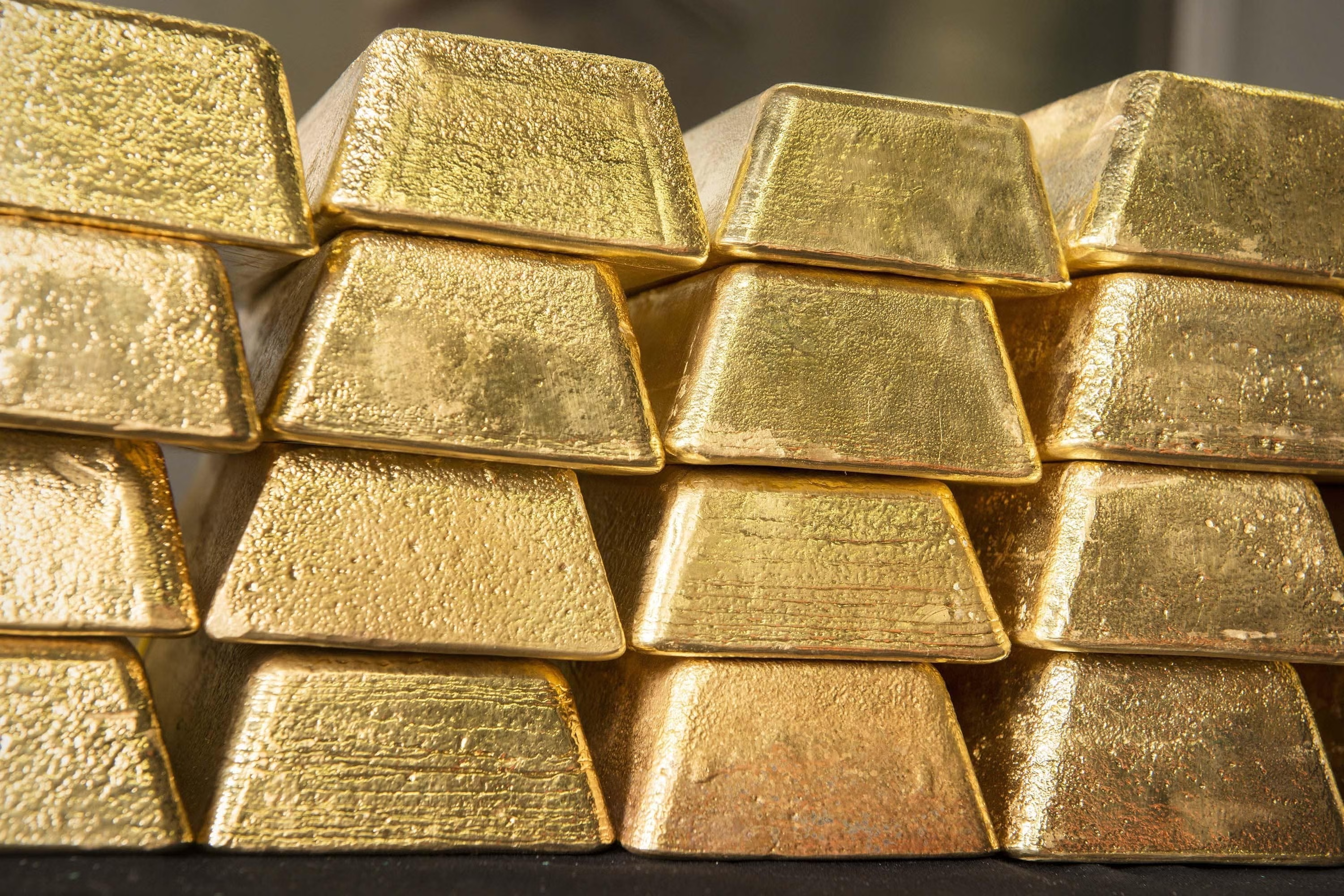
Gold bullion is defined as refined gold in bulk form, typically cast into bars or minted into coins, valued primarily for its metal content rather than any artistic or collectible appeal.
Unlike jewelry, which incorporates design elements and craftsmanship that inflate costs, gold bullion focuses on purity and weight, making it a straightforward investment vehicle.
The key difference between bullion vs jewelry lies in liquidity and purpose: jewelry often carries high markups for aesthetics and may depreciate due to wear, while bullion maintains value based on the spot price of gold.
Similarly, bullion vs coins highlights that while bullion bars are utilitarian and cost-effective for large investments, coins like the American Eagle offer legal tender status and easier divisibility for smaller transactions.
Another distinction is bullion vs ETFs, where physical bullion provides tangible ownership and protection against counterparty risks, but ETFs offer convenience through stock-like trading without the need for storage.
Purity standards are crucial in the gold bullion market, with most products adhering to 24K or 999.9 fineness, ensuring they meet international benchmarks set by organizations like the London Bullion Market Association (LBMA).
This high purity guarantees that investors receive gold free from significant impurities, enhancing resale value. In practice, when buying gold bullion, always verify certifications to avoid counterfeits, as substandard products can erode returns.
Overall, gold bullion serves as a reliable store of value, especially in turbulent times, offering investors a way to preserve wealth outside traditional financial systems.
How the Gold Bullion Market Works
The gold bullion market operates through a complex interplay of physical and financial mechanisms, starting with the spot price, which is the current market rate for immediate delivery of gold, quoted per troy ounce.
This price is determined by global supply and demand dynamics, influenced by trading on exchanges like the COMEX in New York and over-the-counter markets in London.
The London Bullion Market Association (LBMA) plays a pivotal role by setting standards for good delivery bars, ensuring quality and facilitating large-scale transactions among banks and refiners.
Central banks contribute significantly, often buying or selling gold to manage reserves; for example, in 2025, purchases reached 863 tons, stabilizing prices during volatility.
The market distinguishes between physical gold—actual bars and coins held by investors—and paper gold, such as futures contracts or ETFs, which represent claims on gold without physical possession.
Physical markets involve direct ownership, while paper markets allow speculation on price movements.
Gold bullion prices fluctuate daily due to factors like U.S. dollar strength, interest rates, and mining output; a weaker dollar typically boosts gold as it’s priced in USD globally.
In 2026, with forecasts predicting averages around $5,055 per ounce by year-end, these movements are amplified by trade concerns and monetary policy shifts.
To illustrate, here’s a simple table comparing key market components:
| Component | Description | Impact on Prices |
|---|---|---|
| Spot Price | Real-time value per ounce | Base for all transactions |
| LBMA | Sets purity and delivery standards | Ensures market integrity |
| COMEX | Futures trading platform | Influences short-term volatility |
| Central Banks | Reserve management | Provides long-term demand support |

Current Gold Bullion Market Trends (2026)
In 2025, the gold bullion market experienced record-breaking performance, with prices surging over 60% and setting more than 50 all-time highs, driven by a confluence of economic and geopolitical factors.
Inflation and interest rates have had a profound impact, as persistent high inflation eroded fiat currency value, prompting investors to flock to gold as a hedge; meanwhile, Federal Reserve rate cuts further supported upward momentum by reducing the opportunity cost of holding non-yielding assets.
Central bank buying trends remained robust, with purchases totaling 863 tons, geographically diverse and historically elevated, as institutions like China’s People’s Bank extended their spree to diversify reserves away from the dollar.
Geopolitical risks, including ongoing tensions and tariff threats, have amplified safe-haven demand, pushing prices beyond $5,000 per ounce in early 2026.
Supply constraints from mining disruptions in key regions like Africa and Australia have tightened availability, while investor demand shifts toward physical bullion over ETFs reflect a preference for tangible assets amid uncertainty.
Looking at the gold bullion market outlook, analysts from J.P. Morgan forecast averages of $5,055 by Q4 2026, with potential highs at $5,400, fueled by continued central bank accumulation averaging 585 tons quarterly.
The gold market forecast suggests moderate gains of 5-15% if economic slowdowns persist, or surges up to 30% in severe downturns. Incorporating phrases like gold demand trends highlights the broadening investor base, making this a pivotal time for entry into the market.

Gold Bullion Prices Explained
Gold bullion prices are multifaceted, starting with the spot price—the baseline rate for raw gold, currently around $5,200 per ounce in January 2026—versus the retail price, which includes additional costs for fabrication and distribution.
Premiums represent the markup over spot, varying by product type; minted bars often carry 2-5% premiums for intricate designs and packaging, while cast bars are cheaper at 1-3% due to simpler production.
Regional price differences are notable: in the US, prices align closely with global spots but include sales taxes in some states;
Europe faces VAT on bullion, adding 15-20% in countries like Germany; Africa, with major producers like South Africa, sees lower premiums due to proximity to mines but higher risks from political instability; Asia, particularly India and China, experiences demand-driven surges during festivals, pushing premiums up to $65 above London spots.
Taxes and VAT further impact net costs—for instance, VAT-exempt storage in Switzerland makes it attractive for international buyers.
To aid understanding, consider this pricing table based on current data:
| Region/Product | Spot Price (USD/oz) | Premium (%) | Total Retail Price (USD/oz) | Tax/VAT Impact |
|---|---|---|---|---|
| US (1 oz Bar) | $5,200 | 3% | $5,356 | Varies by state (0-7%) |
| Europe (1 kg Bar) | $5,200 | 4% | $5,408 + VAT | 15-20% added |
| Asia (10 oz Bar) | $5,200 | 5% | $5,460 | Festival surcharges |
| Africa (1 oz Coin) | $5,200 | 2% | $5,304 | Export duties |

Types of Gold Bullion
The gold bullion market offers diverse options to suit various investment strategies, primarily divided into bars and coins.
- Gold bars come in popular sizes like the 1 oz bar, ideal for entry-level investors due to its affordability and liquidity; the 10 oz bar appeals to those scaling up, offering better value per ounce; and the 1 kg bar suits high-net-worth individuals for bulk storage efficiency.
- Gold coins provide added collectibility, such as the American Eagle, backed by the US government with a face value but traded at bullion rates; the Canadian Maple Leaf, renowned for 9999 purity; and the South African Krugerrand, a pioneer in modern bullion coins.
The choice between minted vs cast bullion depends on preferences: minted products feature polished finishes and security elements, commanding higher premiums, while cast bars are rougher but cheaper to produce.
Each type ensures high purity, making them reliable for long-term holding in the gold bullion market.
How to Buy Gold Bullion Safely
Buying gold bullion safely is crucial to avoid pitfalls in this valuable market, and this section guides you toward conversions.
Start with choosing between online vs local dealers:
online platforms like Gold Buyers Africa, JM Bullion or APMEX offer convenience, competitive pricing, and discreet shipping, while local dealers provide immediate inspection but may charge higher premiums.
Key checks include LBMA accreditation for authenticity, assay cards verifying purity and weight, and buyback policies ensuring easy resale at fair rates.
To avoid scams, watch for red flags like unsolicited offers, prices far below spot, or pressure tactics; always verify dealer ratings on BBB or Trustpilot.
Shipping, insurance, and delivery should be insured and tracked, with options for discreet packaging.
For a soft CTA, compare trusted gold bullion dealers to secure the best deals.
By following these steps, you mitigate risks and enhance your investment in the gold bullion market.

Best Places to Buy Gold Bullion
In the gold bullion market, choosing a reliable and reputable source is critical for ensuring authenticity, fair pricing, and secure delivery.
Buyers today have access to a wide range of options, from online dealers to international refineries, each catering to different investment needs.
International suppliers are increasingly popular for bulk and wholesale buyers.
Companies like Gold Buyers Africa specialize in responsibly sourced gold bullion and direct trade from Africa, making them attractive for investors seeking competitive pricing and large-volume purchases.
Similarly, well-known refineries such as PAMP Suisse and Valcambi offer LBMA-certified gold bars with guaranteed purity, though premiums are typically higher due to brand recognition.
For retail and beginner investors, online bullion dealers remain the most convenient choice.
JM Bullion is favored for its low pricing, free shipping on qualifying orders, and transparent buyback policies.
APMEX stands out for its vast inventory of gold bars and coins from multiple mints worldwide, while SD Bullion appeals to budget-conscious buyers with consistently low premiums.
Traditional banks, such as HSBC, also sell gold bullion, offering a high level of security and trust.
However, their prices and fees are often higher, making them less attractive for frequent investors.
Below is a quick comparison of popular gold bullion sources:
| Dealer / Source | Pros | Cons | Best For |
|---|---|---|---|
| Gold Buyers Africa | Direct sourcing, bulk supply | Pricing on request | Wholesale & global buyers |
| JM Bullion | Low prices, free shipping | Online only | Beginners |
| APMEX | Huge inventory | Higher premiums | Variety seekers |
| SD Bullion | Competitive rates | Limited physical stores | Budget buyers |
| PAMP Suisse | High purity, LBMA-certified | Premium cost | International investors |

Storage & Security for Gold Bullion
Proper storage and security are essential when investing in physical gold bullion.
Choosing the right storage option protects your investment from theft, damage, and loss while preserving its long-term value.
1. Home Storage
Home storage offers immediate access and avoids ongoing storage fees, making it appealing for small to moderate holdings. Gold bullion can be stored in high-quality safes that are fireproof and bolted down.
However, home storage carries higher security risks and may require additional insurance coverage. Discretion and proper concealment are critical to reducing exposure.
2. Bank Vaults
Bank vaults and safety deposit boxes provide a higher level of security than home storage. Banks offer controlled access, professional security, and peace of mind.
The downside is limited access hours and ongoing rental fees. Additionally, contents of safety deposit boxes are typically not insured by the bank, so separate insurance may be necessary.
3. Private Vault Services
Private vaulting services are a popular choice for serious investors and high-value holdings. These facilities offer advanced security, 24/7 surveillance, full insurance coverage, and global access options.
Many private vaults also support international storage, allowing investors to diversify geopolitical risk. While more expensive, private vaults provide the highest level of protection.
4. Allocated vs Unallocated Storage
Allocated storage means specific gold bars are held in your name, with serial numbers recorded—offering maximum ownership security.
Unallocated storage, by contrast, represents a claim on gold rather than physical ownership, carrying counterparty risk but lower costs. Investors seeking full control should prioritize allocated storage.
Choosing the right storage solution depends on investment size, access needs, and risk tolerance.
Is Gold Bullion a Good Investment?
Gold bullion has long been considered a reliable store of value, particularly during periods of economic uncertainty.
Whether it is a good investment depends on your financial goals, time horizon, and risk tolerance.
Pros and Cons of Gold Bullion
One of the biggest advantages of gold bullion is its ability to preserve wealth. Physical gold is not tied to any government or company, making it a hedge against inflation, currency devaluation, and geopolitical risk.
It also carries no counterparty risk when held in allocated form. However, gold bullion does not generate income like dividends or interest, and investors must account for storage, insurance, and dealer premiums.
Long-Term vs Short-Term Investment
Gold bullion performs best as a long-term investment. Historically, it has maintained purchasing power over decades and often rises during market downturns.
Short-term trading is possible, but price fluctuations, premiums, and spreads can reduce profitability. Investors seeking quick gains may find bullion less suitable than more volatile assets.
Gold Bullion vs Stocks and Crypto
Compared to stocks, gold bullion offers stability but lacks growth potential and cash flow. Stocks can outperform gold over long periods but carry higher market risk.
Cryptocurrencies, while offering high upside, are extremely volatile and speculative. Gold bullion stands out as a defensive asset, helping balance portfolios exposed to equity and digital asset risk.

Who Should Invest in Gold Bullion?
Gold bullion is well-suited for conservative investors, long-term savers, retirees, and those looking to diversify their portfolios. It is also ideal for investors seeking tangible assets and protection against economic instability.
For most portfolios, allocating 5–15% to gold bullion can enhance resilience without sacrificing growth.
Ultimately, gold bullion works best as a stabilizing cornerstone rather than a high-risk growth investment.
Frequently Asked Questions
Is gold bullion taxed?
Gold bullion taxation depends on your country. In the United States, investment-grade gold bullion is generally exempt from sales tax in many states but may be subject to capital gains tax when sold. In the UK and parts of Europe, gold bullion that meets purity standards is often VAT-exempt. Always check local tax regulations before buying or selling.
Can I resell gold bullion easily?
Yes, gold bullion is highly liquid. Reputable dealers, online marketplaces, and bullion exchanges buy gold daily at prices close to the spot rate. Bars from recognized mints with intact assay cards typically command better resale prices and sell faster.
Is gold bullion better than coins?
Gold bullion bars usually carry lower premiums than gold coins, making them more cost-effective for pure investment. Coins, however, offer greater flexibility for smaller transactions and may carry collectible value. The better option depends on whether your priority is investment efficiency or liquidity.
How do I verify authenticity?
Authentic gold bullion should include a serial number, assay card, and certification from an LBMA-approved refinery. Verification methods include weight and dimension checks, magnet testing, ultrasound scanning, and XRF analysis. Buying from trusted dealers significantly reduces the risk of counterfeits.
Conclusion
The gold bullion market remains one of the most reliable ways to preserve wealth, hedge against inflation, and diversify investment portfolios.
With its global demand, intrinsic value, and long-term stability, gold bullion continues to attract both new and experienced investors seeking tangible financial security.
Choosing the right supplier is just as important as choosing the right investment. Working with reputable, transparent, and responsibly sourced dealers helps ensure authenticity, fair pricing, and secure delivery.
By understanding market trends, pricing structures, storage options, and resale potential, investors can confidently navigate the gold bullion market and avoid unnecessary risks.
If you are ready to buy or compare options, Gold Buyers Africa offers direct access to responsibly sourced gold bullion with a focus on quality, compliance, and competitive pricing for global buyers.
Take the next step by comparing suppliers, requesting a quote, or exploring available gold bullion products to secure your investment with confidence today.