
Physical Gold Bars: Ultimate Investment & Buying Guide 2026
What Are Physical Gold Bars?
Physical gold bars are refined pieces of .999 or .9999 fine gold manufactured by accredited mints and refineries for investment purposes.
Unlike jewelry or collectible coins, gold bars are valued primarily for their metal content and purity. They are typically stamped with their weight, purity, refinery name, and often a unique serial number.
Investors buy physical gold bars as a direct way to own tangible wealth that is not dependent on a financial intermediary.
Physical Gold vs. Paper Gold
Physical gold refers to actual bullion you can hold, store, or vault. Paper gold, on the other hand, represents gold exposure through financial instruments such as exchange-traded funds (ETFs), futures contracts, or certificates.
For example, SPDR Gold Shares (GLD) is an ETF designed to track the price of gold. When you invest in it, you own shares in a fund that holds gold on your behalf—you do not directly own specific gold bars.
Similarly, gold futures traded on COMEX provide exposure to gold prices through contracts rather than physical possession of the metal.
The key distinction lies in ownership structure:
-
Physical Gold Bars → Direct ownership of tangible bullion
-
Gold ETFs / Futures → Financial exposure to price movements
Tangible Ownership Benefits
Owning physical gold bars provides:
-
No counterparty risk (no reliance on banks or fund managers)
-
Protection against financial system instability
-
Privacy and direct control over assets
-
Long-term wealth preservation
In times of economic uncertainty, investors often prefer physical bullion because it exists outside digital systems and financial markets.
Why Investors Prefer Physical Bullion
Physical gold bars typically carry lower premiums than many gold coins, making them cost-efficient for larger investments. They are widely recognized, highly liquid, and globally traded.
For investors seeking security, diversification, and control, physical bullion remains one of the most trusted forms of wealth protection.

Why Invest in Physical Gold Bars?
When it comes to safeguarding your wealth, physical gold bars remain one of the most trusted assets for investors worldwide.
This isn’t just tradition — gold has repeatedly proven its value through some of the most severe economic disruptions in modern history.
1. Hedge Against Inflation
Inflation erodes the purchasing power of fiat currencies like the U.S. dollar or the euro — meaning that over time the same amount of money buys less.
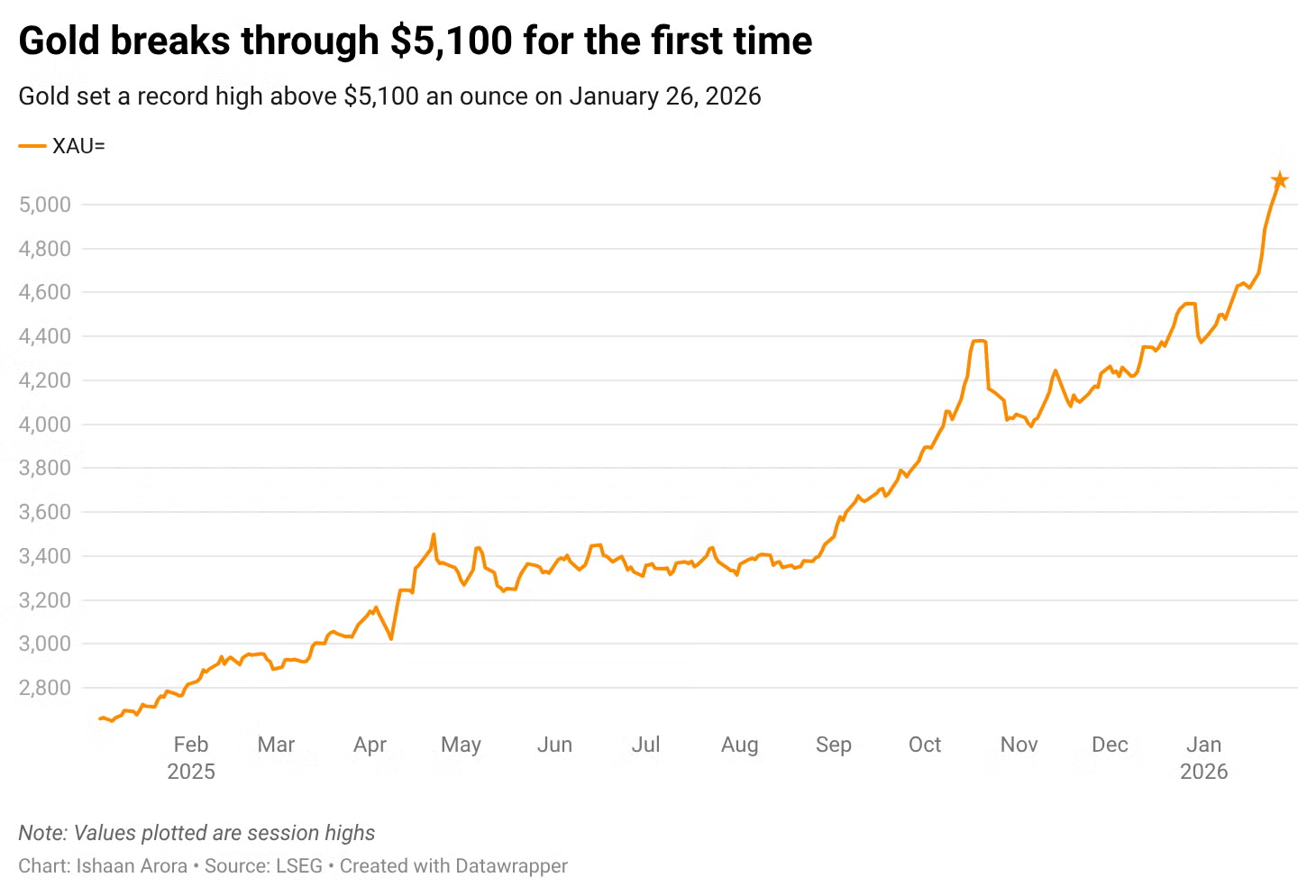
Physical gold, on the other hand, retains real value because its supply is limited and its demand is global. During periods of high inflation, investors often turn to gold to preserve wealth, which in turn drives gold prices up.
Research and historical trends show that gold prices tend to rise when inflation accelerates, making gold a practical long-term hedge for preserving purchasing power.
2. Protection from Currency Collapse
In extreme cases, when a national currency crashes or loses credibility, gold becomes a safe alternative store of value. Unlike paper money, whose value is determined by government policy, gold is a physical asset valued globally.
Countries with hyperinflation — where citizens see their savings wiped out — often experience surging demand for gold as people seek stability beyond fiat currencies.
3. A Safe-Haven Asset During Recession
During economic downturns or financial crises, gold has historically acted as a safe haven that preserves value when stocks and other risk assets fall.
For instance, during the 2008 Financial Crisis, gold prices climbed as investors fled unstable markets and poured money into precious metals.
Likewise, the COVID-19 pandemic saw gold prices surge as governments slashed interest rates and unleashed massive stimulus measures. These trends highlight gold’s role as financial insurance in times of uncertainty.
4. Portfolio Diversification
Adding physical gold to an investment portfolio reduces overall risk because gold often behaves differently than stocks, bonds, or real estate.
This low correlation with traditional assets enhances diversification — helping stabilize your portfolio during volatile markets.
Financial advisors generally recommend maintaining a modest allocation to gold (often 5–10%) for better long-term risk-adjusted returns.
5. Wealth Preservation
Gold’s durability and universal acceptance make it a preferred choice for wealth preservation across generations. It does not corrode, can be liquidated almost anywhere in the world, and has been valued as money for thousands of years.
In contrast to financial instruments erased by bank defaults or market failures, physical gold offers tangible ownership that remains valuable regardless of economic conditions.

Types of Physical Gold Bars
When investing in physical gold bars, understanding the different types available helps you choose the right option based on budget, liquidity, and storage preferences.
Gold bars generally fall into three main categories: cast bars, minted bars, and CombiBars. Each serves a slightly different investment purpose.
A. Cast Gold Bars
Cast gold bars are produced by pouring molten gold directly into molds and allowing it to cool naturally. This traditional manufacturing method gives them a rough, matte finish with slightly uneven edges and a more industrial appearance.
Because they require less refinement and polishing, cast bars typically carry lower premiums over the spot price compared to minted bars. This makes them especially attractive for investors purchasing larger weights such as 100g, 500g, or 1kg bars.
Cast bars are ideal for:
-
Long-term wealth storage
-
Bulk gold investment
-
Investors prioritizing lower cost per gram
They are often stamped with weight, purity (.9999 fine gold), and the refinery’s hallmark.
B. Minted Gold Bars
Minted gold bars undergo a more refined manufacturing process. Gold is first cast into long strips, then precisely cut into uniform shapes and polished. The result is a smooth, polished finish with sharp edges and a highly professional appearance.
Minted bars often include:
-
Unique serial numbers
-
Assay certificates
-
Tamper-evident packaging
These features enhance authenticity and resale confidence. While minted bars usually carry slightly higher premiums, they are popular among retail investors due to their attractive design and easier resale in smaller denominations (1g to 1oz).
C. CombiBars (Breakable Gold Bars)
CombiBars are innovative gold bars designed with pre-scored segments that can be broken into smaller pieces without losing value.
For example, a 50g CombiBar may consist of fifty 1g detachable pieces.
These bars provide:
-
Flexibility for partial liquidation
-
Easier trade in smaller amounts
-
Portability and divisibility
CombiBars are particularly useful for investors who want liquidity in smaller units without purchasing multiple individual bars.
Trusted Gold Bar Refiners
When buying physical gold bars, always choose products from globally recognized refiners accredited by major bullion associations.
Some of the most trusted names include:
-
PAMP Suisse – Known for high-quality minted bars and the famous Lady Fortuna design.
-
Valcambi – Producer of widely recognized CombiBars and investment-grade bullion.
-
Perth Mint – Government-owned refinery offering both cast and minted gold bars.
-
Royal Canadian Mint – Renowned for advanced security features and high purity standards.
Choosing bars from reputable refiners increases liquidity, trust, and resale value in global markets.

Gold Bar Sizes & Weights
Physical gold bars are available in a wide range of sizes, allowing investors to choose based on budget, liquidity needs, and long-term goals.
Understanding the differences between weights is essential for making a smart purchase.
1 Gram Gold Bar
A 1g gold bar is one of the smallest and most affordable entry points into gold investing. It offers excellent flexibility and is easy to resell in small amounts.
However, it typically carries the highest premium per gram due to manufacturing and packaging costs.
5g Gold Bar
The 5g bar strikes a balance between affordability and lower premiums compared to 1g bars. It remains highly liquid and is popular among new investors who want gradual exposure to physical gold.
10g Gold Bar
A 10g gold bar offers improved value per gram while still being easy to liquidate. Premiums decrease as weight increases, making it a cost-efficient option for moderate investors.
1 oz Gold Bar (31.1g)
The 1 oz gold bar is one of the most globally recognized investment sizes. It offers strong liquidity and competitive premiums. Because it is widely traded internationally, resale is typically fast and straightforward.
50g Gold Bar
A 50g bar is ideal for investors seeking better pricing efficiency. Premiums are lower per gram compared to smaller bars, but liquidity may be slightly less flexible than 1 oz or 10g bars.
100g Gold Bar
The 100g size is popular among serious investors. It offers strong cost efficiency and relatively low premiums, while still being manageable for resale.
1 kg Gold Bar
A 1 kilogram gold bar provides the lowest premium per gram, making it ideal for high-net-worth investors. However, liquidity can be less flexible since selling requires finding a buyer capable of purchasing the full amount.
Liquidity Differences
Smaller bars (1g–10g) offer greater flexibility for partial sales. Larger bars (100g–1kg) provide better pricing efficiency but may require selling the entire unit at once.
Premium Differences
Premiums decrease as bar size increases. Smaller bars cost more per gram due to higher production costs.
Best Size for Beginners
For most new investors, 5g, 10g, or 1 oz gold bars offer the best balance of affordability, liquidity, and reasonable premiums.

How to Buy Physical Gold Bars (Step-by-Step Guide)
Buying physical gold bars is straightforward when you follow a structured process. The key is to prioritize security, transparency, and pricing efficiency to protect your investment.
Step 1: Choose a Reputable Dealer
Always buy from an established and trusted dealer with verified customer reviews, transparent pricing, and proper accreditation.
Reputable platforms provide clear product details, buy-back policies, and secure ordering systems.
Examples of well-known platforms include:
- Gold Buyers Africa
-
APMEX
-
JM Bullion .
-
BullionVault
If you’re targeting a specific country, also research local, licensed bullion dealers with strong compliance standards.
Step 2: Check the Spot Price
The spot price is the current market price of gold per ounce, updated in real time. Before purchasing, compare the dealer’s listed price against the live gold spot rate to ensure transparency. Reliable dealers clearly display how much you are paying above spot.
Step 3: Compare Premiums
The premium is the amount charged above the spot price to cover manufacturing, distribution, and dealer margins.
Smaller bars (1g–10g) usually carry higher premiums, while larger bars (100g–1kg) offer better cost efficiency.
Comparing premiums between dealers can significantly reduce your total investment cost.
Step 4: Verify Certification & Authenticity
Only purchase gold bars from reputable refiners that provide:
-
.999 or .9999 purity stamp
-
Assay certificate
-
Serial number (for minted bars)
-
Tamper-evident packaging
Certification increases resale value and protects you from counterfeit products.
Step 5: Use Secure Payment Methods
Trusted dealers offer multiple secure payment options such as:
-
Bank wire transfers
-
Credit/debit cards
-
Verified online payment processors
Avoid cash deals without documentation, especially for large transactions.
Step 6: Ensure Insured Shipping
Always confirm that your order includes fully insured shipping with tracking. High-quality dealers insure packages until they are delivered and signed for. Some platforms also offer direct vault storage for added security.
By following these steps, you minimize risk while maximizing value — ensuring your physical gold bar investment is safe, authentic, and competitively priced.

Physical Gold Bars vs Gold Coins
Investors often debate whether to buy physical gold bars or gold coins. Both provide tangible ownership of gold, but they differ in cost, liquidity, and investment purpose.
Understanding these differences helps you choose the option that aligns with your financial goals.
Key Differences
| Feature | Gold Bars | Gold Coins |
|---|---|---|
| Premium | Lower | Higher |
| Collectibility | Low | Medium-High |
| Liquidity | High | High |
| Recognition | Refinery-based | Government-backed |
Premium Differences
Gold bars typically have lower premiums over spot price because they are produced in bulk and designed purely for investment.
Gold coins, on the other hand, carry higher premiums due to smaller minting quantities, collectible appeal, and legal tender status.
Collectibility and Recognition
Coins often carry numismatic or collector value beyond their gold content. For example, the American Gold Eagle and Canadian Gold Maple Leaf are highly recognized and widely tradable.
Bars, in contrast, are refinery-based, meaning their value depends entirely on weight and purity rather than rarity.
Liquidity
Both gold bars and coins are highly liquid. You can sell them to banks, brokers, or online bullion platforms worldwide.
However, very small coins or limited-edition coins may occasionally trade at a premium, while larger bars may require finding buyers able to purchase the full weight.
Which Should You Choose?
-
Gold Bars: Best for investors seeking cost-efficient, bulk gold investment with lower premiums. Ideal for long-term wealth preservation.
-
Gold Coins: Better for those interested in collectibility, government-backed recognition, and smaller, flexible units for gifting or partial resale.
By understanding these distinctions, investors can optimize their portfolio for both growth and flexibility, combining bars and coins to balance cost, liquidity, and long-term value.

How to Store Physical Gold Bars Safely
Owning physical gold bars is one thing; storing them securely is equally important. Proper storage ensures your investment is protected from theft, loss, or damage while maintaining liquidity and resale value.
1. Home Safe
For smaller quantities of gold, a high-quality home safe is a popular choice. Choose a safe that is fireproof, waterproof, and bolted to the floor or wall.
Keep its location confidential and consider installing home security systems and cameras for added protection. While convenient, storing gold at home carries higher risk compared to professional storage.
Security Tip: Use a safe with UL or equivalent certification and avoid sharing the safe’s location with anyone.
2. Bank Safety Deposit Box
A bank safety deposit box offers a higher level of security than home storage. Banks provide controlled access, physical security, and insurance options in some cases.
This method is ideal for medium to large holdings, especially for investors who do not want to manage the logistics of home storage.
Consideration: Accessibility is limited to bank hours, and insurance may not cover full replacement value unless separately arranged.
3. Professional Vault Storage
For large investments or international investors, professional vault storage is the safest option.
Companies like BullionVault or local custodians offer allocated storage, where your gold is physically separated and fully insured, and unallocated storage, which represents your gold as a claim against the vault.
Allocated vs Unallocated Storage:
-
Allocated: Gold bars are individually tracked, fully owned by you, and segregated from others’ holdings.
-
Unallocated: You hold a general claim to a pool of gold; lower fees but slightly higher counterparty risk.
4. Insurance Guidance
Regardless of storage choice, always insure your gold. Check if home or vault storage is covered under your current policy, or purchase specialized precious metals insurance.
Proper insurance protects against theft, fire, and natural disasters.
By selecting the right storage method and following these security practices, investors can safely preserve the value of physical gold bars while maintaining flexibility and peace of mind.

Are Physical Gold Bars a Good Investment in 2026?
Investors considering physical gold bars in 2026 are weighing multiple macroeconomic and geopolitical factors that impact gold’s performance as a safe-haven asset.
Historical trends, central bank activity, and currency movements all suggest that gold remains a strong hedge and portfolio diversifier.
Current Macroeconomic Outlook
Global markets in 2026 are navigating moderate inflation, rising interest rates in some economies, and ongoing geopolitical uncertainties.
Stock and bond markets have shown volatility, prompting investors to look for stable, tangible assets like gold.
Physical gold bars provide a non-digital, counterparty-free investment, making them particularly attractive during uncertain times.
Central Bank Gold Buying Trends
Central banks continue to increase their gold reserves, signaling confidence in the metal as a long-term store of value.
According to the World Gold Council, major central banks added hundreds of tonnes of gold to their holdings in the past few years, particularly in Asia and the Middle East.
This consistent demand supports gold prices and underscores its importance in global finance.
Inflation & Interest Rates
Gold historically performs well during inflationary periods, as it preserves purchasing power when fiat currencies weaken. In 2026, with inflation remaining above central bank targets in some regions, gold provides a natural hedge.
While rising interest rates may increase the opportunity cost of holding gold (since it does not pay interest), investors often still allocate a portion of their portfolios to gold as a risk-mitigation tool.
USD Weakness Analysis
The U.S. dollar remains the primary global reserve currency, but periods of USD weakness often correlate with rising gold prices. Physical gold bars become more attractive internationally when the dollar declines because gold is priced globally in USD.
Reports from the Federal Reserve indicate ongoing monetary policies that may contribute to moderate USD softness, which historically supports bullion demand.
Conclusion
Given the current economic backdrop, central bank buying trends, inflationary pressures, and currency movements, physical gold bars remain a compelling investment in 2026.
They provide wealth preservation, liquidity, and diversification, making them a prudent choice for investors seeking long-term security and protection against market volatility.
Risks of Buying Physical Gold Bars
While physical gold bars are a trusted investment, there are risks every investor should be aware of. Understanding these risks helps you make informed decisions and protect your wealth.
Storage Risk
Physical gold must be stored securely. Improper storage at home or unprotected facilities increases the risk of theft, fire, or damage.
Always use a certified safe, bank safety deposit box, or professional vault storage, and consider full insurance coverage to mitigate these risks.
Liquidity During Crisis
Although gold is generally liquid, in extreme economic crises or when selling very large bars, finding a buyer quickly may be challenging. Investors should plan for liquidity needs and keep smaller denominations or partial holdings to allow for flexible selling.
Dealer Scams
Buying from unverified dealers can expose investors to fraud. Scammers may misrepresent gold purity, sell fake bars, or charge inflated premiums.
Tips to Avoid Scams:
-
Buy only from reputable, accredited dealers.
-
Verify serial numbers and assay certificates.
-
Compare prices with live spot rates and other dealers.
-
Check for customer reviews and industry accreditations.
Counterfeit Bars
Counterfeit or tampered gold bars are a real risk, especially in online marketplaces. Use professional verification tools or request third-party authentication when buying larger or high-value bars.
By understanding these risks and following best practices, investors can safely enjoy the benefits of physical gold bars while minimizing exposure to fraud, storage issues, or liquidity challenges.
Frequently Asked Questions (FAQ)
Is buying physical gold bars safe?
Yes, buying from reputable dealers and storing them securely makes physical gold bars a safe investment. Always verify certification and purity.
What is the best gold bar size for beginners?
For new investors, 5g, 10g, or 1 oz gold bars are ideal. They balance affordability, liquidity, and reasonable premiums.
Are gold bars taxable?
Tax rules vary by country. In some regions, gold is exempt from VAT, while capital gains tax may apply when selling. Always consult local tax laws.
Can I sell gold bars easily?
Yes, gold bars are highly liquid and can be sold through dealers, banks, or online platforms. Smaller denominations are easier to sell quickly.
Do gold bars increase in value?
Gold bars tend to preserve wealth over time. Prices fluctuate with market conditions, inflation, and global economic factors, but historically gold has retained purchasing power.
How can I verify the authenticity of a gold bar?
Check the assay certificate, serial number, and refinery hallmark. Professional testing with XRF devices or trusted third-party verification is recommended for larger purchases.
Should I buy allocated or unallocated storage?
-
Allocated: Gold is segregated and fully owned by you.
-
Unallocated: You own a claim on a pool of gold, with slightly higher counterparty risk. Allocated storage is safer for large investments.
Where can I buy physical gold bars online?
Trusted online platforms include Gold buyers Africa, APMEX, JM Bullion, BullionVault.
Can gold bars be insured?
Yes, most storage methods — home safes, bank deposit boxes, and professional vaults — offer insurance coverage against theft, fire, and damage.
Are gold bars better than coins?
Gold bars have lower premiums and are ideal for large investments, while coins carry collectible value and are easier to sell in smaller amounts.
Conclusion: Physical Gold Bars
Physical gold bars remain one of the most reliable and tangible investment options for both new and experienced investors.
They provide wealth preservation, portfolio diversification, and protection against inflation and currency volatility, making them a crucial asset in uncertain economic times.
Whether you choose cast bars for lower premiums, minted bars for certified and polished investment-grade gold, or CombiBars for flexibility, owning physical gold gives you direct control and security that paper gold or digital assets cannot match.
By following best practices—buying from trusted dealers, checking spot prices and certifications, storing gold safely in home safes, bank deposit boxes, or professional vaults, and insuring your investment—you can minimize risks such as theft, counterfeiting, or liquidity issues.
In 2026, with global economic uncertainty, central bank gold purchases, and potential USD weakness, physical gold bars continue to be a smart choice for long-term security.
They not only retain value over time but also offer flexibility, liquidity, and peace of mind that other investments cannot fully provide.
For investors seeking a stable, high-value asset that combines tangible ownership, historical reliability, and global recognition, physical gold bars remain a cornerstone of any well-rounded investment strategy.