How Much Is a Gold Bar Worth in 2025? Current Prices, Trends, Forecast & Buying Guide
How Much is a Gold Bar Worth? A gold bar’s worth and value depends on its weight, purity, and the current gold spot price.
Most gold bars are made of 99.9% pure gold and are priced based on the global market rate per troy ounce.
As of today, gold is traded per troy ounce (31.1 grams), a 1-ounce gold bar is worth about $4,330. A 10-ounce gold bar would be worth roughly $43,300, while a 1-kilogram gold bar (32.15 troy ounces) would be valued at approximately $139,300 at the same price.
However, the final cost is usually higher than spot price. Dealers add a premium to cover manufacturing, handling, and distribution. Smaller bars typically carry higher premiums than larger bars.
Gold bar values change daily because gold prices fluctuate with inflation, interest rates, currency strength, and global economic conditions.
To know exactly how much a gold bar is worth, multiply its weight by the current gold spot price and add the dealer premium.
Gold bars remain a popular investment due to their stability and long-term value.
Gold has fascinated humans for centuries, not just for its beauty but also as a safe-haven investment. In times of economic uncertainty, inflation, or global market volatility, many people turn to gold to preserve wealth.
Others are simply curious about its value, especially when gold prices reach record highs, prompting questions like, “How much is a gold bar really worth?” With gold frequently in the news, it’s no wonder searches for its price spike during market surges.
In this article, we will explore how gold bar prices are determined, the differences between various bar sizes, and why even small bars can have a higher per-ounce cost than larger ones.
We’ll also explain the difference between a troy ounce, which is the standard measurement for precious metals (31.1 grams), and a regular ounce used in everyday measurements (28.35 grams). Understanding this distinction is key to accurately calculating gold bar value.
By the end, you’ll know how to estimate the worth of any gold bar, why prices fluctuate daily, and what factors investors and collectors consider when buying gold.
Whether you are planning to invest or just curious, this guide provides a clear, up-to-date snapshot of the gold market and how it affects the value of gold bars.
Current Gold Spot Price Today
As of today, December 17, 2025, the live gold spot price is approximately $4,318 per troy ounce.
This is a real‑time market value reflecting what gold is trading for on global exchanges, and it fluctuates throughout the day based on supply, demand, economic news, and investor sentiment.
Be sure to check a reliable live price feed or commodities market source for the most up‑to‑date rate before making any financial decisions.
Gold has reached historically high levels this year, climbing far above previous price ranges and breaking records in 2025 as demand surged among investors seeking a hedge against inflation and global uncertainty.
Here’s a snapshot of today’s approximate gold spot price per ounce in major currencies (values rounded and approximate):
| Currency | Price per Troy Ounce |
|---|---|
| USD (US Dollar) | ~$4,318 |
| GBP (British Pound) | ~£3,500* |
| EUR (Euro) | ~€3,660* |
| AED (UAE Dirham) | ~15,880* |
| CNY (Chinese Yuan) | ~30,560* |
| INR (Indian Rupee) | ~357,000* |
| SGD (Singapore Dollar) | ~5,860* |
*Converted estimates based on current exchange rates — actual local prices may vary due to premiums, taxes, and dealer fees. Always check live market data for exact figures.
Gold prices can change minute by minute, so this snapshot represents today’s approximate spot value and should be used as a reference point only.

Common Gold Bar Sizes and Their Values
Gold bars are one of the most popular forms of bullion for investors, collectors, and even central banks. When assessing their value, two key factors come into play: weight and purity.
Gold is almost always measured in troy ounces, not the standard ounces used for everyday items. One troy ounce equals 31.1035 grams, slightly heavier than a standard ounce (28.35 grams).
This distinction is important because gold prices are quoted per troy ounce, so using the wrong unit can lead to inaccurate calculations.
Most investment-grade gold bars are 99.9% pure or higher, often stamped as “.999” or “24 karat.” Some bars reach 99.99% purity, offering almost entirely pure gold.
Purity, combined with weight, determines the spot value of a bar, which is simply the current market price of the gold content.
However, the retail price is typically higher because dealers charge a premium for production, distribution, and profit. Smaller bars usually carry a higher percentage premium, while larger bars are closer to the spot price.
Here’s a breakdown of popular gold bar sizes and their approximate values based on a gold spot price of ~$4,330 per troy ounce, including typical retail prices with premiums:
| Size | Weight (troy oz) | Approx. Value (Spot Only) | Typical Retail Price (with Premium) |
|---|---|---|---|
| 1 gram | 0.032 | ~$139 | $150–$200 |
| 1 oz | 1 | ~$4,330 | $4,400–$4,600 |
| 10 oz | 10 | ~$43,300 | $43,500–$44,500 |
| 1 kilo | 32.15 | ~$139,000 | $140,000–$143,000 |
| 400 oz (Good Delivery) | ~400 | ~$1.73 million | Institutional pricing (low premium) |
Why do retail prices exceed spot value?
The difference between spot price and retail price comes from the premium, which covers:
-
Manufacturing: Minting or casting gold bars requires precision and quality assurance.
-
Distribution & Handling: Secure shipping, storage, and insurance add costs.
-
Dealer Margin: Retailers must make a profit, especially on small transactions.
Interestingly, larger gold bars carry smaller premiums relative to their weight. For example, a 1-gram bar may carry a 10–20% premium, while a 1-kilogram bar may only have a 1–3% markup.
This is why serious investors often prefer kilogram or Good Delivery bars over smaller denominations.
Understanding gold bar sizes and values is essential for anyone considering investing or collecting.
Whether buying small 1-oz bars for flexibility or a 400-oz bar for institutional investment, knowing the spot price, weight, and typical premiums ensures that you pay a fair price and understand your actual investment value.
Gold’s combination of tangible wealth, liquidity, and long-term stability makes it a cornerstone of precious metal investment.
By carefully selecting the right size and factoring in premiums, buyers can maximize their investment potential while minimizing unnecessary costs.

What Is a “Standard” Gold Bar?
When people think of a gold bar, they often imagine a large, rectangular ingot worth millions of dollars.
In the precious metals market, the term “standard” gold bar usually refers to Good Delivery bars, which meet the strict criteria set by the London Bullion Market Association (LBMA).
These bars are primarily used by central banks, financial institutions, and bullion dealers rather than individual investors.
Good Delivery bars have a nominal weight of around 400 troy ounces (approximately 12.4 kilograms), though the official LBMA weight range is 350–430 troy ounces.
They are stamped with the manufacturer’s mark, serial number, and assayer’s mark to certify authenticity and purity.
Importantly, these bars must have a minimum gold purity of 99.5%, ensuring that buyers know they are dealing with nearly pure gold.
The size, shape, and markings of Good Delivery bars are standardized to allow seamless trading across global markets.
In terms of value, a 400-ounce bar at a spot price of roughly $4,330 per troy ounce is worth about $1.73 million.
Depending on its exact weight within the 350–430 ounce range, the value can reach $1.7–$1.9 million, making it a significant asset for institutions.
While the premium over spot price for these bars is minimal, they are typically traded at or very close to spot, reflecting their role as bulk investment-grade gold.
For comparison, smaller investor-grade bars, such as 1-ounce, 10-ounce, or 1-kilogram bars, are far more accessible to individual buyers but carry higher premiums relative to their spot value.
These smaller bars are easier to store, transport, and sell in retail markets, but the cost per ounce is often slightly higher than that of a Good Delivery bar.
Essentially, large standard bars optimize efficiency and cost for institutional transactions, whereas smaller bars cater to flexibility and accessibility for personal investors.
Understanding the difference between Good Delivery bars and smaller bullion bars is crucial for investors.
While the former represents the backbone of global gold trading, the latter allows everyday buyers to own a portion of this precious metal without needing millions of dollars or specialized storage facilities.
Both types play an important role in gold investment, but the scale, pricing, and purpose differ significantly.
Factors That Affect a Gold Bar’s Worth
The value of a gold bar is influenced by much more than its weight and purity.
Several market, economic, and practical factors combine to determine how much a bar is worth at any given time.
Understanding these influences is essential for both investors and collectors looking to make informed purchases.
1. Spot Price Drivers
The primary determinant of a gold bar’s value is the spot price of gold, which fluctuates constantly based on global market conditions.
Key drivers include:
-
Inflation: Gold is often seen as a hedge against inflation. When currencies lose purchasing power, investors flock to gold, driving up demand and prices.
-
Interest Rates: Low interest rates tend to make gold more attractive since it doesn’t generate interest or dividends. Conversely, high rates can temporarily depress demand.
-
Geopolitical Events: Political instability, conflicts, or economic sanctions often trigger spikes in gold prices as investors seek safe-haven assets.
-
Demand from Central Banks and Jewelry Markets: Central banks hold gold as part of their reserves, and strong demand from jewelry markets—especially in India and China—can influence global prices.
2. Premiums Over Spot Price
A gold bar’s retail price is almost always higher than the raw spot value.
This difference is called the premium, and it varies based on:
-
Brand: Renowned refiners like PAMP Suisse, Perth Mint, or Credit Suisse often command higher premiums due to recognized quality and global trust.
-
Condition: Bars in pristine, unblemished condition generally sell for more than scratched or damaged bars.
-
Seller Type: Authorized dealers, private sellers, and online platforms may have different markups, affecting the price you pay.
Premiums tend to be lower for larger bars, which is why institutional buyers favor kilo or 400-ounce Good Delivery bars over small 1-ounce bars.
3. Purity and Authenticity
Gold bars are usually 99.5%–99.99% pure. Even minor deviations can impact value.
Certified bars with assayer marks, serial numbers, and LBMA approval carry higher trust and are easier to sell at or near spot value.
Uncertified or questionable bars may require independent testing, lowering their market price.
4. Market Value vs. Melt Value
-
Market Value: The price a buyer is willing to pay in retail or wholesale markets, including premiums and dealer margins.
-
Melt Value: The intrinsic worth of the gold content alone, calculated as weight × spot price. Melt value is always a baseline; most retail bars sell above it due to added premiums.
5. Taxes and Storage Costs
Additional factors affect the final cost or net return of a gold bar:
-
Taxes: Some countries charge VAT, sales tax, or import duties on gold purchases, which can add significantly to cost.
-
Storage and Security: Keeping gold safe may require bank vaults, private safes, or third-party storage, each with associated fees. These costs indirectly influence the bar’s effective value to the owner.
Conclusion
A gold bar’s worth is the product of multiple intertwined factors. While the spot price provides a base, premiums, brand reputation, purity, authenticity, and practical considerations like taxes and storage all shape the final price.
By understanding these elements, investors and collectors can make smarter decisions, ensuring they pay fairly and protect their investment in one of the world’s most trusted assets.
How to Calculate a Gold Bar’s Value Yourself
Calculating the value of a gold bar may seem complicated at first, but it’s actually straightforward once you know the right formula and tools.
Doing it yourself ensures you understand what you’re paying for and can spot fair deals in the market.
Step-by-Step Formula
The basic formula to estimate a gold bar’s value is:
Gold Bar Value=(Weight in troy ounces)×(Spot Price per troy ounce)×(Purity)+Premium\text{Gold Bar Value} = (\text{Weight in troy ounces}) \times (\text{Spot Price per troy ounce}) \times (\text{Purity}) + \text{Premium}Gold Bar Value=(Weight in troy ounces)×(Spot Price per troy ounce)×(Purity)+Premium.
-
Weight in troy ounces: Check the bar’s stamped weight. Remember, gold is measured in troy ounces (1 troy oz = 31.1035 grams), not standard ounces.
-
Spot Price: Use the current gold spot price from a reliable source. This reflects the market value of one troy ounce of pure gold.
-
Purity: Divide the gold’s purity percentage by 100. For example, a 99.9% pure bar is 0.999.
-
Premium: Add any dealer or brand premium. Smaller bars or premium brands like PAMP Suisse or Perth Mint may carry higher premiums.
Example: A 10-ounce bar at a spot price of $4,330/oz, 99.9% purity, with a $200 premium:
10×4,330×0.999+200≈43,327+200=43,52710 \times 4,330 \times 0.999 + 200 \approx 43,327 + 200 = 43,52710×4,330×0.999+200≈43,327+200=43,527
The bar’s estimated value is $43,527.
Tools to Simplify the Process
-
Online Gold Calculators: Many bullion dealers and financial websites offer calculators where you input weight, purity, and spot price to get instant value.
-
Mobile Apps: Precious metal apps track live spot prices and can calculate gold bar values on the go.
-
Spreadsheets: For frequent investors, Excel or Google Sheets can automate calculations for multiple bars at once.
By understanding this simple formula and using the right tools, you can quickly and accurately determine a gold bar’s worth, whether you’re buying, selling, or evaluating your investment portfolio.
Buying and Selling Gold Bars: Tips
Investing in gold bars can be highly rewarding, but it requires careful consideration to ensure safety, authenticity, and maximum value.
Whether you’re buying your first bar or selling part of your portfolio, following these tips can help you make informed decisions.
1. Choose Reputable Dealers
The first rule of gold investment is to buy from trusted, established dealers. Reputable dealers provide certified, assayed bars and transparent pricing.
Examples of globally recognized sellers include Gold Buyers Africa, APMEX, JM Bullion, and Kitco.
These companies ensure that the gold you purchase meets purity and weight standards, reducing the risk of scams or counterfeit products.
Always check for dealer reviews, accreditation, and LBMA approval if available.
2. Avoid Fakes: Buy Assayed Bars
Counterfeit gold is a genuine risk in the market. To avoid fakes, only purchase assayed gold bars—those certified for weight and purity by recognized refiners.
Look for serial numbers, manufacturer marks, and assay certificates, which guarantee authenticity.
Reputable bars also carry recognizable brand names like PAMP Suisse, Perth Mint, or Credit Suisse, which further ensures quality and easier resale.
3. Storage Options
Gold bars are valuable and must be stored securely. You have several options:
-
Home Safes: Suitable for small quantities, but ensure the safe is fireproof and securely bolted.
-
Bank Safe Deposit Boxes: A convenient option for mid-size holdings, though access may be limited during bank hours.
-
Third-Party Vaults: Companies specializing in bullion storage provide professional-grade security and insurance, ideal for larger investments.
4. Investment Pros and Cons Compared to Coins or ETFs
-
Pros of Gold Bars:
-
Lower premiums per ounce compared to coins.
-
Easier bulk storage for large investments.
-
High liquidity in global bullion markets, especially for LBMA-approved bars.
-
-
Cons of Gold Bars:
-
Less flexible than coins or smaller bars for small transactions.
-
Storage and insurance costs can add up.
-
Selling large bars may require dealing with institutional buyers for the best price.
-
-
Compared to ETFs: Physical gold bars offer tangible ownership, while gold ETFs provide convenience and instant liquidity but carry management fees and no physical possession. Coins may carry higher premiums but are easier to sell in smaller amounts.
5. Selling Tips
When selling gold bars, compare spot prices across multiple dealers, consider premiums, and ensure the buyer verifies authenticity.
Certified and branded bars typically sell closer to spot, while unbranded or uncertified bars may sell for less.
By following these tips, you can safely buy, hold, and sell gold bars while minimizing risk and maximizing investment returns.
Whether for long-term wealth preservation or portfolio diversification, knowledge, security, and trusted sources are your keys to success.

Historical Gold Prices and Future Outlook
Gold’s price has climbed dramatically over the past decade, reflecting its role as a safe‑haven asset amid economic and geopolitical uncertainty.
In 2015, gold traded around $1,060 per troy ounce at the end of the year. By the end of 2024, prices had risen to roughly $2,623 per ounce, more than doubling over that period.
In 2025, spot prices have surged even higher, closing near $4,276 per ounce in December 2025 — a jump of over 260% from 2015.
Here’s a simplified annual snapshot of gold’s rising trend (approximate closing prices in USD per troy ounce):
| Year | Approx. Gold Price |
|---|---|
| 2015 | ~$1,060 |
| 2018 | ~$1,280 |
| 2020 | ~$1,895 |
| 2023 | ~$1,913 |
| 2024 | ~$2,639 |
| 2025 | ~$4,276 |
The 2025 trend has been especially strong, with gold prices reaching historic highs above $3,500 per ounce earlier in the year due to a mix of economic pressures, including inflation concerns, geopolitical tensions, and increased demand from central banks and investors seeking protection against market volatility.
Looking ahead, many analysts believe gold will remain elevated. Reasons include continued monetary easing, persistent global uncertainty, and strong demand from major holders like central banks.
Some investment forecasts suggest prices could climb further toward $4,800 per ounce or more by late 2026 if economic conditions favor safe‑haven assets.
In summary, gold’s long‑term trend has been upward, with significant gains in recent years.
Historical data shows strong appreciation during periods of financial stress, and current forecasts support further strength as investors weigh inflation, currency fluctuations, and global risks.
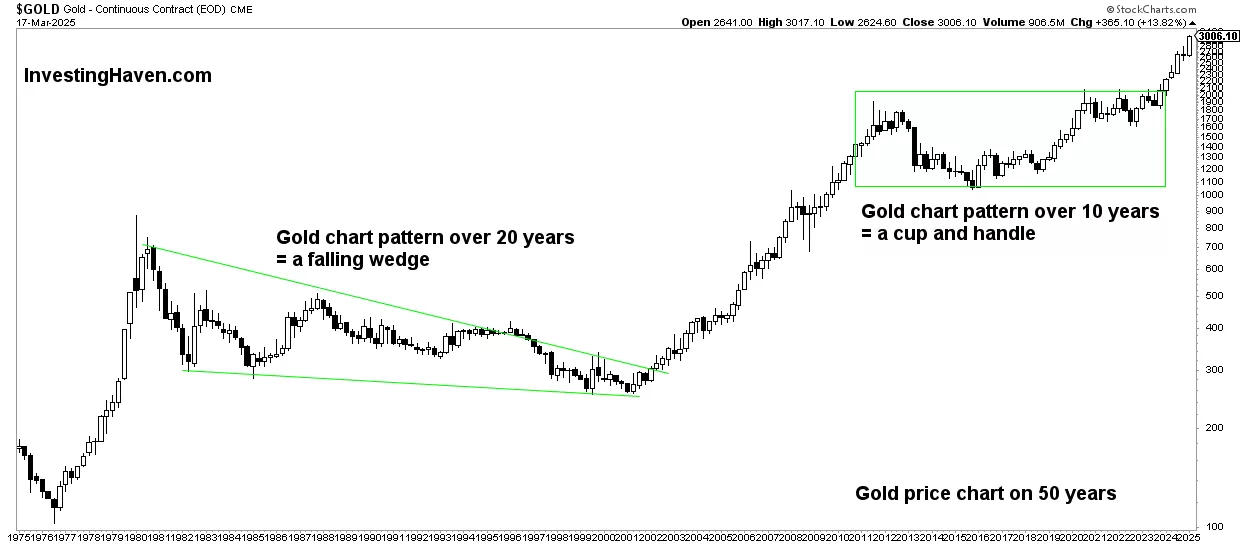
Checking up‑to‑date price charts and expert forecasts can help you gauge future movements more precisely.
How much is 1 bar of gold worth?
The value of a gold bar depends on its weight, purity, and the current spot price.
A standard 1-ounce gold bar at a spot price of ~$4,330 (Dec 2025) is worth about $4,330, while larger bars scale proportionally.
Retail prices are usually slightly higher due to dealer premiums, which cover production, branding, and distribution. Premiums are smaller for larger bars and higher for small ones like 1 gram.
Because gold prices fluctuate daily with market conditions, the exact value of a gold bar changes constantly, so real-time quotes from trusted sources are essential.
How much is a 12.4 kg gold bar worth?
A 12.4-kilogram gold bar is roughly equivalent to a 400 troy ounce Good Delivery bar, commonly held by banks or institutions.
At a current spot price of ~$4,330 per ounce, the bar’s value is about $1.73 million. Dealer premiums are minimal for such large bars, so retail price closely tracks spot price.
These bars are highly liquid in institutional markets but impractical for individual buyers due to storage, security, and cost.
The bar’s worth can fluctuate daily with global market conditions, interest rates, and geopolitical factors.
How much is 1 kilo gold bar?
A 1-kilogram gold bar weighs about 32.15 troy ounces. At a spot price of ~$4,330 per ounce, its gold content alone is worth roughly $139,000.
Retail prices typically range from $140,000 to $143,000 due to dealer premiums, which cover manufacturing and handling. Smaller bars like this are popular among individual investors for easier storage and liquidity.
The price fluctuates daily according to the spot gold market, making it important to check live rates before buying or selling. Purity and certification also impact resale value.
What if I invested $1,000 in gold 10 years ago?
Ten years ago, in 2015, gold traded around $1,060 per ounce. A $1,000 investment would have bought roughly 0.94 ounces.
At today’s spot price of ~$4,330 per ounce, that 0.94 ounces is worth approximately $4,070, representing a fourfold increase over the decade.
Gold’s value growth reflects its role as a hedge against inflation and economic uncertainty.
While past performance doesn’t guarantee future returns, this example illustrates how long-term gold investing can preserve and grow wealth, especially in times of market volatility.
Why Buy Gold Bars from Africa with Gold Buyers Africa
Investing in gold is not just about wealth—it’s about security, trust, and tangible value.
When it comes to buying gold bars in Africa, Gold Buyers Africa stands out as a reliable, professional, and customer-focused choice.
Here’s why investors and collectors trust them:
1. Certified 99.99% Pure Gold
Gold Buyers Africa deals exclusively in premium 24-karat gold bars with 99.99% purity.
Each bar is certified and assayed, ensuring you receive gold of the highest standard recognized worldwide.
With such purity, your investment maintains its intrinsic value and liquidity, whether you plan to hold it long-term or sell in international markets.
2. Authenticity You Can Trust
Counterfeit gold is a real risk in today’s market. Gold Buyers Africa guarantees authentic, fully traceable gold bars from reputable refiners, complete with serial numbers and assay certificates.
Every purchase is verified, giving you peace of mind that your investment is genuine and secure.
3. Competitive Pricing & Transparent Premiums
Unlike many other sellers, we offers fair pricing based on real-time spot prices plus transparent, minimal premiums.
You know exactly what you’re paying for, without hidden costs, ensuring maximum value for your investment.
4. Safe and Convenient Purchase
We make buying gold simple and secure. Our professional team provides guidance throughout the purchase process, and we ensure safe storage and delivery options.
Whether you are a first-time buyer or an experienced investor, our services make owning gold straightforward and stress-free.
5. Trusted Reputation Across Africa
As a recognized name in the African gold market, Gold Buyers Africa has built a reputation for honesty, reliability, and excellent customer service.
Investors across the continent trust them for secure, high-quality gold investments.
Investing in gold bars with Gold Buyers Africa means choosing purity, authenticity, and peace of mind.
Don’t settle for uncertainty—own certified, 99.99% pure gold bars from a dealer you can trust today.
Frequently Asked Questions
What is the most common gold bar size?
The most common sizes for investors are 1 ounce, 10 ounces, and 1 kilogram. For institutions, the standard Good Delivery bar (~400 oz) is most common.
How much is a 1 oz gold bar worth today?
As of December 2025, a 1-ounce gold bar is approximately $4,330 based on spot price, with typical retail prices ranging $4,400–$4,600 depending on premiums.
What is a Fort Knox-style gold bar worth?
Fort Knox holds large Good Delivery bars (~400 oz). At current spot prices (~$4,330/oz), each bar is valued around $1.73 million, though exact worth depends on the bar’s precise weight.
Is now a good time to buy gold bars?
Gold is considered a safe-haven investment during economic uncertainty, inflation, or market volatility. Prices are high in 2025, so timing depends on personal financial goals and risk tolerance.
What is the difference between gold bars and coins?
Bars generally have lower premiums per ounce and are easier for bulk investment. Coins are smaller, collectible, and easier to trade in small quantities, but often carry higher premiums.
What does purity .999 or 99.99% mean?
Purity indicates how much of the bar is pure gold. A 99.99% pure bar is nearly all gold, making it ideal for investment and global resale.
How do I calculate a gold bar’s value?
Use the formula:
Value=(Weight in oz)×(Spot Price)×(Purity)+Premium\text{Value} = (\text{Weight in oz}) \times (\text{Spot Price}) \times (\text{Purity}) + \text{Premium}Value=(Weight in oz)×(Spot Price)×(Purity)+Premium
Online calculators and apps make this easy.
How can I safely store gold bars?
Options include home safes, bank deposit boxes, or professional bullion vaults, each providing different levels of security and convenience.
Are branded bars better than generic ones?
Yes. Brands like PAMP Suisse or Perth Mint are widely recognized, often easier to sell, and carry lower resale risk.
Can I sell gold bars anytime?
Yes, but resale value depends on spot price, bar condition, and premiums. Certified bars sell closer to spot price, making them easier to liquidate.
Conclusion
Gold bars remain one of the most trusted and tangible forms of investment, offering stability, liquidity, and long-term value.
However, it’s important to remember that gold’s value fluctuates daily based on the spot price, economic conditions, geopolitical events, and demand from central banks and investors.
Smaller bars may carry higher premiums, while large institutional bars trade closer to spot, making it essential to understand the size, purity, and market factors before buying or selling.
To make informed decisions, always rely on reputable sources for gold prices and certified dealers for your purchases.
Trusted dealers like Gold Buyers Africa, APMEX, and JM Bullion provide assayed, authentic gold bars with transparent pricing, giving you peace of mind and protecting your investment.
Before investing, calculate the value of your gold bars using the weight, purity, and current spot price, and factor in premiums and storage costs. Monitor market trends, check.