
10 Gram Gold Bars in Africa: Your Guide to Investing in Precious Metal at Affordable Price 2026
Did you know that Africa produces over 25% of the world’s gold, making it the leading continent in global output? This dominance positions 10 gram gold bars in Africa as an accessible and appealing entry point for investors like you.
With current gold prices hovering around $5,100 per ounce in March 2026, a 10 gram gold bar—equivalent to about 0.3215 troy ounces—typically costs between $1,640 and $1,670, a significant jump from historical lows but still affordable compared to larger bars.
This portability makes them ideal for beginners, allowing easy storage in a wallet or safe while offering tangible wealth preservation.
The allure of 10g gold bars lies in their balance of value and convenience. They’re perfect for diversifying portfolios amid volatile African markets, where currencies like the Ugandan shilling fluctuate due to inflation and global events.
Whether you’re hedging against economic uncertainty or seeking a hedge in Kampala’s bustling economy, these bars provide stability.
In this comprehensive guide, we’ll explore the history of gold in Africa, specifications of 10 gram gold bars, investment benefits, buying tips (with a focus on Uganda), authenticity verification, storage and legal aspects, market trends, and FAQs.
By the end, you’ll be equipped to boost your investments and secure your financial future in Africa’s gold landscape.

History of Gold in Africa and the Rise of 10g Bars
Gold has been central to Africa’s story for millennia, shaping empires and economies. The ancient Ghana Empire (6th-13th century), often called the “Land of Gold,” controlled vast gold fields in modern-day Guinea and Mali.
Traders transported gold across the Sahara, exchanging it for salt and goods, fueling prosperity. The Mali Empire (1240-1645) elevated this further under Mansa Musa, whose legendary pilgrimage to Mecca in 1324 flooded markets with gold, devaluing it temporarily in Cairo.
Musa’s wealth, derived from fields like Bambuk and Bure, highlighted Africa’s dominance in trans-Saharan trade.
Fast-forward to modern times: South Africa revolutionized global gold production with the 1886 Witwatersrand discovery, peaking at over 600 tonnes annually in the 1990s.
Today, Ghana leads Africa with 140 tonnes in 2025 projections, followed by Mali (100 tonnes) and South Africa (98 tonnes).
Other key producers include Tanzania, Burkina Faso, and Uganda, where artisanal mining thrives in regions like Karamoja.

The emergence of 10g gold bars stems from standardization efforts in the post-2000s. Refineries like South Africa’s Rand Refinery and Switzerland’s PAMP Suisse introduced smaller, LBMA-approved bars to make gold accessible amid rising prices.
This shift democratized investment, especially in Africa, where economic growth post-2000s saw production surge from ~600 tonnes to over 1,000 tonnes by 2025.
In Uganda, local refineries process ore into bars, boosting exports.
Here’s a timeline of key events:
- 300 CE: Gold from West Africa reaches North Africa via Ghana Empire.
- 1324: Mansa Musa’s hajj showcases Mali’s gold wealth.
- 1886: Witwatersrand rush transforms South Africa.
- 1960s: Independence era sees nationalization in Ghana and Tanzania.
- 2000s: Standardization introduces 10g bars; Africa’s output grows 30%+.
- 2026: Projections for 1,000+ tonnes, driven by Ghana and Mali.
This history underscores why 10 gram gold bars Africa remain a smart choice for portable, high-value assets.

Understanding 10 Gram Gold Bars: Specifications and Purity
Delving into 10 gram gold bars Africa, these compact investments pack significant value. A 10g gold bar weighs exactly 10 grams, converting to approximately 0.3215 troy ounces—the standard unit in precious metals.
Most are minted with 99.99% purity (24k or 999.9 fine gold), ensuring maximum resale value.
Compare minted vs. cast bars: Minted ones, like those from PAMP Suisse, feature precise engravings and serial numbers for security.
Cast bars, often from African refineries, have a rustic finish but the same purity. Certifications matter—look for LBMA (London Bullion Market Association) approval, guaranteeing global tradability.
Dimensions vary by brand but average ~25mm x 15mm x 1.5mm, making them wallet-friendly.
Common brands include:
| Feature | Description | Benefits |
|---|---|---|
| Weight | 10 grams | Portable, easy to store |
| Purity | 999.9 fine gold | High resale value |
| Dimensions | ~25x15x1.5mm (varies) | Fits in wallet or safe |
| Common Brands | PAMP Suisse, Valcambi, Rand Refinery | Trusted globally |
In Africa, bars from local sources like Uganda’s African Gold Refinery often meet these specs, blending international standards with regional accessibility.
Always verify assays for authenticity.

Why Invest in 10g Gold Bars in Africa?
Investing in 10 gram gold bars Africa offers robust benefits, especially in volatile economies. As an inflation hedge, gold preserves purchasing power when currencies like the Ugandan shilling depreciate—rising prices counteract rising costs.
In Africa, where inflation often exceeds 10% in countries like Zimbabwe, gold held value during hyperinflation crises, outperforming local assets.
Diversification is key: Unlike stocks or crypto, gold isn’t tied to market whims, providing stability amid Africa’s commodity-driven economies. Tax advantages exist in some nations; for instance, no VAT on gold in Uganda for licensed deals.
Pros:
- Inflation protection: Outpaces inflation long-term.
- Portability: Easy to transport or hide.
- Liquidity: Quick sales globally.
- Hedge vs. volatility: Shields against currency fluctuations.
Cons:
- Storage risks: Theft or loss in insecure areas.
- Market volatility: Short-term price dips.
- Opportunity cost: No dividends like stocks.
Case study: During Zimbabwe’s 2008 hyperinflation, gold investors retained wealth while the dollar collapsed. Expert quote: “Gold acts as a long-term inflation hedge, appreciating relative to inflation,” notes Forbes analyst Bill Stone.
For Gold Buyers Africa in Kampala, 10g bars are ideal for personal wealth building amid Uganda’s growing economy.
Where to Buy 10g Gold Bars in Africa: Top Sources and Tips
Finding reliable sources for 10 gram gold bars Africa is essential for secure, authentic purchases—especially in high-production regions like Uganda, Kenya, and South Africa.
As of March 9, 2026, the global gold spot price sits around $5,090–$5,110 per ounce (fluctuating daily due to geopolitical tensions, dollar strength, and safe-haven demand).
A 10g gold bar (≈0.3215 troy oz) typically costs $1,640–$1,700 USD (roughly UGX 6,000,000–6,200,000 in Kampala, depending on exchange rates), including premiums.
Pricing factors include:
- Spot price (base market value).
- Premiums (5–15% for small bars like 10g, covering minting, distribution, and dealer margins—higher for branded/minted vs. cast/local bars).
- Local taxes, transport, and dealer fees.
Online vs. physical buying:
- Physical: Preferred in Africa for immediate inspection and lower import risks. Visit licensed dealers in person.
- Online: Convenient via international sites (e.g., Gold Buyers Africa, APMEX, JM Bullion) with shipping to Africa, but factor in customs duties and delays. Local online options from Ugandan dealers offer easier pickup.
Safety tips to avoid scams:
- Buy only from licensed, government-registered dealers.
- Verify hallmarks, serial numbers, purity certificates (99.99% fine gold), and LBMA approval where possible.
- Use secure payment methods; inspect before finalizing.
- Avoid street vendors or unverified online sellers promising unrealistically low prices.
- Get an independent assay if buying larger quantities.
Top regions and sources (focus on reputable, licensed options):
- Uganda (Kampala jewelers and dealers) — Ideal for you in Kampala. Local refineries and traders offer competitive prices with easy access. Top picks:
- Gold Buyers Africa (Kampala-based, government-registered; specializes in high-purity bars from African sources.
- Gold Sales Department (GSD) Uganda — Premier seller with transparent, high-quality bars.
- UG Fields (Uganda Goldfields) — Offers certified bars and storage.
- Novalex Gold — Handles trading/export with reliable purity.
- South Africa (Johannesburg dealers) — Home to Rand Refinery; excellent for LBMA-approved, minted bars.
- SA Bullion — Online/physical shop for global brands.
- Gold Reef City Mint — Registered with SA Mint/Rand Refinery; high standards.
- Mr K — Trusted for bullion and storage.
- Kenya (Nairobi markets) — Vibrant hub with ethical sourcing options.
- Maiyam Minerals — Certified, ethical gold bars.
- Nairobi Gold Market dealers (seek Ministry of Mining-licensed ones; avoid unregulated spots).
Comparison table (approximate prices in USD for 10g 99.99% bars, March 2026; includes typical premiums; check live rates):
| Country | Average Price (USD) | Premium Range | Top Dealers/Notes |
|---|---|---|---|
| Uganda | $1,680–$1,720 | 8–12% | Gold Buyers Africa, GSD Uganda; local pickup, competitive for East Africa |
| South Africa | $1,650–$1,690 | 5–10% | SA Bullion, Rand Refinery-linked; LBMA quality, lower premiums |
| Kenya | $1,690–$1,730 | 7–12% | Maiyam Minerals, Nairobi markets; ethical focus, moderate premiums |
| Ghana | $1,670–$1,710 | 6–11% | Local mints/refineries; high production area |
For seamless, trusted buys in Kampala, start with Gold Buyers Africa—they offer certified 10 gram gold bars Africa, real-time pricing, and secure transactions.
Contact us directly for quotes, authenticity guarantees, and potential affiliate-style deals. Always cross-check spot prices (e.g., via Kitco or Trading Economics) and prioritize licensed sources to protect your investment.
How to Verify Authenticity and Avoid Counterfeits
Counterfeits plague 10 gram gold bars Africa, so verification is crucial.
Methods include:
- Visual inspection: Sharp edges, clear stamps; fakes have uneven weight or poor engravings.
- Weight/density check: Use precise scales—10g exact; density testers confirm 19.3 g/cm³.
- Acid tests: Nitric acid reacts with impurities, not pure gold.
- XRF analyzers: Professional devices scan composition.
- Ping test: Pure gold rings high-pitched.
Signs of fakes: Magnetic attraction (real gold isn’t), blurry serials. In Africa, adhere to South African Mint standards or Uganda’s export permits. Warn: Black markets in Kampala risk fakes; stick to licensed dealers.
Step-by-step guide:
- Weigh and measure against specs.
- Use magnet— no pull.
- Download PAMP Veriscan app for scans.
- Consult jewelers for XRF.
Storage, Selling, and Legal Considerations in Africa
Properly managing 10 gram gold bars Africa after purchase involves secure storage, strategic selling, and compliance with legal and tax rules—especially important for investors in Kampala, Uganda.
Storage options prioritize security to protect against theft, loss, or damage in urban settings like Kampala:
1. Home safes:
Ideal for small holdings like a few 10g gold bars. Invest in a high-quality, fireproof, bolted safe (e.g., rated for burglary resistance). This offers quick access but requires personal responsibility for insurance and alarms.
2. Bank vaults or safe deposit boxes:
Many Ugandan banks (e.g., Standard Chartered, Stanbic) provide secure deposit boxes for valuables. While not all explicitly advertise gold-specific services, they offer insured, climate-controlled options with 24/7 monitoring—safer for moderate quantities.
3. Specialized digital gold apps or professional vaults:
Companies like Uganda Goldfields Consultants (UG Fields), Gold Options, or Atlas Gold Uganda provide allocated, insured storage in specialist facilities with independent audits, verification, and insurance cover.
These allow easy liquidation and reduce counterparty risk. Services often include global bonded vaults or local high-security options in Kampala (e.g., Kawuku or Ntinda areas). Digital platforms may offer “allocated” gold storage tied to physical bars.

Selling your 10g gold bars is straightforward with high liquidity:
- Sell back to licensed dealers in Kampala, such as Gold Sales Department (GSD Uganda), Novalex Gold, African Gold Refinery, or Gold Buyers Africa—often at close to spot price minus small fees.
- Use auctions, online platforms, or refineries for larger volumes. Always get multiple quotes and verify current spot prices (~$5,100/oz in March 2026). Transactions should include assays for purity confirmation.
Legal considerations focus on compliance to avoid issues:
1. Import/export rules:
In East African Community (EAC) countries (Uganda, Kenya, Tanzania, etc.), intra-regional trade often incurs no or low duties under the Common External Tariff and Customs Union—facilitating movement of originating goods.
For imports from outside EAC, expect 18% VAT, withholding taxes, and potential duties. Exporting gold from Uganda requires a Mineral Dealer’s License (MDL), export permit from the Directorate of Geological Survey and Mines (DGSM), assay certificate, certificate of origin, commercial invoice, and tax compliance proof via Uganda Revenue Authority (URA). A $200/kg levy applies to refined gold exports; unrefined may face higher rates (e.g., 10%).
2. Tax implications for gains:
Capital gains on gold sales are taxed as part of income under Uganda’s Income Tax Act—typically at progressive individual rates (up to 40%) or corporate rates for businesses.
No specific separate CGT rate for gold; gains form part of chargeable income. Exemptions may apply in limited cases (e.g., certain transfers). Consult a tax advisor for your situation, as enforcement varies.
By choosing insured, professional storage and sticking to licensed channels for selling, you minimize risks while complying with Africa’s (and Uganda’s) evolving regulations—bolstering the safety of your 10 gram gold bars investment.
Market Trends and Future Outlook for Gold in Africa
As of March 9, 2026, the spot gold price hovers around $5,100–$5,130 per ounce, reflecting recent fluctuations amid a stronger US dollar, persistent inflation concerns from surging oil prices, and ongoing geopolitical tensions in the Middle East.
This marks a pullback from earlier 2026 highs near $5,589 in January but maintains gold well above $5,000, driven by safe-haven demand and central bank purchases.
Africa remains the world’s leading gold-producing region, with output exceeding 1,000 tonnes in recent years and projected to rise further in 2026.
Ghana achieved a record 6 million ounces (about 186 tonnes) in 2025, led by large-scale and artisanal mining, while countries like Mali, South Africa, and Tanzania contribute significantly.
This robust supply supports global demand but benefits African economies through export revenues, job creation, and fiscal gains—especially as high prices boost margins for producers (average all-in sustaining costs around $1,672/oz in 2025, yielding strong profitability at current levels).
Key drivers include global demand from investors hedging against uncertainty, central bank diversification (e.g., away from the dollar), and geopolitical tensions fueling safe-haven flows.
In Africa, these trends amplify local advantages: rising prices hedge against currency volatility in nations like Uganda, while production growth (forecast to increase in 2026) positions the continent to capture more value.
Predictions point to continued upside, with analysts like JP Morgan forecasting $6,300/oz by end-2026 in bullish scenarios, or averages around $5,000–$5,400 from others (e.g., Goldman Sachs, World Gold Council).
If geopolitical risks escalate or economic slowdowns prompt rate cuts, gold could surge 15–30%; otherwise, moderate gains of 5–15% are likely.
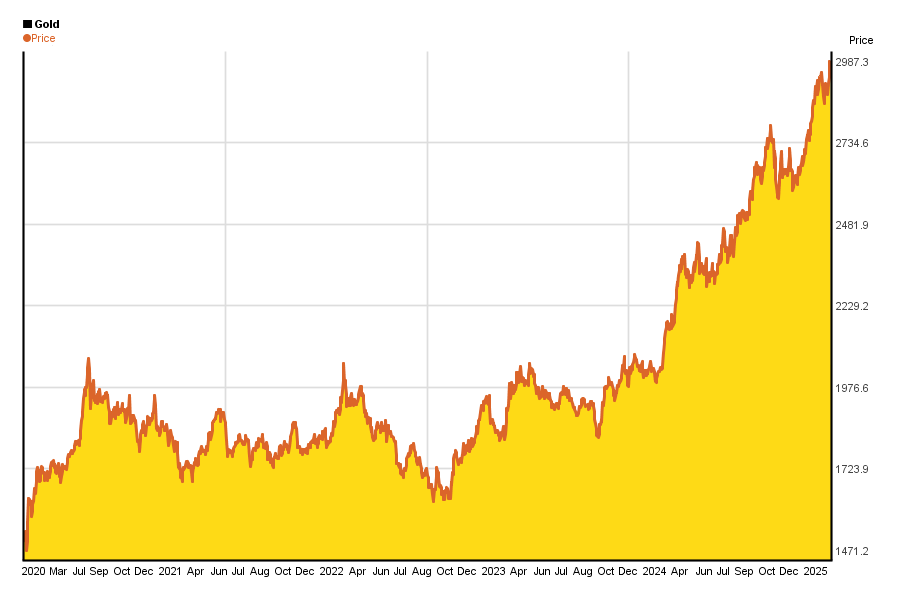
5-year trend (2021–2026): From ~$1,800/oz in 2021, prices climbed steadily through inflation and crises, accelerating post-2024 to break $5,000 in 2026—a structural bull market reflecting diversification and uncertainty.
For investors in Kampala, this outlook reinforces 10 gram gold bars Africa as a timely hedge—affordable entry at ~UGX 6M, with strong potential appreciation.
Frequently Asked Questions
Is 10g gold a good investment?
Yes—10 gram gold bars serve as an excellent inflation hedge and portfolio diversifier. With gold prices around $5,100–$5,170 per ounce in March 2026 (making a 10g bar roughly $1,640–$1,700 USD, or about UGX 6,000,000–6,200,000 depending on premiums and exchange rates), they offer portability, liquidity, and long-term value preservation amid currency fluctuations like the Ugandan shilling.
Where can I buy authentic 10g gold bars in Kampala?
Trusted local options include licensed dealers such as Gold Sales Department (GSD) Uganda, UG Fields, and Gold Buyers Africa. Always choose LBMA-approved or certified sources to avoid counterfeits—verify hallmarks, serial numbers, and purity (99.99%).
How do I store 10 gram gold bars safely?
Use a home safe for small amounts, bank vaults for added security, or insured storage services from reputable Ugandan dealers. Avoid informal hiding spots due to theft risks in urban areas.
What’s the current approximate price of a 10g gold bar in Uganda?
As of March 2026, expect UGX 6,000,000–6,200,000 (based on spot prices around $5,100–$5,170/oz plus 5–10% premiums). Prices fluctuate daily—check live rates from reliable sources before buying.
Are there risks when buying gold bars in Africa?
Key risks include counterfeits, market volatility, and storage security. Mitigate by purchasing from licensed dealers, using authenticity tests (e.g., acid or XRF), and following export/import regulations in Uganda.
How do I sell my 10g gold bars later?
Sell back to dealers like those in Kampala markets, online platforms, or auctions. Aim for close to spot price minus small fees—liquidity is high for certified bars.
What’s the future outlook for gold in Africa?
Bullish—driven by global demand, geopolitical tensions, and Africa’s rising production (over 1,000 tonnes annually). Prices could climb further, making now a strategic time to invest.
Conclusion
In conclusion, 10 gram gold bars Africa combine affordability, portability, and proven wealth protection in volatile markets. From historical significance to modern buying tips and authenticity checks, this guide equips you to invest confidently.
Ready to secure your future? Contact Gold Buyers Africa today for authentic, certified 10g gold bars—reach out via their website or Kampala office for competitive deals, secure transactions, and expert guidance. Start building your gold portfolio now!.