
100 Gram Gold Bar – Price, Purity, Brands & Buying Guide 2026
What Is a 100 Gram Gold Bar?
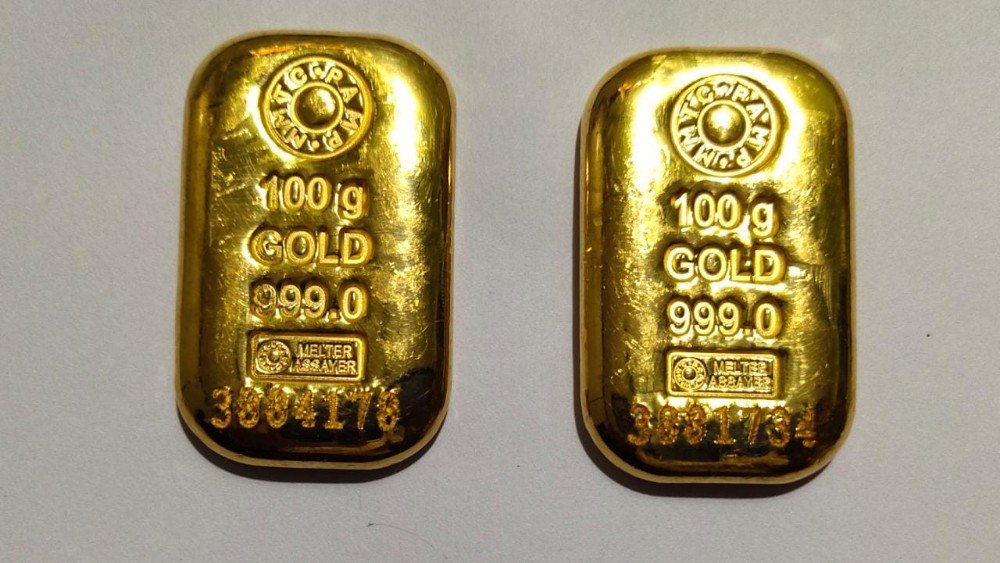
A 100 gram gold bar is a refined bullion product containing exactly 100 grams of pure gold, typically with a fineness of .999 or .9999 (99.9% to 99.99% pure).
These bars are produced by accredited refineries like PAMP Suisse, Valcambi, Perth Mint, or Argor-Heraeus, often stamped with the weight, purity, serial number, and refinery logo.
They come in minted (polished with designs) or cast forms and are packaged with assay certificates for authenticity.
The 100g gold bar meaning refers to this standardized investment-grade ingot, popular in global bullion markets for its portability and value.
In terms of weight, a 100 gram gold bar equals precisely 100 grams, or approximately 3.215 troy ounces (the standard measure for precious metals, where 1 troy ounce = 31.1035 grams).
The 100g size is often called the “sweet spot” for investors because it strikes an ideal balance.
Compared to smaller bars (1-10g) or coins, it offers significantly lower premiums per gram—meaning you pay less markup over the spot price—making it more cost-effective for acquiring larger amounts of gold.
Yet, unlike kilo (1,000g) or larger bars, it’s still highly liquid, easy to store, transport, and sell without excessive difficulty.
This intermediate size provides flexibility: substantial value in a compact form (typically around 45mm x 25mm x 2-3mm), with global recognition and quick resale potential.
In today’s market, with gold trading around $4,460–$4,480 per troy ounce (as of January 2026), a 100g bar represents roughly $14,400–$14,500 in spot value, appealing for meaningful exposure without overwhelming commitment.
A 100 gram gold bar is best suited for serious investors diversifying portfolios, those hedging against inflation or economic uncertainty, and long-term savers building wealth preservation.
It’s ideal for mid-level buyers who want efficient stacking over numismatic coins, prioritizing pure metal content over collectibility.
Preppers may favor it for tangible asset storage, while retirement planners often include it in self-directed IRAs (when from approved refiners).
Beginners might start smaller, but experienced holders appreciate the reduced costs and stability it offers during volatile times.
Overall, the 100g gold bar embodies reliable, tangible wealth in an accessible format.

100 Gram Gold Bar Price Today
The 100 gram gold bar price today fluctuates in real-time based on the global gold market, which operates nearly 24/7 across major exchanges like London, New York, and Shanghai.
As of January 6, 2026, the live gold spot price is approximately $4,480 per troy ounce (or about $144 per gram in USD), making the raw spot value of a 100g gold bar around $14,400–$14,404.
However, actual retail prices for physical 100g bars from reputable dealers typically range from $14,500 to $14,800, depending on the brand (e.g., PAMP Suisse, Valcambi, or Perth Mint), form (cast or minted), and dealer premiums.
These prices update frequently—often every few seconds during trading hours—so always check live quotes from trusted sources like Gold Buyers Africa, JM Bullion, APMEX, or Kitco for the most accurate 100g gold bar cost.
Several key factors influence the 100 gram gold bar price today:
- Gold Spot Price: This is the primary driver, determined by global supply/demand, geopolitical events, central bank purchases, and investor sentiment. Recent highs have been fueled by economic uncertainty and safe-haven demand.
- Currency Exchange Rates: Gold is priced globally in USD, so fluctuations in currencies like EUR, GBP, or INR directly affect local costs. A stronger USD typically lowers prices in other currencies, and vice versa.
- Taxes and Making Charges: Dealer premiums (1–5% over spot for bars) cover refining, assaying, and distribution. Additional costs include sales tax (varies by country/state—e.g., exempt in many EU nations for investment gold), VAT/GST, or import duties. In jewelry-heavy markets, “making charges” add extra for crafted items, but pure bullion bars minimize these.

Country-specific pricing varies significantly due to local taxes, import regulations, and market dynamics:
- United States: Spot-based with low/no sales tax on bullion in most states; expect $14,500–$14,700 for branded 100g bars.
- Europe (EUR): Investment gold is often VAT-exempt; prices around €13,500–€13,800 equivalent.
- United Kingdom (GBP): Capital gains tax-exempt for investment bars; similar low premiums.
- India: Higher due to import duties and GST (3% on bars); 24K bullion rates around ₹12,900–₹13,600 per gram, pushing a 100g bar to roughly ₹1,290,000–₹1,360,000 (influenced heavily by INR-USD rate and local demand during festivals).
In summary, the 100g gold bar cost offers excellent value for investors seeking tangible assets, with lower premiums than smaller denominations. Monitor live charts and consult reputable dealers to capitalize on daily movements.

24K Purity Explained – How Pure Is a 100g Gold Bar?
A 24k gold bar represents the highest level of gold purity available for investment bullion, essentially 100% pure gold with minimal trace impurities.
Most reputable 999 gold bars are stamped as .999 (99.9% pure) or .9999 (99.99% pure, often called “four nines fine”).
The difference between 999 vs 999.9 gold is subtle: .999 fineness means 99.9% gold (0.1% other metals), while .9999 is 99.99% gold (just 0.01% impurities).
In practice, both are considered investment-grade 24K and valued nearly identically, as the extra refinement in .9999 offers marginal improvement but higher prestige from top refiners like PAMP Suisse or Valcambi.
Hallmark certification and assay stamps verify this purity. Accredited refiners (LBMA-approved, such as Perth Mint, Argor-Heraeus, or Valcambi) stamp bars directly with the purity (e.g., “999.9”), weight, serial number, and refinery logo.
Many include a sealed assay certificate—a card detailing the exact purity, weight, and authenticity, often with matching serial numbers for tamper-proofing.
Unlike jewelry, bullion bars don’t require independent government hallmarks (e.g., UK assay offices), as the refiner’s reputation and LBMA accreditation serve as the guarantee.
Purity matters greatly for resale. Higher fineness (.999 or .9999) ensures maximum value based on spot price, with low or no deductions—dealers pay near-full melt value for recognized brands.
Lower purity or unverified bars risk discounts, testing fees, or rejection. In volatile markets, a certified 24k gold bar provides liquidity and trust, making it ideal for investors seeking reliable wealth preservation.
Top 100 Gram Gold Bar Brands (Trusted Worldwide)
When choosing the best 100 gram gold bar, investors prioritize brands from LBMA-accredited refineries for guaranteed purity (.9999 fine), authenticity, and superior liquidity.
These 100g gold bar brands dominate global markets due to their impeccable reputation, innovative security features, and strong resale value—often fetching near-spot price with minimal discounts from dealers worldwide.
PAMP Suisse leads as the most sought-after brand.
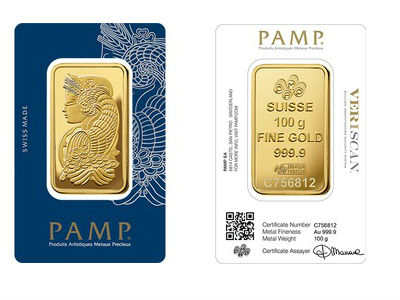
Famous for its iconic Lady Fortuna design, PAMP bars feature Veriscan® technology (microscopic surface scanning for authenticity verification) and come sealed in tamper-proof assay packaging with matching serial numbers.
This Swiss refiner’s prestige commands slight premiums on purchase but ensures top resale value and instant recognition.
Valcambi Suisse, another Swiss powerhouse, offers sleek minted bars, often in CombiBar format (scored for easy division into smaller units).
Known for precision engineering and LBMA approval, Valcambi provides tamper-evident packaging and assay certificates, delivering excellent resale liquidity—dealers rarely question their authenticity.
Australia’s Perth Mint stands out with its government-backed guarantee and iconic swan logo.
These cast or minted 100g bars include serial numbers and secure assay cards, benefiting from state sovereignty for added trust.
Perth Mint bars excel in resale, especially in Asia-Pacific markets, with consistent demand and low buyback spreads.
Credit Suisse, though production has shifted post-acquisition, remains highly trusted for legacy bars featuring the classic statue design.
Sealed in assay packaging, these bars maintain strong resale value due to historical brand equity and LBMA standards—still widely accepted by dealers globally.
Other notable options include local certified refineries like Argor-Heraeus (Swiss, kinegram security), Metalor, Umicore, or Asahi—all LBMA-approved with robust tamper-proof packaging and serializations.
These provide comparable reputation and resale performance, often at lower premiums than premium designs.
Across all top brands, intact tamper-proof packaging preserves full value; damaged seals can reduce buyback offers.
For maximum resale, stick to LBMA-accredited names—the gold standard for trust and liquidity in the best 100 gram gold bar investments.
Why Invest in a 100 Gram Gold Bar?
Investing in a 100 gram gold bar is a smart choice for those seeking tangible wealth preservation in uncertain times.
As a physical gold bar investment, it offers direct ownership of .9999 pure gold without counterparty risk—meaning you hold the asset outright, immune to bank failures or market crashes.
Gold has historically served as a hedge against inflation, maintaining purchasing power when fiat currencies weaken due to excessive money printing or economic instability.
With gold spot prices around $4,480 per ounce in early 2026, a 100g bar (about 3.215 troy ounces) provides meaningful exposure worth roughly $14,400 at spot.
Key benefits include high liquidity: Recognized LBMA brands sell quickly to dealers worldwide, often at near-spot prices with minimal spreads.
The 100g size strikes a balance with lower premiums than smaller bars (typically 1-3% over spot vs. 5-10% for 1-10g items), making it cost-efficient for stacking larger amounts.
It’s also easy to store—compact (around the size of a credit card but thicker), fitting securely in home safes, bank deposit boxes, or vaults without excessive space or insurance costs.
Compared to alternatives:
- Gold coins: Popular sovereign coins (e.g., Eagles, Maple Leafs) offer similar purity but higher premiums (3-8%) due to minting and collectibility. They provide divisibility for smaller transactions but less value per gram than bars.
- Gold ETFs: Convenient paper exposure tracking spot prices with low fees (~0.2-0.4%), easy trading, and no storage hassles. However, they lack physical possession, carry counterparty risk, and may underperform physical gold long-term due to expenses or tracking errors.
-
Jewelry: Offers aesthetic value but poor investment returns—high making charges (10-30%), lower purity (often 18-22K), and resale at melt value minus fees erode profits.For serious investors prioritizing purity, efficiency, and control, buying gold bars for investment—especially 100g—delivers superior long-term benefits in portfolio diversification and crisis protection.

100 Gram Gold Bar vs Other Gold Weights
Choosing the right gold bar size is crucial for optimizing your investment in terms of cost, liquidity, and practicality.
The 100g gold bar is widely regarded as a “sweet spot” in gold bar sizes comparison, offering a strong balance.
It provides more gold per dollar than smaller bars while remaining far more manageable than larger ones.
Here’s a breakdown, focusing on premium over spot price, liquidity (ease of resale), and affordability (entry cost based on current ~$144/gram spot).
| Aspect | 50g Bar | 100g Bar | 1kg Bar (1000g) |
|---|---|---|---|
| Approx. Spot Value | ~$7,200 | ~$14,400 | ~$144,000 |
| Typical Premium | 4-7% over spot | 2-4% over spot | 1-2% over spot |
| Liquidity | High – easy to sell quickly | Excellent – highly demanded globally | Good for bulk, but slower for individuals (harder to divide/sell portions) |
| Affordability | More accessible for beginners | Balanced entry for serious investors | Requires significant capital; best for institutions or high-net-worth |
| Storage/Portability | Very compact and easy | Compact, fits in small safes | Bulky, often needs professional vault storage |
| Best For | Incremental stacking, gifting | Cost-efficient mid-level investing | Maximum value per gram, long-term holding |
50g vs 100g: The 50g bar is slightly more affordable upfront and highly portable, making it ideal for newer investors or those building positions gradually.
However, it carries a higher premium per gram, meaning you get less actual gold for your money compared to the 100g.
100g gold bar vs 1kg:
The 1kg bar offers the lowest premium—saving significantly on larger purchases—but its high cost and size reduce liquidity for average buyers.
Selling a full kilo quickly can be challenging, and it often requires secure vaulting. The 100g provides similar low premiums to the kilo while being far easier to store, transport, and liquidate.
Overall, the 100g strikes the optimal balance for most private investors: substantial value without excessive premiums or liquidity trade-offs.
How to Buy a 100 Gram Gold Bar Safely
Buying a 100 gram gold bar safely requires caution to avoid counterfeits and scams.
Follow this step-by-step guide to ensure authenticity and secure transactions from reputable sources.
1. Choose a certified seller:
Stick to established, LBMA-accredited dealers like Gold Buyers Africa, JM Bullion, APMEX, Kitco, SD Bullion, or local authorized mint retailers (e.g., Perth Mint distributors).
Check reviews on Trustpilot or BBB, verify years in business, and confirm they sell only branded bars from trusted refiners (PAMP, Valcambi, etc.).
Avoid marketplaces like eBay or unknown online sellers—risk of fakes is high.
2. Check hallmarks and assay:
Upon receipt, inspect for clear stamps: refinery logo, weight (“100g”), purity (“.9999” or “999.9”), and serial number.
Premium bars come sealed in tamper-proof packaging with a matching assay certificate. Use a loupe or app to verify details.
3. Verify invoice and purity:
Ensure the invoice matches the bar’s serial number, weight, and description.
Reputable dealers provide detailed receipts for resale proof. Optionally, test purity with a sigma metalytics tester or XRF at a local jeweler.
4. Use secure payment methods:
Opt for bank wire transfers (often discounted), credit cards (for buyer protection), or PayPal (where available).
Avoid checks, crypto, or unsecured methods that offer no recourse.
5. Demand insured delivery:
Choose tracked, fully insured shipping (e.g., via USPS Registered, UPS, or Brinks). Require signature on delivery and discreet packaging—no external markings indicating valuables.
Store in a safe or bank vault immediately.
Trust signals like SSL encryption 🔒, clear return policies, and live chat support boost confidence.
By following these steps, you’ll minimize risks and secure genuine investment-grade gold.
Storage & Insurance for 100g Gold Bars
Proper storage and insurance are essential to protect your 100g gold bar investment from theft, damage, or loss.
The compact size makes it versatile, but security should always be prioritized.
1. Home safe:
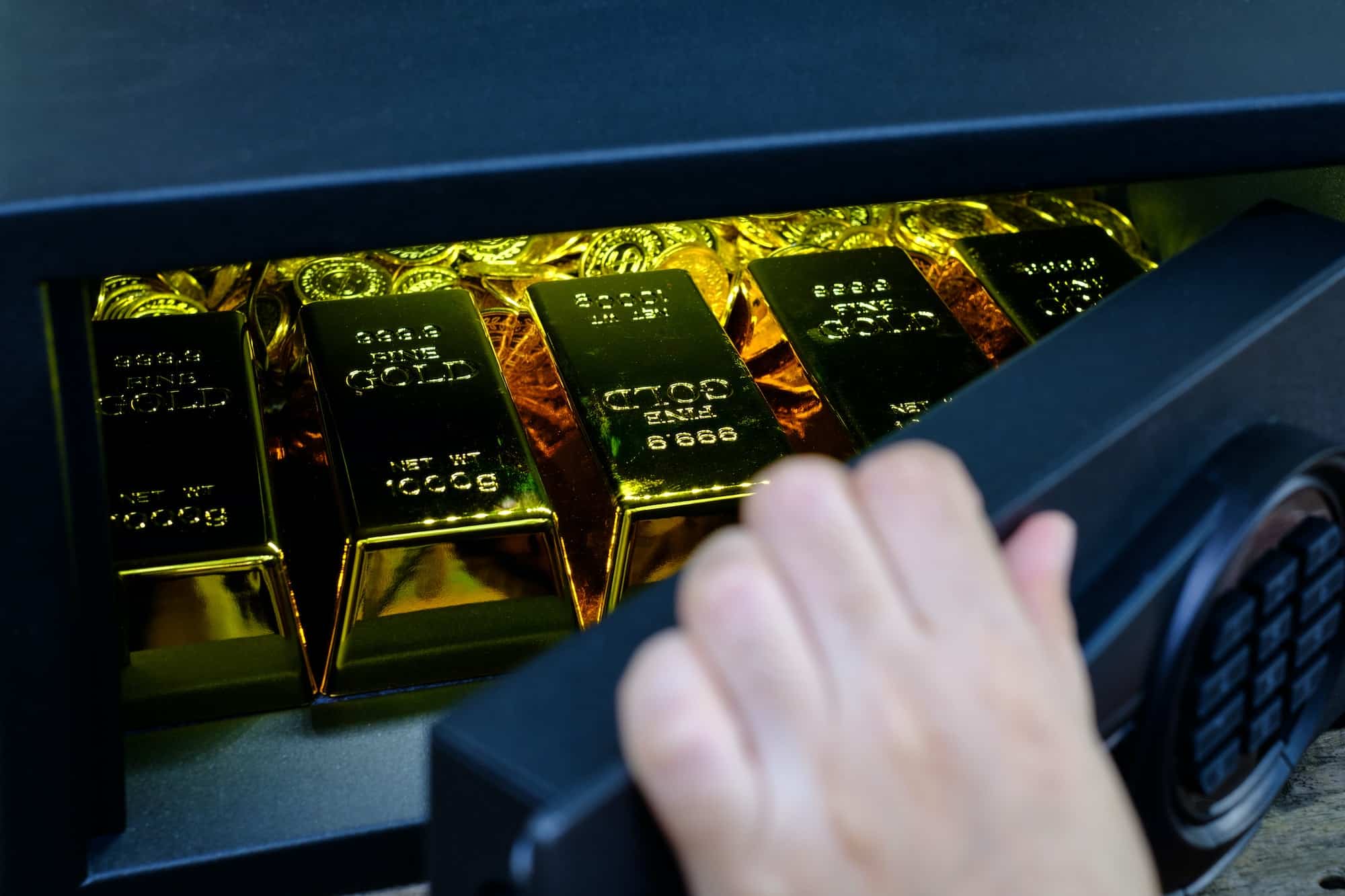
A popular option for quick access and privacy. Choose a bolted-down, fireproof safe rated for valuables (e.g., UL Class 350 for fire resistance).
Diversify hiding spots and avoid obvious locations.
Pros: Full control, no fees.
Cons: Higher theft risk if discovered.
2. Bank locker (safety deposit box):
Offers excellent security with bank-grade vaults and limited access.
Annual fees range from $50–$300 depending on size and location.
Pros: Protected from home burglaries and fires.
Cons: No bank insurance coverage, limited hours, and potential privacy concerns.
3. Professional vault storage:
Services like Brinks, Loomis, or allocated vaults (e.g., via dealers) provide segregated, audited storage with armed security. Fees are typically 0.5–1% annually.
Pros: Highest security, full insurance often included. Ideal for larger holdings.
4. Insurance importance:
Neither home safes nor bank lockers automatically insure contents—standard policies often exclude or limit precious metals.
Add a rider to your homeowner’s/renter’s insurance or get specialized precious metals coverage (document with photos, invoices, and serial numbers).
Vault services usually include it. This safeguards against unforeseen risks, ensuring peace of mind.
Choose based on your risk tolerance and holding size for optimal protection.
Is a 100 Gram Gold Bar Easy to Sell? (Liquidity)
Yes, a 100 gram gold bar is highly liquid and easy to sell, especially from reputable LBMA-accredited brands like PAMP Suisse or Valcambi.
Its size offers excellent resale potential—more substantial than small bars or coins yet far easier to move than kilo bars—making it a favorite for quick transactions in global markets.

The resale process is straightforward:
Contact online dealers (e.g., Gold Buyers Africa, JM Bullion, Kitco, APMEX) for instant quotes, ship insured, or visit local bullion shops/pawn dealers for in-person sales.
Keep the bar in original tamper-proof packaging with assay certificate for maximum value—dealers verify weight, purity, and authenticity on-site (often using scales and testers)
Payment is typically via check, wire, or cash, often within days.
Most major dealers offer transparent buyback policies, paying close to spot price (currently ~$4,480/oz as of January 2026, valuing a 100g bar at ~$14,400 spot) minus a small spread (1-3%).
Branded bars fetch the best rates with minimal deductions.
Tax considerations vary by country: In the US, profits are taxed as collectibles (up to 28% long-term capital gains).
UK investment bars may incur CGT if gains exceed allowances.
In India, short-term gains are taxed at income slab rates, long-term at 20% with indexation.
Always document purchase invoices for accurate reporting.
Overall, the 100g bar’s global recognition ensures fast, reliable liquidity.

Why Buy 100 Gram Gold Bars from Gold Buyers Africa
When you choose Gold Buyers Africa for your 100 gram gold bar purchase, you’re not just buying a product — you’re investing with a trusted partner who puts transparency, authenticity, and customer value first.
1. Certified 24K Purity & Genuine Assay
All our 100 gram gold bars are:
-
100% genuine 24 karat (999.9) fine gold
-
Certified by internationally recognized assayers
-
Hallmarked with official weights, serial numbers, and refinery stamps
This means zero guesswork — what you see is what you truly own. Authenticity guaranteed.
2. Competitive Prices Based on Live Gold Rates
We price our gold bars transparently, driven by:
-
Current global gold spot prices
-
Real-time market movements
-
Minimal premiums
You always get market-aligned pricing — no hidden markups, no surprises.
3. Trusted Brands and Refineries
Gold Buyers Africa sources bars from reputable global refineries known for quality and acceptance worldwide, including:
-
PAMP Suisse
-
Valcambi
-
Credit Suisse
-
Other certified refineries
This ensures maximum resale value, liquidity, and trust.
4. Secure & Insured Delivery Across Africa
We know gold is valuable — so we make sure yours reaches you safely:
-
Fully insured shipping
-
Discreet packaging
-
Tracking and peace of mind from purchase to doorstep
Whether you’re in Nairobi, Kampala, Lagos, or Johannesburg, we bring gold to you securely.
5. Flexible Payment Options
To make buying easier we offer:
-
Bank transfers in local currency
-
Mobile money payments (where available)
-
Safe and verified payment gateways
This flexibility reduces friction and makes your purchase smooth.
6. Expert Guidance & Customer Support
Gold investment can be confusing. That’s why our team:
-
Helps you understand gold pricing
-
Answers all questions before you buy
-
Offers insights on storage and resale
We’re not just sellers — we’re your gold investment partner.
7. Strong Buyback & Resale Support
Unlike regular dealers who make you hunt for buyers later, we offer:
-
Buyback options
-
Resale support if you decide to liquidate
-
Fair, transparent pricing based on market rates
This ensures your gold stays liquid and valuable.
8. Trusted by Thousands of Customers
Gold Buyers Africa has built a reputation for:
⭐ Reliability
⭐ Real products
⭐ Repeat buyers
We prioritize long-term satisfaction over quick sales.
In Summary — Why Choose Us
| Feature | Gold Buyers Africa |
|---|---|
| Authentic 24K Gold | ✅ |
| Live Market Pricing | ✅ |
| Top Brand Refineries | ✅ |
| Secure Delivery | ✅ |
| Flexible Payments | ✅ |
| Expert Support | ✅ |
| Buyback Options | ✅ |
You’re not just buying gold — you’re buying trust, value, and an investment that stands the test of time.
FAQs About 100 Gram Gold Bars
Is a 100g gold bar a good investment?
Yes, it’s an excellent choice for many. The 100g size offers lower premiums than smaller bars, high liquidity, and easy storage—making it cost-effective for hedging inflation, diversifying portfolios, or long-term wealth preservation. With gold’s historical performance as a safe-haven asset, a branded 100g bar from LBMA refiners provides tangible ownership without counterparty risk, outperforming jewelry or smaller denominations in efficiency.
Is 100 gram gold bar hallmarked?
Investment-grade 100g bars aren’t “hallmarked” in the traditional jewelry sense (e.g., BIS in India), but they feature refinery markings: weight, purity (.9999), serial number, and logo. Reputable brands include tamper-proof assay certificates verifying authenticity. These refiner stamps and certificates serve as the hallmark equivalent, ensuring global trust.
How much is 100g gold worth today?
As of January 6, 2026, the gold spot price is approximately $4,480 per troy ounce ($144 per gram), valuing a 100g bar at around $14,400 spot. Retail prices from dealers add 1-4% premium, so expect $14,500–$14,800 for branded bars. Prices fluctuate—check live quotes from Kitco or JM Bullion.
Can I sell it anytime?
Absolutely—100g bars are highly liquid. Sell to online dealers (APMEX, Kitco) for quick buybacks near spot, or local shops. Keep original packaging and assay intact for best prices. Resale is fast globally, often within days.
Is GST/tax applicable?
It depends on location: In the US, no federal sales tax on bullion (state varies); capital gains tax (up to 28%) on profits. EU investment gold is VAT-exempt. India: 3% GST on bars, plus import duties. UK: CGT-exempt for investment bars. Always consult local tax rules and keep invoices for reporting.
These answers highlight why 100g bars remain popular for reliable, accessible gold investment.
Final Verdict – Should You Buy a 100 Gram Gold Bar?
If you’re looking for a smart, secure, and time-tested investment, a 100 gram gold bar is a strong choice.
It strikes the perfect balance between affordability and value, offering lower premiums than smaller bars while remaining easier to buy, store, and resell than very large bullion sizes.
For investors who want tangible wealth protection, gold continues to act as a reliable hedge against inflation, currency fluctuations, and economic uncertainty.
A 100g gold bar also gives you high purity (24K / 999.9 fine gold), global acceptance, and excellent liquidity. Whether you’re a long-term investor, a portfolio diversifier, or someone safeguarding wealth for the future, this size provides flexibility without compromising on quality or trust.
When purchased from a reputable and certified seller, it becomes an asset you can confidently hold, pass on, or liquidate when needed.
In short, if your goal is stable value, long-term growth, and peace of mind, buying a 100 gram gold bar is a decision that makes financial sense today—and for years to come.
👉 Buy Now to secure your gold at today’s price
👉 Check Price for live market rates
👉 Contact Us for expert guidance and secure purchasing