
Current Gold Market | 10 Things Every Investor Should Know
What is the Current Gold Market?
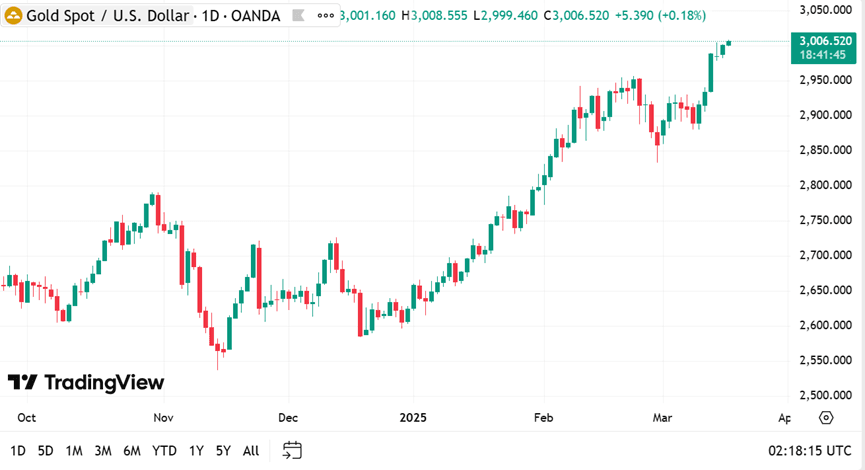
The current gold market in 2025 is experiencing a significant rally, with prices reaching record highs.
This surge is driven by factors such as geopolitical tensions, a weaker US dollar, range-bound interest rates, and robust investment demand.
Analysts and institutions like the World Gold Council forecast a slight upward bias for the gold price, with expected gains of 0%-5% in the latter half of 2025.
However, the market remains volatile with potential for further rises if economic and geopolitical uncertainties intensify, or declines if tensions ease.
As of August 25, 2025, gold prices are approximately $3,372 per ounce, $108.53 per gram, and around $108,531 per kilogram.
The gold market remains strong with sustained demand driven by inflation concerns, geopolitical tensions, and central bank buying.
Prices fluctuate based on US dollar strength, interest rate expectations, and global economic data.
Investors view gold as a reliable safe haven and inflation hedge amid ongoing uncertainties.
Market momentum suggests potential continued price gains, supported by dovish monetary policy signals and risk aversion globally.
“For the latest detailed rates, check out our comprehensive guide on the gold market price per gram, updated daily with spot prices, regional comparisons, and purity breakdowns.”
Why gold remains the world’s most trusted asset
Gold continues to be the world’s most trusted asset due to its historical stability, status as a safe-haven in times of economic uncertainty, and intrinsic value.
It is highly favored by investors and central banks as a hedge against inflation, currency devaluation, and geopolitical risks.
Central bank purchases remain strong, reinforcing gold’s role as a key diversification tool away from traditional fiat currencies.
Global gold prices today (per gram, ounce, kilo)
-
Price per ounce: Around $3,348 (as of August 2025) with forecasts suggesting it may trade between $3,100 to $3,600 for the remainder of the year.
-
Price per gram: Approximately $107.70 (based on $3,348/ounce divided by 31.1 grams per ounce).
-
Price per kilo: Roughly $107,700 (multiplying gram price by 1000).
-
These prices represent a roughly 26% increase year-to-date in 2025, maintaining gold’s position as one of the best-performing asset classes
“Explore the latest current gold market trends and gold price per gram to better understand the advantages and disadvantages of investing in gold in 2025, helping you make informed investment decisions.”
Gold Price Trends 2025
Current global spot price of gold
As of August 25, 2025, the global spot price of gold is approximately $3,414.70 per ounce.
The price remains volatile within a trading range of around $3,100 to $3,600 for the year, maintaining near record highs achieved in 2024 and early 2025.
Daily, weekly, and yearly price movement
-
Daily: Gold prices fluctuate mildly with daily changes around -0.1% to 0.1%.
-
Weekly: The past week saw gold price movements generally within a 1.5% range, reflecting cautious market sentiment amid geopolitical and economic uncertainties.
-
Yearly: Year-to-date, gold has surged about 26% to 34% in 2025, outperforming many traditional asset classes thanks to ongoing geopolitical risks, weak USD, and low interest rates.
How inflation, currency, and global economy impact gold
-
Inflation: Gold is traditionally a hedge against inflation; as inflation rises and real interest rates stay low, gold attracts more investment.
-
Currency: A weaker US dollar boosts gold prices because gold is dollar-denominated and becomes cheaper for holders of other currencies.
-
Global economy: Economic uncertainty, geopolitical tensions, and trade wars generally increase gold’s safe-haven demand, driving prices up. Conversely, easing tensions or economic stability may reduce demand and lower prices.
Gold market comparison: 2020 vs 2025
-
In 2020, gold prices saw a significant spike due to the COVID-19 pandemic, reaching highs above $2,000/oz amid economic uncertainty and stimulus.
-
By 2025, prices have climbed considerably further, breaking records around $3,500/oz, supported by persistent inflation concerns, geopolitical risks, and central bank demand.
-
The market in 2025 shows a more structural bull run with strong institutional and central bank buying, versus the more pronounced pandemic-driven spike in 2020.
Regional Gold Market Analysis
Africa: Uganda, Ghana, Mali, DRC
African countries such as Uganda, Ghana, Mali, and the Democratic Republic of Congo (DRC) are significant gold producers with rich artisanal and industrial mining sectors.
Ghana and Mali are among Africa’s top gold producers, contributing heavily to national revenues through exports.
The DRC, rich in minerals, is also increasing gold output despite regulatory challenges.
Uganda is emerging as a new player, with investments boosting gold mining activities.
These markets face opportunities from rising global gold prices but also challenges related to governance, artisanal mining, and export logistics.
Middle East: Dubai/UAE gold hub
Dubai and the wider UAE remain one of the world’s most important gold trading hubs.
Dubai’s Gold Souk continues to draw international buyers attracted by tax-free policies, competitive pricing, and cultural affinity for 22K gold jewelry.
Despite record gold prices exceeding $3,400 per ounce in mid-2025, demand for traditional gold jewelry is softening due to high prices, with a shift toward diamonds and lighter pieces.
The UAE gold market is positively influenced by geopolitical tensions, US tariff impacts, and strong Asian demand, particularly from Indian expatriates.
Institutional inflows into gold-backed ETFs have surged, amplifying bullish momentum in the region.
Asia: India, China demand drivers
India and China dominate global gold demand as the top consumers. India’s gold purchases are driven by cultural factors such as weddings and festivals, but high prices have begun tempering demand slightly in 2025.
China’s market sees steady central bank purchases and resilient private buying despite fears of economic slowdown.
Both countries influence global gold prices significantly, with buying behavior in India especially impacting Gulf markets like the UAE.
Import-export flows, demand for investment gold, and jewelry consumption remain robust but are sensitive to price volatility.
Europe: Switzerland, UK investment trends
Switzerland and the UK serve as key gold refining and investment centers in Europe.
Switzerland remains a global refining powerhouse, processing large quantities of gold for supply to global markets.
The UK has seen growing interest in gold as a safe-haven investment amid inflation concerns and geopolitical uncertainty in 2025.
Investments in gold ETFs and physical bullion remain strong, supported by institutional investors and private wealth preservation strategies.
Both countries benefit from stable regulatory environments and developed financial markets that underpin gold’s role as a portfolio diversifier.
USA: COMEX & Wall Street influence
The USA’s gold market is anchored by the COMEX futures exchange, where price discovery and trading volumes heavily influence global pricing.
Wall Street investment firms and hedge funds actively trade gold contracts, with recent years showing increased participation in gold through ETFs and options.
US monetary policy, Federal Reserve actions, and dollar valuation strongly impact gold prices, as seen in 2025’s price movements driven by inflation expectations and geopolitical risks.
The US market acts as a bellwether for global investor sentiment on gold.
“For the latest detailed rates, check out our comprehensive guide on the gold market price per gram, updated daily with spot prices, regional comparisons, and purity breakdowns.”
Gold Investment Demand 2025
Central banks’ gold reserves 2025
Central banks continue to aggressively increase their gold reserves in 2025, with Q1 purchases reaching 244 tonnes.
Despite a slight decrease from 310 tonnes in Q1 2024, these acquisitions exceed the five-year quarterly average by 25%.
This marks the 16th consecutive year of rising central bank gold reserves, with over 1,000 tonnes added annually since 2022, up from an average of 473 tonnes per year between 2010 and 2021.
Poland leads the buying trend, followed by significant accumulation in China, Kazakhstan, and other nations.
Central banks view gold as a critical diversification from the US dollar, a hedge against inflation, currency devaluation, and geopolitical risks.
Central banks hold roughly 35,500 tonnes total, around 17% of all mined gold, providing market stability through their long-term accumulation strategies.
Institutional investors (hedge funds, ETFs)
Institutional investors including hedge funds, gold ETFs, and large asset managers remain key sources of demand. Gold-backed ETFs have seen inflows due to sustained inflation concerns and geopolitical uncertainty.
Hedge funds actively trade gold futures and options on exchanges like COMEX, driving price discovery and liquidity. These investors capitalize on gold’s safe-haven status, portfolio diversification benefits, and rising long-term price support from central bank buying and retail demand.
The increased institutional presence has contributed to gold’s record price highs near $3,500 per ounce in 2025.
Retail gold buyers (jewelry & bullion)
Retail demand remains strong in emerging markets like India, China, and the Middle East, where cultural affinity for gold jewelry sustains steady gold purchases, despite high prices.
Investment demand in physical gold bullion also grows among retail buyers seeking protection against inflation and currency risks.
However, very high gold prices in 2025 have tempered some jewelry demand, encouraging consumers to prefer lighter designs or alternative precious stones.
Bullion coins and bars remain popular for personal wealth preservation and gifting.
Safe-haven demand during global uncertainty
Gold’s safe-haven status is reinforced during periods of economic, geopolitical, and financial instability.
In 2025, with ongoing global tensions, inflation concerns, and fears of monetary system disruptions, demand for gold as a crisis hedge remains elevated.
Central banks, institutions, and retail investors all seek refuge in gold to mitigate risks related to currency volatility, sanctions, and inflationary pressures.
This safe-haven demand underpins both price strength and market liquidity, proving gold’s enduring appeal as a trusted store of value amid uncertainty.
Gold Supply Side (Mines & Production)
Top gold producing countries
In 2025, the top gold producing countries remain largely consistent with recent years, dominated by:
-
China: The world’s largest producer, expected to output around 380 metric tons of gold, driven by large modern mining complexes in provinces like Shandong and Henan.
-
Russia: Producing approximately 310 metric tons, with major mines in Siberia and the Far East.
-
Australia: Estimated to produce 320 metric tons, with key mines located in Western Australia.
-
Canada and United States follow, producing around 200 and 160 metric tons respectively.
Current mining output in Africa, China, Russia, Australia
-
Africa contributes significantly to global gold supply, led by Ghana (about 135 tons annually), South Africa, Mali, Burkina Faso, Tanzania, and DRC, with many artisanal and industrial mining operations. West African countries especially play a pivotal role due to favorable geology and increasing foreign investment.
-
China leads with integration of modern technology for automation, efficiency, and sustainability in mining.
-
Russia focuses on new mine development and energy-efficient processing facilities.
-
Australia continues consistent production increases, emphasizing sustainable and high-tech mining practices.
Uganda & Africa’s role in gold exports
Uganda is an emerging gold producer and exporter in Africa, contributing notably to the continent’s overall gold output.
African exports are critical to the global market, with countries like Ghana and Mali dominating mining exports.
Gold is a major export commodity for several African nations, representing a key source of foreign exchange and government revenue.
Challenges include artisanal mining regulation, supply chain traceability, and geopolitical issues, but investment inflows in mining infrastructure are bolstering capacity and production.
Recycling of gold (scrap gold market)
Gold recycling remains a vital component of the global supply chain, accounting for around 25-30% of total annual gold supply.
Scrap gold from jewelry, electronics, and industrial sources is reprocessed and reintroduced into the market, helping to buffer supply against fluctuating mine production. Increased environmental and sustainability awareness is boosting recycling efforts.
The scrap market also responds dynamically to gold price fluctuations; high prices encourage more recycling as owners sell old gold for profit.
Scrap sourcing is concentrated in developed markets but also growing in developing economies.

Forms of Gold in the Market
Gold bullion (bars, coins, rounds)
Gold bullion is the purest form of gold traded on markets and highly favored by investors. It includes:
-
Gold bars: These come in various sizes from small gram bars to large kilogram bars, often with purity of 99.5%-99.99%. Bars are popular for large investments due to their low premium over spot price.
-
Gold coins: Minted coins like the American Eagle, Canadian Maple Leaf, and South African Krugerrand are popular for both investment and collectors. They combine gold value with legal tender status.
-
Gold rounds: These are privately minted gold pieces without legal tender status but valued similarly to coins and bars for investment and gifting.
Gold bullion is globally recognized for ease of storage, transport, and liquidity, making it a preferred choice for long-term wealth preservation and portfolio diversification.
Gold jewelry (22K, 18K, 14K demand)
Gold jewelry remains a significant form of gold demand, especially in culturally rich markets:
-
22K gold (91.7% purity) is highly popular in India, Middle East, and parts of Africa for weddings and festivals.
-
18K gold (75% purity) blends purity and durability, favored in Western markets and luxury jewelry.
-
14K gold (58.3% purity) is common in the US and Europe due to its hardness and affordability.
Jewelry demand can fluctuate with price trends, and while it sometimes carries a higher premium than bullion, it remains a culturally significant store of value and wealth transfer mechanism.
Digital gold & gold-backed ETFs
-
Digital gold: This relatively new form allows investors to buy fractional gold online, with holdings backed by physical gold stored securely in vaults. It offers convenient access without handling physical gold.
-
Gold-backed ETFs: Exchange-Traded Funds hold physical gold or gold-related assets, enabling investors to trade gold exposure easily on stock exchanges. ETF holdings surged (>100 tonnes increase YTD in 2025), driven by global economic uncertainty and investor appetite for flexible, liquid gold investments.
These modern investment formats democratize access and boost gold market liquidity, attracting institutional and retail participants alike.
Central bank reserves
Central banks worldwide maintain gold reserves as a strategic asset, constituting around 17% of all mined gold.
These reserves bolster economic security, diversify reserve portfolios, and hedge against currency risk and inflation.
In 2025, central banks continued to increase their gold holdings, albeit at a moderated pace compared to previous years, reinforcing gold’s role as an essential financial asset.
Market Drivers & Influences
US Dollar strength vs gold
The traditional relationship between the US dollar and gold remains a core market dynamic in 2025: a stronger US dollar tends to pressure gold prices lower because gold is priced in dollars, making it more expensive for buyers holding other currencies.
For example, in July 2025, spot gold fell 0.6% when the dollar index strengthened by 0.3%. However, exceptions occur during extreme market stress, when both assets attract safe-haven demand simultaneously.
Central bank policies, interest rate differentials, inflation expectations, and geopolitical factors also influence this inverse correlate.
Inflation & interest rates
Inflation concerns drive gold demand as investors seek a hedge against currency devaluation.
Persistently high inflation alongside low or range-bound real interest rates makes gold attractive.
Rising interest rates typically increase the opportunity cost of holding non-yielding assets like gold, putting downward pressure on prices.
However, in 2025, mixed signals from global central banks and inflation persistence have maintained strong gold appeal, especially amid economic uncertainty and expectations of future monetary easing.
Geopolitical tensions & wars
Geopolitical instability is a major catalyst for gold’s safe-haven demand. In 2025, ongoing conflicts and tensions (e.g., Russia-Ukraine, Middle East) reinforce gold’s role as a crisis hedge.
Periods of heightened conflict see investors flock to gold regardless of dollar strength or interest rate pressures, occasionally disrupting normal market relationships.
Political instability, trade disputes, and sanctions amplify this effect, making gold a key asset during uncertain times.
Oil & commodity market correlation
Gold prices are often correlated with oil and commodity markets, as rising energy prices can stoke inflation, indirectly boosting gold demand.
Higher oil prices increase production costs and fuel inflationary pressures, pushing investors towards inflation hedges like gold.
Commodity market volatility and supply chain disruptions in raw materials can also signal economic stress, encouraging safe-haven investment flows into gold.
This interconnectedness grows with global economic complexity and policy uncertainty.
Current Gold Market Trends
The current gold market in 2025 is marked by record-high prices around $3,400 per ounce, driven by strong central bank purchases, geopolitical tensions, and persistent inflation fears.
Demand from institutional investors and retail buyers remains robust despite price volatility.
Supply constraints from top producers like China, Russia, and Africa add upward pressure, while sustainable mining and digital gold trading gain prominence.
The US dollar’s strength and interest rate movements create fluctuations, but gold’s status as a safe-haven asset endures.
Overall, gold continues to be a favored investment for wealth preservation amid global economic uncertainties.
Current Challenges in Gold Market
Gold smuggling & fake dealers
Gold smuggling remains a significant challenge worldwide, including in major trading hubs like Dubai and emerging markets like Uganda and India.
Smuggling operations exploit regulatory gaps and tax arbitrage, undermining legal trade and government revenue.
Fake dealers and counterfeit gold products also proliferate, especially where regulatory enforcement is weak, posing fraud risks to buyers and reputational damage to the market.
These illicit activities create price distortions, liquidity issues, and trust deficits in the sector.
Regulatory frameworks (Uganda, Dubai, India, US)
Regulatory regimes vary widely:
-
Uganda has been strengthening gold mining and export regulations to curb illegal mining and smuggling, with increasing focus on traceability and certification.
-
Dubai enforces strict regulations and authentication processes to maintain its reputation as a reliable gold trading hub, alongside robust anti-money laundering (AML) frameworks.
-
India’s gold market is governed by import duties, hallmarking standards, and consumer protection laws, with recent efforts to promote transparency and combat tax evasion.
-
The US has comprehensive regulations covering gold trading, including the Commodity Futures Trading Commission (CFTC) oversight, Know Your Customer (KYC) rules, and anti-counterfeiting laws.
Despite these measures, regulatory fragmentation and enforcement gaps remain challenges affecting market integrity.
Impact of taxes, VAT, and export duties
Taxes such as VAT, import duties, and export levies significantly impact gold market dynamics:
-
High tariffs and VAT can increase gold prices, push buyers to informal channels, and encourage smuggling.
-
Countries like India have seen fluctuating import duties aimed at balancing domestic demand and controlling gold outflows.
-
In Uganda and other African countries, export duties aim to capture more value locally but can discourage formal exports if rates are too high.
These fiscal policies create market distortions and sometimes unintended consequences such as broad divergence in gold pricing across markets.
Risks of counterfeit gold & frauds
Counterfeit gold and fraud risks are persistent, especially in less regulated markets.
Sophisticated fake gold products—ranging from plated metals to adulterated alloys—can deceive even experienced buyers.
Fraud cases involve fake certificates, fake hallmarking, and deceptive selling practices. These undermine consumer confidence and expose investors to potential financial losses.
Market participants emphasize the need for stronger authentication technologies, consumer education, and legal enforcement to combat fraud effectively.
Future of Gold Market
Predictions for gold price 2025–2030
Gold price forecasts indicate a bullish trend in the medium to long term. Prices are expected to rise from around $3,500 per ounce in 2025 to between $5,000 and $7,000 by 2030.
Key drivers include persistent inflation, geopolitical instability, sustained central bank purchasing, and economic uncertainty.
Some optimistic forecasts even project prices approaching $8,900 by 2030 under scenarios of high inflation and global risk.
Institutional forecasts like JP Morgan and Goldman Sachs suggest prices could reach $3,700–$3,900 range by late 2025 and steadily climb through the decade.
Gold’s growing recognition as a portfolio diversifier and inflation hedge underpins these predictions.
“Explore the latest current gold market trends and gold price per gram to better understand the advantages and disadvantages of investing in gold in 2025, helping you make informed investment decisions.”
Gold vs crypto debate
The gold vs cryptocurrency debate revolves around their roles as stores of value.
Gold remains the proven safe-haven asset with millennia of use, tangible value, and wide acceptance.
Cryptocurrencies, while volatile and speculative, appeal for their decentralization, potential for high returns, and tech-driven innovation.
In 2025, many investors view gold and crypto as complementary rather than competing assets — gold for stability and long-term wealth preservation, crypto for growth and digital innovation.
Regulatory clarity and market maturation will influence their evolving relationship.
Sustainable gold mining trends
Sustainability is reshaping gold mining, with increasing emphasis on reducing environmental impact and improving social outcomes. Innovations include:
-
Use of renewable energy sources (solar, wind) for mining operations.
-
Adoption of water recycling and pollution reduction technologies.
-
Enhanced transparency and responsible sourcing certifications (e.g., Fairmined, Responsible Jewellery Council).
-
Community engagement programs and benefit-sharing with local populations.
These trends respond to investor and consumer demands for ethical gold and regulatory pressures, positioning sustainable mining as a market advantage.
AI & technology in gold trading
Artificial intelligence (AI) and technology are transforming gold trading and market analysis:
-
AI-driven algorithms analyze market data, sentiment, and macroeconomic trends to optimize trading strategies.
-
Blockchain technology enhances gold supply chain transparency and authenticity verification.
-
Digital platforms facilitate real-time trading, fractional ownership, and automated portfolio management.
-
Machine learning models improve price forecasting accuracy and risk management.
These technological advancements increase market efficiency, liquidity, and accessibility for investors and traders alike, shaping the future landscape of gold markets.
What is the gold market today?
The gold market in 2025 is robust with prices near $3,400 per ounce amid strong demand from central banks, institutional investors, and retail buyers.
Gold remains a top safe-haven asset due to inflation fears, geopolitical tensions, and economic uncertainty.
Supply constraints from major producers add upward pressure on prices. Innovations like digital gold and sustainable mining gain traction, while traditional bullion and jewelry demand persists.
Price fluctuations are influenced by the US dollar strength and interest rates, but gold’s role as portfolio hedge and wealth preserver remains unchallenged.
How much is 1 gram of gold in Uganda today?
As of August 2025, 1 gram of 24K pure gold in Uganda trades at approximately 386,225 Ugandan Shillings (UGX), which equals about $105.50 USD depending on currency fluctuations. The local gold price mirrors international LBMA spot prices with slight premiums based on purity, dealer fees, and supply-demand factors. Prices for lower karat gold such as 22K or 18K are proportionally lower based on gold content. These rates fluctuate daily but remain competitive and transparent relative to global benchmarks.
How much is 1 dollar in gold?
To determine how much gold $1 USD can buy in 2025, divide $1 by the current gold price per ounce (approximately $3,416) and convert to grams (1 ounce = 31.1 grams). Thus, $1 buys about 0.0091 grams of gold. This reflects gold’s high value density; small dollar amounts yield tiny gold fractions but still represent tangible wealth protected from inflation and currency risk.
How much is 1g of gold right now?
Currently, 1 gram of gold is priced around $109.90 USD globally, based on spot prices near $3,416 per ounce. The gram price fluctuates with daily market changes influenced by currency strengths, geopolitical events, and investor demand. Retail premiums may add slightly to the spot rate when buying physical gold bars or coins. Prices in local markets vary based on fees, taxes, and purity levels but closely follow the global spot benchmark.
“For the latest detailed rates, check out our comprehensive guide on the gold market price per gram, updated daily with spot prices, regional comparisons, and purity breakdowns.”
Conclusion & Investment Guide
Key takeaways from current gold market
The gold market in 2025 remains robust, supported by a combination of strong central bank demand, sustained retail and institutional investment, and geopolitical and economic uncertainties.
Gold’s role as a safe-haven asset and inflation hedge is as crucial as ever. Supply constraints from top-producing countries and growing interest in sustainable mining also underscore gold’s long-term value.
Why gold remains a safe investment in 2025
Gold protects purchasing power amid inflation and currency volatility. Unlike volatile equities, gold offers portfolio diversification and lower overall risk.
Central banks’ continued accumulation confirms gold’s monetary importance.
Additionally, technological innovations like digital gold and AI-driven market access are making gold investing more accessible and transparent, reinforcing its safety and appeal.
Actionable advice for investors (buy, hold, sell)
-
Buy: Consider purchasing physical gold (bars, coins) or reputable gold-backed ETFs to build a hedge against inflation and uncertainty. New investors may use dollar-cost averaging to mitigate price volatility.
-
Hold: Existing investors should hold gold as a long-term store of value, especially with prices forecasted to rise towards $5,000-$7,000 per ounce by 2030.
-
Sell: Avoid selling during temporary market dips unless aligned with portfolio rebalancing or cash needs. Selling gold in a falling market often results in realized losses.
-
Always verify sources, prefer physical gold storage for security, and evaluate mining stocks with ESG factors and financial health in mind.
“For the latest detailed rates, check out our comprehensive guide on the gold market price per gram, updated daily with spot prices, regional comparisons, and purity breakdowns.”
Call to Action: Partner with Gold Buyers Africa for Trusted Sourcing
For trusted, ethical sourcing and investment-grade gold, partner with Gold Buyers Africa. Benefit from transparent supply chains, competitive pricing, and expert market insights tailored to investors and businesses in the gold sector.
Secure your gold investments with a reliable partner committed to integrity and quality.