
Historical Gold Performance in the US Market from 1915 – 2026 Trends
Historical Gold performance in the US Market: In the volatile world of investments, gold has long stood as a beacon of stability, especially in the US market.
As of March 2026, gold prices have shattered records, peaking at an astonishing $5,608 per ounce in January amid surging inflation, geopolitical tensions, and economic uncertainty.
This remarkable surge—up over 74% year-over-year from 2025—highlights gold’s historical performance as a resilient asset.
But what exactly defines gold performance? It encompasses price trends, annual returns, volatility, and inflation-adjusted values, all of which paint a picture of gold’s role in portfolios.
For US investors, understanding historical gold performance in the US market is crucial. Gold acts as a hedge against uncertainty, preserving wealth when stocks falter or inflation erodes purchasing power.
Unlike equities, which can plummet during recessions, gold price history shows it often thrives in crises, such as the 2008 financial meltdown or the 2020 pandemic. With the US dollar weakening and central banks stockpiling reserves, gold’s relevance has never been higher.
This comprehensive guide delves into gold’s historical performance from the gold standard era to today’s highs, offering insights for modern portfolios.
We’ll explore key periods, factors influencing gold prices, comparisons with other assets, and future strategies. Whether you’re searching for “gold price history US” or analyzing “inflation-adjusted gold returns,” this article provides data-driven analysis to boost your investment decisions.
Key teasers: Discover how gold jumped 1,800% in the 1970s, its safe-haven role in the 2000s, and projections for $6,000+ by 2027.

The Gold Standard Era: 1915-1971
During the gold standard era, gold prices in the US were tightly controlled, offering minimal volatility but underscoring gold’s foundational role in the economy.
This period, spanning from 1915 to 1971, saw gold backing the US dollar, ensuring currency stability but limiting price growth.
Pre-1933 Stability
Under the Gold Standard Act of 1900, gold was fixed at $20.67 per ounce, promoting economic predictability. This era featured low volatility, with prices fluctuating minimally between $19 and $21 per ounce annually.
Gold’s role? It backed the dollar, facilitating international trade and curbing inflation. For US investors, this meant gold was more a monetary anchor than an investment vehicle.
Here’s a table of annual average gold prices from 1915-1933 (nominal USD per ounce):
| Year | Average Price | High | Low |
|---|---|---|---|
| 1915 | $20.67 | $20.67 | $20.67 |
| 1920 | $20.67 | $20.67 | $20.67 |
| 1925 | $20.67 | $20.67 | $20.67 |
| 1930 | $20.67 | $20.67 | $20.67 |
| 1933 | $20.67 | $20.67 | $20.67 |
(Source: Historical data from Macrotrends and World Gold Council)
Great Depression Shift
The Great Depression prompted drastic changes. In 1933, President Franklin D. Roosevelt revalued gold to $35 per ounce via the Gold Reserve Act, devaluing the dollar by 40% to stimulate the economy.
Private gold ownership was banned, shifting control to the government. Inflation-adjusted returns hovered near 0%, as the fixed price didn’t outpace rising costs.
This move boosted exports but limited gold’s performance for individuals, emphasizing its role in national recovery.
Post-WWII Bretton Woods (1944-1971)
The Bretton Woods system pegged international currencies to the US dollar, convertible to gold at $35 per ounce. Gold performance remained stable with 0% nominal growth, but it correlated positively with US GDP expansion post-war.
Volatility was negligible, making gold a symbol of global stability. However, pressures from Vietnam War spending and inflation built up, setting the stage for the era’s end. Sub-analysis: Gold’s tie to GDP growth (averaging 3-4% annually) reinforced its economic bedrock status.
Overall, this era’s historical gold performance teaches lessons in stability versus growth, with low returns but essential hedging against systemic risks.

Post-Gold Standard Boom and Bust: 1971-1990
The end of the gold standard unleashed gold prices, leading to dramatic booms and busts in the US market. From 1971 to 1990, gold’s historical performance shifted from fixed to market-driven, influenced by inflation and global events.
Nixon Shock and 1970s Surge
President Nixon’s 1971 decision to end dollar-gold convertibility—the “Nixon Shock”—freed gold prices, jumping from $35 to $665 per ounce by 1980, a staggering 1,800% rise.
Key factors: Oil crises (1973, 1979) and stagflation drove demand. Gold outperformed stocks amid high inflation (peaking at 13.5% in 1980).

1980s Decline
After the 1980 peak at $850 per ounce, prices plummeted to the $300s by the late 1980s. Reasons: Paul Volcker’s high interest rates (up to 20%) strengthened the dollar, curbing inflation.
Inflation-adjusted terms, the 1980 high remained unmatched until the 2020s. Volatility spiked, with annual drops averaging -10%.
Performance Metrics
- Annual returns: Explosive in 1979 (+125%), but negative in the 1980s (e.g., -32% in 1981).
- Volatility: High, with standard deviation around 30%.
- Comparison: Gold beat stocks during inflation spikes (S&P 500 down 10% in 1974 vs. gold up 73%).
This period’s gold price history US illustrates gold’s sensitivity to monetary policy, offering high rewards in turbulent times.
Modern Era Volatility: 1990-2010
The 1990s and 2000s marked modern era volatility in gold performance, with stagnation followed by rallies amid tech booms and crises.
1990s Stagnation
Gold prices hovered between $300-400 per ounce, yielding low returns (~-28% decade total). The dot-com boom favored equities, drawing capital away. Inflation was tame (2-3%), reducing gold’s appeal.
2000s Financial Crisis Rally
From $280 in 2000 to $1,900 by 2011, gold surged due to 9/11, the housing crash, and quantitative easing (QE). As a safe haven, it countered stock losses.
Table: Yearly highs/lows (nominal USD per ounce):
| Year | High | Low | Annual Return |
|---|---|---|---|
| 2000 | $312 | $264 | -5.5% |
| 2005 | $536 | $411 | +18% |
| 2008 | $1,011 | $712 | +5.5% (vs. S&P -37%) |
| 2010 | $1,420 | $1,058 | +30% |
Analysis
Gold’s negative correlation with US Treasuries during crises solidified its safe-haven status. Volatility averaged 15%, with strong returns in downturns.

Recent Trends and Record Highs: 2011-2026
The period from 2011 to 2026 represents one of the most dynamic chapters in gold’s historical performance in the US market, transitioning from post-crisis highs to multi-year consolidation, followed by explosive gains amid global disruptions.
Gold prices evolved from a 2011 peak near $1,900/oz through a prolonged dip, a steady recovery, and then unprecedented surges to records exceeding $5,600/oz in early 2026.
This era underscores gold’s role as a safe-haven asset, thriving on uncertainty while facing headwinds from rising rates and strong equities.
2011-2019 Pullback and Recovery
Following the 2011 all-time high of around $1,921/oz (driven by post-2008 QE, European debt fears, and inflation worries), gold entered a multi-year bear phase.
Prices corrected sharply as the Fed tapered QE, interest rates began normalizing, and the US dollar strengthened. By December 2015, gold dipped to a low of about $1,050/oz—a roughly 45% decline from the 2011 peak—marking the trough amid improved economic outlook and equity bull markets.
Recovery began in 2016, fueled by Brexit uncertainty, US election volatility, and renewed central bank easing. Prices climbed steadily, breaking $1,400/oz by 2019.
The rebound accelerated with US-China trade wars (2018-2019), which sparked safe-haven demand and fears of global slowdown.
From the 2015 low, gold delivered solid gains, with an average annual return of approximately +7% over the decade (2011-2019), blending negative years (e.g., -28% in 2013) with positive rebounds (e.g., +18% in 2016). This phase highlighted gold’s resilience as a diversifier when equities faltered.
2020s Pandemic and Inflation Surge
The 2020s marked a dramatic acceleration in gold price history. Starting at around $1,575/oz in early 2020, prices surged amid the COVID-19 pandemic—massive fiscal stimulus, near-zero rates, and unprecedented uncertainty pushed gold above $2,000/oz by summer 2020 (+25-30% that year).
The rally paused in 2021-2022 as the Fed hiked rates aggressively to combat multi-decade inflation peaks (9.1% in 2022), causing temporary dips to the $1,600s.
However, tailwinds returned powerfully: the 2022 Russia-Ukraine conflict triggered energy shocks and geopolitical risks; persistent inflation; central bank gold buying (record levels since 2022); and weakening dollar episodes.
By 2024-2025, gold broke successive barriers—surpassing $3,000/oz in 2025 amid ongoing uncertainties—culminating in a stunning peak of $5,608/oz in January 2026.
This represented explosive momentum, with +74% YOY gains in segments of 2025-2026, driven by ETF inflows, investor diversification, and fears of economic slowdown.

US-Specific Insights
In the US market, gold performance has been heavily influenced by dollar strength—a stronger USD (e.g., during 2013-2015 rate hikes or 2022 Fed tightening) caps gains, while weakness amplifies them (e.g., 2020s stimulus-driven dollar depreciation).
ETF inflows played a pivotal role: SPDR Gold Shares (GLD) saw massive accumulations during crises, with AUM swelling from ~$30B pre-2020 to over $178B by 2026, reflecting retail and institutional demand for easy exposure without physical storage.
Comparison to Dow: Since 2000, gold has delivered strong relative performance in turbulent periods. From ~$280/oz in 2000 to ~$5,100/oz in March 2026, gold achieved roughly +1,700-1,800% cumulative gains (nominal).
The Dow Jones rose from ~10,000 to around ~48,000 (approximate 2026 levels), a ~380% increase—meaning gold outperformed the Dow significantly over this span (gold up ~400-500% in relative terms during key decades, though stocks lead in bull markets with dividends).
Gold’s edge: It provided protection during crashes (e.g., 2008, 2020, 2022 volatility), with lower correlation to equities.
This 2011-2026 era cements gold as a powerful hedge in the US market—from recovery rebounds to record-shattering highs—driven by policy shifts, crises, and diversification trends.
As prices stabilize post-2026 peak, the trajectory reinforces gold’s enduring appeal amid ongoing uncertainties.
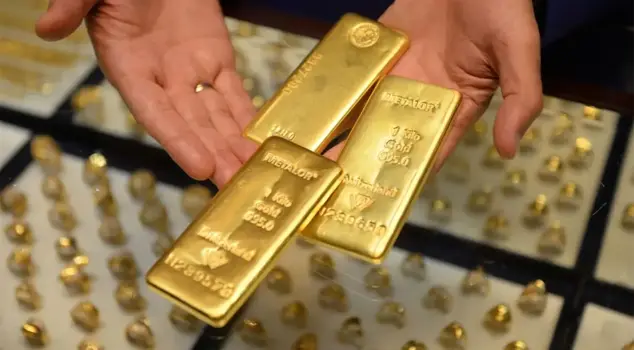
Factors Influencing Gold Performance in the US
Several factors influencing gold prices shape historical gold performance in the US market:
- Economic Factors: Inflation and interest rates—high inflation boosts gold (e.g., 1970s).
- Geopolitical Events: Wars and tensions (e.g., Ukraine 2022) drive safe-haven demand.
- Supply/Demand: Mining output and central bank buying (e.g., 2025 record purchases).
- USD Strength: Weaker dollar elevates prices.
Table: Key events and price impacts:
| Event | Year | Price Impact |
|---|---|---|
| 1973 Oil Crisis | 1973 | +100% |
| 2008 Financial Crisis | 2008 | +25% |
| COVID-19 Pandemic | 2020 | +25% |
| 2026 Iran Conflict | 2026 | +18% YTD |
Gold vs Other Assets: Comparative Analysis
In the context of historical gold performance in the US market, gold offers a unique profile when compared to major asset classes like stocks, bonds, and real estate.
While it doesn’t always lead in raw returns, its role as a diversifier and hedge shines through, especially during economic turmoil.
1. Vs Stocks:
Over the long term (since 1915), stocks (e.g., Dow Jones Industrial Average) have significantly outperformed gold in cumulative growth.
The Dow has delivered massive compounded returns—far exceeding gold’s approximate 25,000% nominal rise from ~$20.67/oz in 1915 to around $5,080–$5,130/oz in March 2026 (a roughly 24,500% increase, though exact figures vary with dividends reinvested for stocks pushing totals higher).
Stocks average ~9-10% annualized historically (including dividends), while gold hovers around 5%.
However, gold shines in downturns: During crises like 2008 (gold +5.5% vs. S&P -37%) or inflationary periods, it often provides negative correlation and capital preservation, reducing portfolio volatility when equities plummet.
2. Vs Bonds/Real Estate:
Gold exhibits lower volatility than stocks but higher than bonds (which average ~4-5% returns with stability) and comparable to or slightly above real estate (~4-5% long-term).
Bonds offer predictable income and lower risk in deflationary environments, while real estate provides rental yields and inflation protection but with illiquidity and maintenance costs.
Gold stands out for liquidity, no counterparty risk, and strong performance amid inflation or geopolitical uncertainty—often outperforming bonds in high-inflation eras and adding diversification without correlation to traditional fixed income or property markets.
Overall, gold lags equities for growth-oriented investors but excels as a hedge, with historical data supporting a 5-10% allocation to balance risk and enhance resilience in uncertain times.

Future Outlook and Investment Strategies
Looking ahead, gold’s historical performance suggests continued strength in the US market, driven by persistent inflation concerns, central bank buying, geopolitical risks, and potential Fed policy shifts.
As of March 2026, gold prices hover around $5,080–$5,130 per ounce, following the January peak of $5,608 and recent consolidation amid dollar fluctuations.
Analyst projections remain largely bullish: J.P. Morgan forecasts averages of $5,055/oz by late 2026 and rising toward $5,400/oz by end-2027, with some scenarios eyeing $6,000+ longer-term if demand surges.
Other forecasts range from $5,700–$7,000+ in 2026–2027 (e.g., LiteFinance, LongForecast), reflecting optimism around ETF inflows, reserve diversification, and supply constraints—though volatility could bring pullbacks if rates stabilize or growth accelerates.
Key investment strategies for US investors:
- Diversify 5–10% of your portfolio into gold as a hedge—historical data shows it reduces overall volatility during downturns.
- Weigh physical gold (bars/coins for tangible ownership, ideal for long-term storage) versus ETFs like GLD (for liquidity, lower costs, and easy trading without storage hassles).
- Monitor catalysts: Inflation trends, USD weakness, and central bank purchases for optimal entry points.
- Consider dollar-cost averaging to mitigate short-term swings.
Gold remains a proven safe haven—integrate it thoughtfully to protect wealth amid uncertainty. Explore reputable dealers or ETFs today to position your portfolio for potential upside
Conclusion
In conclusion, gold’s historical performance in the US market reveals a timeless story of resilience and strategic value.
From the fixed $20.67/oz under the gold standard (1915–1933) to the explosive 1,800% surge in the 1970s, the safe-haven rallies during the 2008 crisis and 2020 pandemic, and the record-breaking climb to $5,608/oz in 2026, gold has repeatedly proven its worth as an inflation hedge, crisis protector, and portfolio diversifier.
Key takeaways:
- Long-term stability during the gold standard era gave way to dramatic volatility and high returns post-1971, especially in inflationary or uncertain times.
- Gold often outperforms stocks during downturns (e.g., +5.5% in 2008 vs. S&P -37%) but lags in strong bull markets.
- Modern drivers—inflation, geopolitical risks, dollar weakness, central bank demand, and ETF inflows—continue to fuel upward momentum.
- Even with pullbacks, gold’s inflation-adjusted real returns and negative correlation with equities make it an essential asset for risk management.
As we look forward, with gold prices consolidating around $5,080–$5,130 in March 2026 and analysts eyeing $6,000+ by 2027, the case for inclusion remains compelling.
Explore gold investments today to protect your wealth—whether through physical bullion, reputable dealers, or accessible ETFs like GLD. In an unpredictable world, gold isn’t just an asset; it’s insurance for your future. Start building that hedge now.