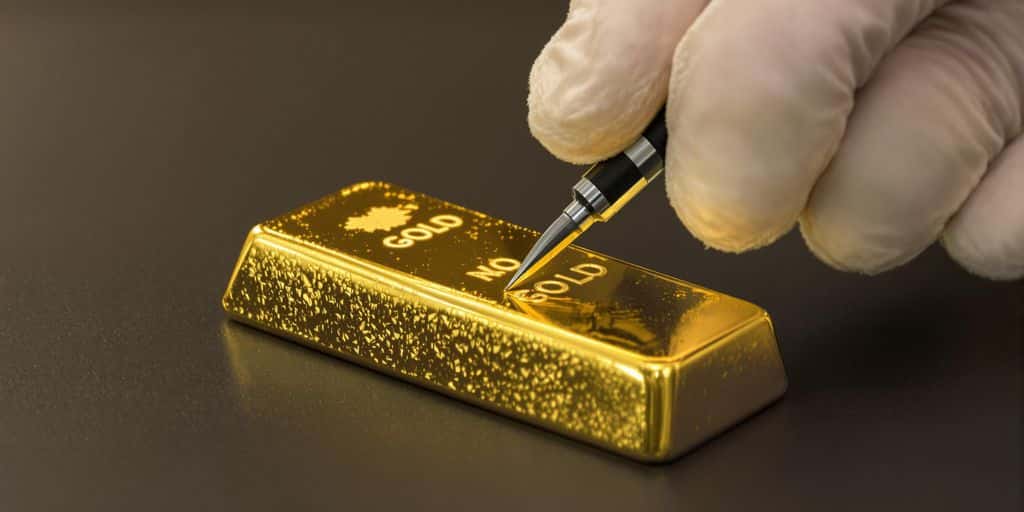
How Much Is a Gold Bar Worth Today? Prices, Sizes & Value Explained 2026
How much is a gold bar worth today? As of January 6, 2026, the live spot price of gold hovers around $4,460 per troy ounce. Gold bars vary in size, affecting their value.
For example, a standard 1-ounce bar would be worth approximately $4,460, plus a small premium for minting and dealer fees (typically 1-3%).
A 10-ounce bar clocks in at about $44,600, while a 1-kilogram bar (roughly 32.15 ounces) fetches around $143,400. Larger “good delivery” bars, at 400 ounces, command over $1.78 million each.
These figures fluctuate in real-time based on market demand, but they reflect gold’s role as a tangible asset in uncertain times.
In the whirlwind of 2025, gold shattered records with a staggering 65% rally, surging past $4,000 per ounce in October and peaking at an all-time high of $4,795 in December, driven by geopolitical tensions, central bank buying, and economic uncertainty.
As we step into 2026, analysts forecast even bolder heights, with projections hitting $5,000 or more by year-end, fueled by persistent inflation hedges and global instability from regions like Latin America and Asia.
This unprecedented surge isn’t just numbers—it’s a beacon for investors navigating a volatile world.
People flock to this query for compelling reasons. In an era of rampant inflation eroding fiat currencies, gold serves as a timeless hedge, preserving wealth when paper money falters.
Investors eye it for portfolio diversification, especially amid stock market highs and crypto volatility. Geopolitics amplifies the appeal—think U.S.-Venezuela escalations or trade wars sparking safe-haven rushes.
Whether building generational wealth or shielding against economic downturns, searching gold’s value signals a strategic pivot toward stability in a chaotic financial landscape.
As 2026 unfolds, gold’s allure only

Current Gold Spot Price & Live Updates
As of January 6, 2026, the gold spot price stands at $4,464.58 per troy ounce, reflecting a slight pullback from recent highs above $4,500 but still up over 70% from early 2025 levels.
This marks continued strength in the bull market, with intraday fluctuations driven by U.S. dollar movements and Fed policy signals.
Live updates show gold trading in a tight range today, influenced by mixed economic data and ongoing Middle East tensions, which bolster its safe-haven appeal.

The spot price represents the current market rate for immediate delivery of large quantities of gold in wholesale transactions, typically quoted in USD per troy ounce.
In contrast, retail prices for physical gold—like coins or bars—include premiums for fabrication, distribution, dealer margins, and taxes, often adding 2-10% or more above spot.
For example, a 1-ounce gold coin might cost $4,600-$4,700 retail today, reflecting these markups.
Gold’s 2026 trajectory is propelled by several key factors. Central banks continue aggressive buying, averaging 70 tonnes monthly, as emerging markets diversify reserves amid de-dollarization and sanctions fears—echoing post-2022 trends.
ETF inflows surge with lower interest rates, as Fed cuts reduce the opportunity cost of holding non-yielding gold, drawing investors from cash holdings.
A weaker USD, down 10% in 2025, enhances gold’s appeal for foreign buyers. Geopolitics plays a pivotal role, with US-China tensions, ongoing wars in Ukraine and the Middle East, and tariff uncertainties fueling safe-haven demand.
Forecasts for 2026 remain bullish, with prices potentially reaching $4,500–$5,500+. J.P. Morgan projects an average of $5,055 in Q4, citing sustained demand from central banks, Chinese insurers, and crypto integration.
Goldman Sachs anticipates $4,900 by year-end, with upside if private investors diversify further amid AI and geopolitical races.
Bank of America sees a path to $5,000, while averages from surveys hover around $4,610. Risks include stronger-than-expected growth tempering gains, but structural drivers suggest gold’s rally persists
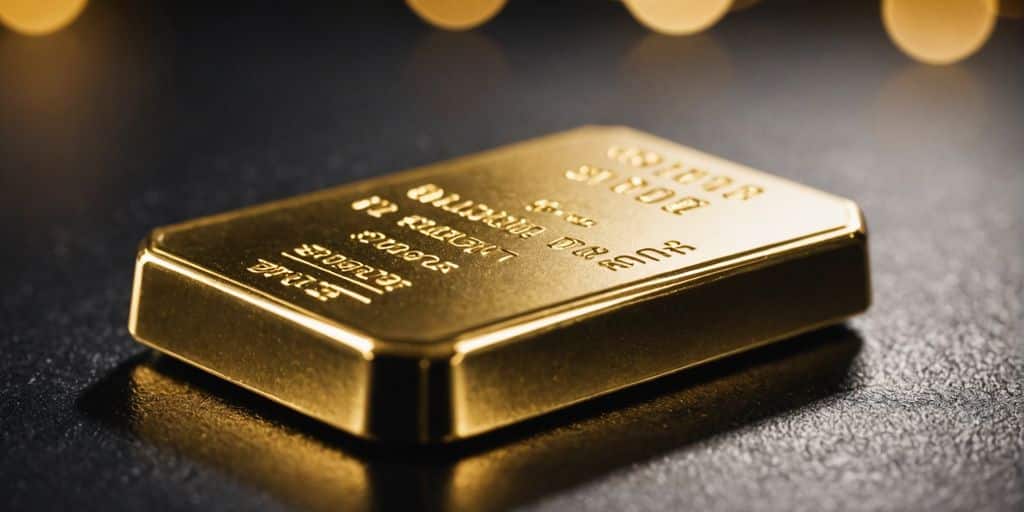
How Much Is a Gold Bar Worth? Breakdown by Size
Gold bars represent one of the most straightforward ways to invest in physical precious metals, offering tangible value tied directly to the global gold market.
As of January 6, 2026, the spot price of gold hovers around $4,465 per troy ounce, reflecting ongoing demand from central banks, ETFs, and geopolitical uncertainties.
However, the “worth” of a gold bar isn’t just the spot price multiplied by its weight—retail prices include premiums for manufacturing, distribution, dealer margins, and sometimes assay certification.
These premiums are generally lower for bars than for coins, as bars require less intricate minting and lack the collectible appeal of government-issued coins like American Eagles or Krugerrands.
Most investment-grade gold bars are .9999 fine (99.99% pure gold), ensuring high liquidity and recognition by refiners worldwide.
Premiums vary by size: smaller bars (e.g., 1 gram) carry higher percentage premiums (5-30%) due to fixed production costs spread over less metal, while larger bars (e.g., 400 oz) have minimal premiums (0.5-2%) for wholesale buyers.
Purity is crucial—.9999 fine means virtually no impurities, making the bar eligible for IRA accounts and easy to resell. Real dealer prices from sites like Gold Buyers Africa, JM Bullion and APMEX show this in action, with variations based on brand, condition, and quantity discounts.
To clarify, here’s a breakdown of popular gold bar sizes, including approximate intrinsic value (based on spot price), typical retail price ranges, and average premiums.
These figures use the current spot of $4,465/oz and account for market data from dealers.
| Size | Weight in Grams | Intrinsic Value (Spot) | Typical Retail Price Range | Average Premium Over Spot | Notes on Purity & Examples |
|---|---|---|---|---|---|
| 1 Gram | 1 g | ~$143.55 | $150–$190 | 5–30% | .9999 fine; high premium due to small size. JM Bullion: 1g Sunshine Bar (new w/ assay) at $186.58. APMEX: Generic 1g bars around $155–$175. Bars cheaper than 1g coins (e.g., fractional Maple Leafs at 10–40% premium). |
| 1 Ounce | 31.1 g | ~$4,465 | $4,500–$4,600 | 1–3% | .9999 fine; popular for individual investors. JM Bullion: Varied 1oz bar at $4,515; Perth Mint at $4,595. APMEX: 1oz bar at $4,593. Lower premium than 1oz coins (e.g., Gold Eagles at 4–6% premium). |
| 10 Ounces | 311 g | ~$44,650 | $45,000–$46,000 | 0.8–3% | .9999 fine; ideal for mid-tier storage. JM Bullion: Varied 10oz at $45,467; Scottsdale Mint at $46,047. APMEX: 10oz bar at $46,179. Economies of scale make bars 1–2% cheaper than equivalent coin stacks. |
| 1 Kilogram | 1,000 g | ~$143,553 | $144,000–$145,500 | 0.3–1.5% | .9999 fine; favored by institutions. JM Bullion: Generic 1kg around $144,500 (based on spot conversions). APMEX: PAMP Suisse 1kg at ~$145,000. Significantly lower premium than 32x 1oz coins (which add 2–4% extra). |
| 400 Ounces (Good Delivery) | 12,441 g | ~$1,786,000 | $1,800,000+ | 0.5–1% | .995– .9999 fine (LBMA standard); wholesale only. Dealers like APMEX quote ~$1,805,000 for accredited bars; JM Bullion similar for vault storage options. No direct retail premiums like smaller sizes; often traded near spot with delivery fees. |
This table highlights how larger bars offer better value per ounce, minimizing premiums.
For context, gold’s worth stems from its role as a hedge against inflation and currency devaluation, with prices up over 70% since early 2025 due to factors like Federal Reserve rate cuts and global tensions.
Starting with the smallest, 1-gram gold bars are entry-level investments, often packaged in tamper-evident assays for authenticity.
Their worth is about $143.55 at spot, but retail adds a hefty premium—think $150–$190—to cover minting and packaging.
For example, JM Bullion sells the 1g Sunshine Mint bar for $186.58, which includes MintMark SI security features.
Purity is .9999, but bars are cheaper than coins; a 1g gold coin might fetch 10–20% more due to design complexity. These are portable but less cost-effective for bulk buying.
Moving up, 1-ounce gold bars strike a balance between affordability and value. At spot, they’re worth $4,465, but dealers charge $4,500–$4,600.
JM Bullion offers varied-condition bars for $4,515, while premium brands like Perth Mint go for $4,595. APMEX lists generic 1oz bars at $4,593.
The .9999 purity ensures easy verification, and premiums are 1–3%, far below coins like the Gold Buffalo (4–6% premium). Investors favor these for stacking without excessive overhead.

Here’s a visual of a typical 1oz gold bar, shown for scale next to equivalent silver—illustrating its compact yet valuable form.
For mid-sized holdings, 10-ounce bars provide efficiency, worth $44,650 at spot but retailing for $45,000–$46,000. JM Bullion’s varied 10oz bars start at $45,467, with Johnson Matthey at $45,797 and Scottsdale at $46,047.
APMEX prices theirs at $46,179. At .9999 fine, these bars have premiums under 3%, making them cheaper per ounce than ten 1oz bars (which add cumulative fees). They’re popular for vaults, offering better liquidity than smaller pieces.
Gold Buyers Africa supplies certified 10-ounce 24K gold bars sourced from licensed African refineries, offering competitive pricing, full assay documentation, and international tradability.
These bars are especially popular for secure vault storage, as we provide better liquidity than smaller denominations while remaining easier to trade and transport than large-format bars.
This Video depicts a 10oz gold bar, showcasing its substantial yet manageable size for serious investors.
Kilogram bars (about 32.15oz) are a step into institutional territory, with spot value around $143,553 and retail $144,000–$145,500.
Based on JM Bullion’s spot conversions, generics hit $144,500, while APMEX’s PAMP Suisse 1kg bars approach $145,000.
Premiums drop to 0.3–1.5%, and .9999 purity is standard. Bars undercut coins here; stacking 32 1oz coins could add $1,000–$2,000 in extra premiums.

Visualize a 1kg gold bar as shown, often handled in professional settings for its weight and worth.
Finally, 400-ounce “Good Delivery” bars are the gold standard for banks and exchanges, compliant with London Bullion Market Association (LBMA) specs (.995 minimum purity, often .9999).
Spot value: $1,786,000, but worth $1,800,000+ retail due to verification and transport. APMEX and JM Bullion quote around $1,805,000 for accredited bars, with premiums as low as 0.5%.
These aren’t for casual buyers—think secure vaults and institutional trades. Bars save significantly over equivalent coins, which aren’t practical at this scale.
In summary, a gold bar’s worth depends on size, spot fluctuations, and premiums—always lower than coins for pure investment.
Check dealers like Gold Buyers Africa, JM Bullion or APMEX for live quotes, and consider storage costs. With gold forecasted to hit $4,500–$5,500 by year-end per JPMorgan and Goldman Sachs, these assets remain a solid hedge.
Types of Gold Bars: Cast vs. Minted
Gold bars are a popular investment vehicle, offering a tangible way to hold physical gold.
They come in two primary types:
cast and minted, each with distinct production methods, appearances, and implications for investors.
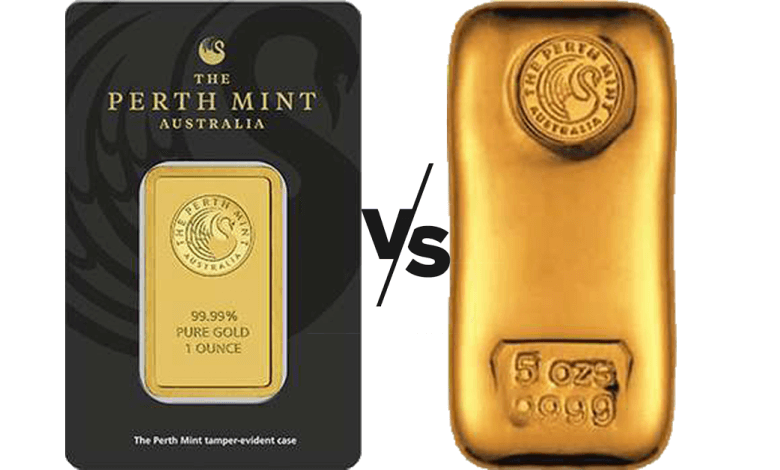
- Cast bars are created by pouring molten gold into molds, resulting in a rugged, matte finish with irregular edges.This traditional process gives them a raw, artisanal look, often preferred by those seeking authenticity in larger sizes.
- Minted bars, on the other hand, are precision-cut from rolled gold sheets and stamped using machinery, yielding a smooth, polished surface with sharp edges and detailed engravings like serial numbers.
Both typically boast .9999 purity, but their differences extend to cost, appeal, and practicality.
Popular Brands
Several renowned refineries produce high-quality gold bars, each with unique features enhancing their market standing.
PAMP Suisse, a Swiss refinery, is celebrated for its minted bars featuring Veriscan technology for easy authenticity verification, making them ideal for resale.
Valcambi, also Swiss, offers innovative designs like the CombiBar, which can be broken into smaller 1-gram pieces for flexibility, available in both cast and minted formats.
The Perth Mint from Australia produces tamper-evident minted bars with swan logos, known for their government backing and global trust.
Other notable brands include the Royal Canadian Mint, which emphasizes security features, and Credit Suisse, offering compact, assay-certified options.
These brands dominate the market due to their LBMA accreditation, ensuring worldwide acceptance.

Pros and Cons: Liquidity and Recognition
When evaluating cast versus minted bars, liquidity (ease of selling) and recognition (market trust) are key factors.
Use the table below for a comparison:
| Aspect | Cast Bars | Minted Bars |
|---|---|---|
| Liquidity | Lower; larger sizes and rough appearance may require assaying, slowing sales. | Higher; sealed packaging and serial numbers facilitate quick transactions. |
| Recognition | Moderate; trusted from reputable brands but less visually appealing to buyers. | Superior; brands like PAMP and Valcambi enjoy global prestige, boosting demand. |
| Pros Overall | Cheaper premiums (1-2% less), durable for long-term holding. | Enhanced security features, better for gifting or fractional sales. |
| Cons Overall | Potential discounts on resale due to aesthetics; harder for small investors. | Higher costs over spot price; overkill for pure stacking. |
Spot Price vs. Retail Price: Premiums Explained
The spot price of gold or silver represents the current market value for immediate delivery of the raw metal, traded on global exchanges like COMEX.
As of January 6, 2026, the gold spot price hovers around $4,475 per ounce, while silver is about $79 per ounce.
This price fluctuates based on supply, demand, geopolitical events, and economic factors.
Retail price, however, is what investors pay dealers for physical bars or coins—always higher than spot due to premiums. Premiums bridge the gap, covering costs beyond the metal’s intrinsic value.
For a 1 oz gold bar, retail prices range from $4,515 to $4,635, implying premiums of $40–$160 over spot.
Why Bars Cost More
Premiums arise from several layered expenses:
- Manufacturing: Refining raw metal, minting, and assaying (certifying purity) add fixed costs. Bars require less intricate production than coins, but smaller sizes (e.g., 1 oz) carry higher per-ounce premiums than larger ones (e.g., 10 oz) due to economies of scale.
- Distribution: Secure shipping, insurance, storage, and handling for heavy, valuable items inflate prices. Geopolitical tensions or supply chain issues can spike these further.
- Dealer Margins: Retailers add 2–6% for overhead, marketing, and profit. Market demand plays a role—high investor interest during uncertainty drives premiums up, as seen with popular brands like PAMP or Perth Mint.
These factors ensure physical bullion isn’t sold at spot; premiums typically range 2–5% for gold bars and 5–15% for silver.
How to Minimize Premiums
To reduce costs and maximize metal per dollar:
- Buy Larger Bars: Opt for 10 oz or 100 oz sizes—premiums drop per ounce (e.g., 100 oz silver bars often 5–10% vs. 15–20% for 1 oz).
- Choose Generic Over Branded: Secondary market or varied-mint bars have lower premiums than government coins like Eagles.
- Shop Around and Buy in Bulk: Compare online dealers (e.g., APMEX, JM Bullion) for volume discounts. Dollar-cost average during low-demand periods.
- Avoid High-Demand Items: Skip collectibles or fractionals, which inflate premiums 10–20%.
By focusing on efficiency, investors can keep premiums under 3% for gold, turning more capital into actual metal.

Historical Gold Bar Prices & Trends
Gold bar prices have exhibited a remarkable upward trajectory over the past decade, evolving from a period of relative stability to explosive growth amid global uncertainties.
From 2016 to early 2026, the spot price of gold—reflecting the value for immediate delivery—climbed from around $1,200 per ounce to over $4,400, marking a compound annual growth rate exceeding 14%.
Early years (2016–2019) saw prices fluctuate between $1,150 and $1,500, influenced by post-financial crisis recovery, modest inflation, and steady demand from jewelry and electronics sectors.
The 2020 COVID-19 pandemic ignited a surge, pushing prices above $1,800 as investors sought safe-haven assets amid economic shutdowns and unprecedented stimulus.
Post-2021, volatility persisted with dips during recovery phases, but geopolitical escalations—like the Russia-Ukraine conflict—and persistent inflation drove renewed gains.
By 2023–2024, prices stabilized around $1,800–$2,600, bolstered by central bank diversification away from U.S. Treasuries. The most dramatic acceleration occurred in 2025–2026, with quarterly closes jumping from $3,120 to $4,463, shattering records multiple times.

Trends highlight gold’s role as an inflation hedge and portfolio diversifier.
Annual returns averaged 10–20% in bullish phases, with premiums on physical bars adding 2–5% over spot due to manufacturing and distribution costs.
Why Gold Hit Records in 2025–2026
Gold’s unprecedented rally, surging 67% in 2025 alone, stemmed from multifaceted pressures.
Escalating geopolitical tensions— including U.S.-Venezuela disputes, ongoing Ukraine war, and global trade frictions under Trump policies—amplified safe-haven demand.
A depreciating U.S. dollar, down 11% in early 2025—its worst start in over 50 years—eroded confidence in fiat currencies, prompting a “debasement trade” into hard assets.
Central banks ramped up purchases to historic levels, diversifying reserves amid economic uncertainty and inflation fears.
Expectations of Federal Reserve rate cuts in 2026, alongside resumed quantitative easing, further fueled inflows into ETFs and bullion. Analysts forecast continued elevation, potentially reaching $5,000 by late 2026, though volatility looms.
Is Buying a Gold Bar a Good Investment in 2026?
In 2026, gold remains a compelling investment amid ongoing geopolitical tensions, inflation concerns, and central bank buying, with prices consolidating around $4,000–$4,500 per ounce and potentially reaching $5,000 by year-end.
Analysts forecast average prices at $5,055/oz in Q4 2026, driven by robust ETF inflows and bar/coin demand exceeding 1,200 tonnes annually.
For investors seeking diversification, physical gold bars offer tangible benefits, but they come with trade-offs compared to alternatives like coins or ETFs.
Pros of Gold Bars
Gold bars serve as a strong hedge against economic downturns and currency devaluation, historically outperforming during market volatility—evidenced by gold’s 55% gain in 2025, its best since 1979.
Their portability is a key advantage: compact and easy to transport, bars (typically 1–400 oz) allow discreet ownership without reliance on financial institutions.
This appeals to those prioritizing self-custody in uncertain times, providing a sense of security as a “safe haven” asset.
Cons of Gold Bars
However, storage poses significant challenges.
Bars require secure vaults, safes, or bank deposit boxes, incurring ongoing costs for insurance and protection against theft—potentially 0.5–1% of value annually.
Liquidity is another drawback: selling involves bid-ask spreads from dealers, and large bars may not fetch spot prices immediately, leading to delays or losses in volatile markets.
Comparison to Gold Coins and ETFs
Gold coins, like American Eagles or Canadian Maples, share bars’ hedging and portability perks but offer better divisibility—ideal for smaller transactions without cutting bars.
Coins often carry numismatic premiums, boosting resale value, but they command higher upfront markups (5–10%) than bars (1–3%). Both physical forms qualify for gold IRAs, meeting IRS fineness standards.
ETFs, such as SPDR Gold Shares, provide superior liquidity: trade like stocks on exchanges with minimal fees (0.4% expense ratio) and no storage hassles.
They track gold prices closely, offering easy entry/exit for portfolio diversification. Downsides include no physical possession, counterparty risk, and minor tracking errors.
For cost-conscious investors, ETFs edge out physical gold in efficiency, especially in 2026’s bullish outlook.
Ultimately, gold bars suit long-term holders valuing tangibility, but for liquidity and simplicity, ETFs or coins may be preferable.
With gold’s structural bull cycle intact, bars could yield solid returns if risks are managed—consult a financial advisor for personalized fit.

Where to Buy Gold Bars Safely
Buying gold bars is a serious financial decision, and safety should always come first.
The most reliable way to purchase gold is through reputable, well-established dealers with a proven track record, transparent pricing, and proper certification.
Buy from Reputable Dealers
Trusted gold dealers include Gold Buyers Africa, APMEX, JM Bullion, and other internationally recognized bullion suppliers.
These companies sell investment-grade gold bars that meet global standards, are clearly labeled with weight and purity, and come with assay certificates and serial numbers.
Reputable dealers also provide clear buyback policies, insured shipping, and customer support—key factors that reduce risk.
Gold Buyers Africa, in particular, offers certified 24K gold bars sourced from licensed African refineries, with competitive pricing, full documentation, and global delivery options for both individual and institutional buyers.
Online vs. Local Gold Dealers
Buying gold online offers convenience, broader selection, and competitive pricing.
Well-known online dealers provide real-time pricing tied to the global spot market and ship securely with insurance.
Local dealers, on the other hand, allow for in-person inspection and immediate possession, but may have higher premiums and limited inventory.
For larger purchases, online dealers with secure logistics are often the preferred option.
Safe Storage Matters
Once purchased, proper storage is essential.
Options include bank safety deposit boxes, professional bullion vaults, or high-quality home safes.
Many investors choose third-party vaulting services for added security, insurance, and ease of resale.
Call to Action
If you’re ready to invest with confidence, choose a dealer that prioritizes authenticity, transparency, and security.
👉 Buy certified 24K gold bars from Gold Buyers Africa today—ethically sourced, competitively priced, and delivered securely worldwide. Protect your wealth with gold you can trust.