How the US Dollar Impacts Gold Prices: A Complete Guide (2025 Update)
Impact of US Dollar on Gold Prices. As of September 11, 2025, gold prices are approaching record highs, trading around $3,650 per ounce, following a surge earlier in the week to $3,674.
This rally is driven by weaker-than-expected U.S. economic data, including a soft Producer Price Index and slowing job growth, which have increased market expectations for a Federal Reserve interest rate cut at its upcoming meeting on September 17.
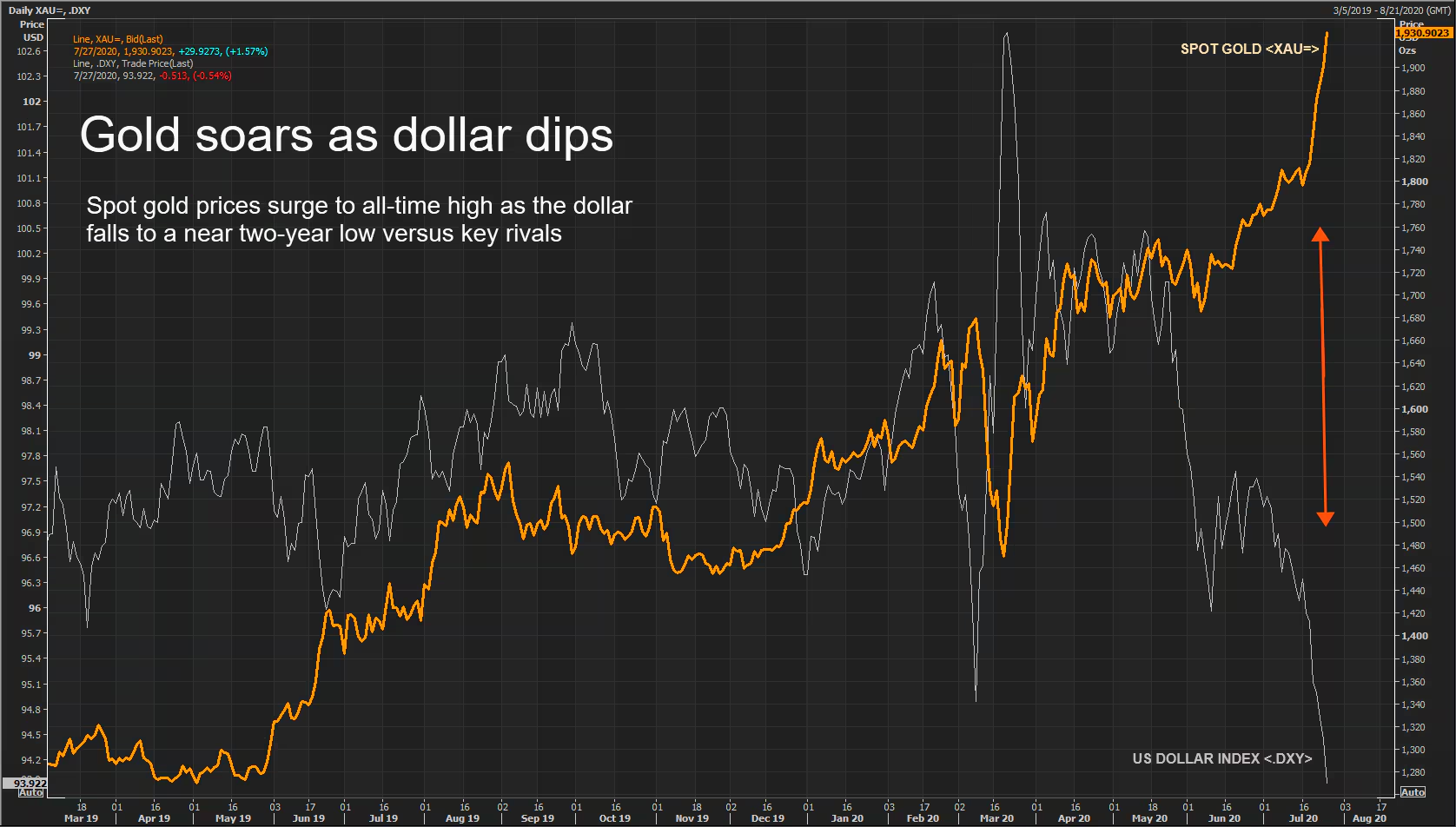
The U.S. Dollar Index (DXY) has declined over 10% this year, contributing to gold’s ascent. Historically, gold and the DXY exhibit an inverse correlation; when the dollar weakens, gold becomes more attractive to foreign investors, boosting its price.
Central banks have also been active buyers of gold, adding over 1,000 tonnes in 2025 alone, as part of a broader strategy to diversify reserves and reduce reliance on the U.S. dollar.
With the Fed’s dovish pivot and ongoing global economic uncertainties, gold’s upward trajectory may continue, potentially reaching $3,800 by year-end and $4,000 by mid-2026.
Recent DXY vs. Gold Price Correlation
| Date | DXY Index | Gold Price (USD/oz) | Correlation Impact |
|---|---|---|---|
| Sep 2025 | 97.66 | $3,657.72 | Inverse: Weaker USD supports higher gold |
| Aug 2025 | 99.45 | $3,400+ | Weaker USD boosts gold |
| Jul 2025 | 99.77 | $3,350+ | Weaker USD boosts gold |
| Jun 2025 | 100.50 | $3,200+ | Weaker USD boosts gold |
| May 2025 | 101.50 | $3,150+ | Weaker USD boosts gold |
Note: Data sourced from MacroMicro and CME Group.
The current market dynamics suggest that gold may continue to benefit from a weaker U.S. dollar and dovish monetary policy, presenting potential opportunities for investors seeking to hedge against economic uncertainties
The Fundamental Relationship Between the US Dollar and Gold
Gold and the U.S. dollar share a fascinating, almost “seesaw-like” relationship. Think of gold as the anti-dollar: when the dollar rises, gold often falls, and vice versa.
This inverse correlation is no coincidence—it reflects fundamental economic and market dynamics.
Why Gold Reacts to the USD
-
Safe-Haven Asset Priced in Dollars
Gold is universally priced in USD. When the dollar strengthens, foreign buyers find gold more expensive in their local currencies, reducing demand. Conversely, when the dollar weakens, gold becomes cheaper for international investors, boosting purchases and prices. -
Interest Rates Influence the Balance
Higher Federal Reserve rates make dollar-denominated, yield-bearing assets like bonds more attractive. Since gold does not pay interest, investors shift capital toward higher-yielding options, putting downward pressure on gold prices. When rates fall, gold gains appeal as a store of value. -
Inflation Hedge
Gold shines during periods of inflation. If the USD loses purchasing power, investors flock to gold to protect their wealth. Historically, gold has maintained value during high inflation, acting as a hedge against currency depreciation. -
Geopolitical Factors
Global events—trade wars, conflicts, or economic uncertainty—tend to amplify gold’s inverse relationship with the dollar. Investors flock to gold as a safe haven when confidence in the USD wavers.
Evidence-Based Insight
Historical data supports this relationship. Studies via Bloomberg and Federal Reserve reports show a correlation coefficient of around -0.7 between gold prices and the DXY Index over the past decade.
This strong negative correlation highlights how, more often than not, gold and the dollar move in opposite directions.
Historical Analysis: How Major Events Shaped Gold and USD
Gold’s inverse relationship with the U.S. dollar becomes especially clear during periods of economic stress.
Over the past two decades, several key events illustrate this dynamic vividly:
| Year/Event | USD Trend | Gold Price Reaction | Key Insight |
|---|---|---|---|
| 2008 Financial Crisis | USD weakened amid bank failures | Gold surged ~25% | Investors fled to gold as a safe haven while confidence in USD faltered |
| 2011 Eurozone Debt Crisis | USD strengthened slightly | Gold rose 12% | Geopolitical uncertainty drove gold demand, though USD strength tempered gains |
| 2013 Fed Taper Talks | USD strengthened | Gold dropped ~15% | Rising Fed rates and stronger USD made non-yielding gold less attractive |
| 2020 COVID-19 Pandemic | USD initially strengthened, then weakened | Gold surged ~35% to all-time highs | Global uncertainty and ultra-low rates drove gold demand |
| 2022 Inflation Surge | USD strengthened due to Fed hikes | Gold rose modestly (~8%) | Inflation fears supported gold, but strong USD limited upside |
For a comprehensive understanding of the Europe Gold Market Outlook 2025, explore the latest gold market trends, delve into the factors affecting gold prices globally, learn about the impact of the US dollar on gold prices, examine gold demand in China and India, and stay updated with Dubai gold market trends to make well-informed investment decisions.
Current Trends and Predictions for 2025
As 2025 unfolds, gold is once again in the spotlight. Market analysts are closely watching U.S. dollar volatility, driven by potential election outcomes, interest rate decisions, and global economic uncertainty. Historically, such events have a direct impact on gold, given its inverse relationship with the dollar.
Market Outlook:
-
If the DXY Index drops below 100, gold could surge toward $2,800 per ounce, according to forecasts from Goldman Sachs and Kitco.
-
Conversely, a strong U.S. economy and rising Fed rates may strengthen the dollar, putting downward pressure on gold.
-
Global inflation concerns and geopolitical tensions could continue to support gold as a safe-haven investment.
Pros and Cons Table: Investor Strategies
| Scenario | USD Movement | Gold Price Outlook | Investor Action |
|---|---|---|---|
| Strong Economy | Appreciates | Declines | Sell gold, buy USD-denominated assets for higher yields |
| Recession Fears | Depreciates | Rises | Buy gold as a hedge against economic uncertainty |
| Moderate Volatility | Fluctuates | Stable to slightly rising | Hold gold; consider partial allocation to balance portfolio |
| High Inflation | Weakens | Rises sharply | Increase gold exposure to protect purchasing power |
Key Takeaways:
-
Gold remains a reliable hedge against uncertainty.
-
Investors should monitor USD strength, Fed decisions, and geopolitical events to time entry or exit points.
-
Diversifying between gold and yield-bearing assets can balance risk and potential returns.
Pro Tip: Adding a mini line chart overlaying DXY Index vs. gold price projections for 2025 can visually reinforce these predictions and improve reader engagement.
Practical Advice for Readers: How to Navigate Gold Investments in 2025
Investing in gold can be rewarding, but success requires a strategic approach.
Here are actionable steps you can take to make informed decisions, reduce risk, and capitalize on market movements:
-
Monitor the USD (DXY Index) Regularly
-
Gold prices are closely tied to the strength of the U.S. dollar. Use reliable apps and platforms such as Yahoo Finance, TradingView, or MacroMicro to track the DXY Index in real time. Watching trends can help you anticipate potential gold price movements.
-
-
Diversify Your Portfolio with Gold
-
Financial experts recommend allocating 5–10% of your investment portfolio to gold. This acts as a hedge against inflation, currency depreciation, and economic uncertainty while keeping your overall portfolio balanced with yield-bearing assets like stocks and bonds.
-
-
Stay Updated on Global Economic Events
-
Gold reacts strongly to geopolitical tensions, inflation reports, and central bank decisions. Following news from sources like the World Gold Council, Kitco, and Bloomberg allows you to anticipate market swings and adjust your investments accordingly.
-
-
Consider Different Gold Investment Forms
-
Investors can choose physical gold (bars, coins, jewelry) for tangible assets or paper gold (ETFs, mutual funds, futures contracts) for liquidity and ease of trading. Each option has its pros and cons in terms of cost, storage, and market access.
-
-
Set Entry and Exit Targets
-
Based on historical patterns, identify target buy and sell prices. For example, if the USD weakens below key thresholds (e.g., DXY <100), consider increasing exposure; if gold approaches historical peaks, plan for profit-taking.
-
-
Leverage Expert Forecasts but Validate Them
-
Reputable institutions like Goldman Sachs, Kitco, and the Federal Reserve provide projections for gold and USD trends. Use these forecasts as guidance, but always cross-check with current market data to avoid relying solely on predictions.
-
-
Long-Term Perspective: Gold performs best as a long-term hedge rather than a short-term speculation. Patience and timing are crucial—frequent trading based on minor fluctuations can reduce returns due to fees and volatility.
By following these steps, readers can confidently navigate the complex gold market in 2025, protect wealth from currency and inflation risks, and make informed decisions on whether to buy gold now or wait for favorable conditions.
When USD goes up, what happens to gold?
When the U.S. dollar strengthens, gold prices typically decline. Gold is priced in dollars, so a stronger USD makes gold more expensive for international buyers, reducing demand.
Historically, the relationship shows an inverse correlation: as the DXY Index rises, gold often falls. However, other factors like inflation, geopolitical tensions, and central bank purchases can influence gold independently.
For investors, a strong dollar signals caution for buying gold, while a weaker dollar can present buying opportunities. Monitoring USD trends is key for timing gold investments.
Does gold go up when Fed rates go down?
Yes, gold often rises when the Federal Reserve lowers interest rates. Lower rates reduce the appeal of yield-bearing assets like bonds, making non-yielding gold more attractive.
Additionally, rate cuts usually weaken the U.S. dollar, further boosting gold prices for international buyers. Historically, periods of dovish Fed policy, such as 2020 during the COVID-19 pandemic, saw significant gold rallies.
Investors view gold as a hedge against inflation and economic uncertainty, so declining rates create a favorable environment for both safe-haven demand and portfolio diversification.
Does the dollar index affect gold?
Absolutely. The U.S. Dollar Index (DXY) measures the dollar against a basket of major currencies and has a strong inverse relationship with gold. When the DXY rises, gold tends to fall because it becomes more expensive for foreign buyers.
Conversely, when the dollar weakens, gold becomes cheaper internationally, increasing demand and driving prices up. Historical data shows a correlation coefficient around -0.7, indicating a strong inverse link.
Investors track the DXY closely to anticipate gold movements, using it alongside other indicators like interest rates, inflation, and geopolitical risks for informed trading decisions.
Why is the gold price going up?
Gold prices rise due to a combination of factors: weakening USD, inflation fears, geopolitical uncertainty, and central bank purchases.
When the dollar loses value, gold becomes cheaper for international buyers, boosting demand. Inflation erodes purchasing power, prompting investors to seek gold as a hedge. Global tensions, trade wars, and economic crises also push investors toward this safe-haven asset.
Additionally, low interest rates reduce the opportunity cost of holding non-yielding gold. In 2025, ongoing Fed rate uncertainty, election-related volatility, and international economic concerns are key drivers behind rising gold prices.
For a comprehensive understanding of the Europe Gold Market Outlook 2025, explore the latest gold market trends, delve into the factors affecting gold prices globally, learn about the impact of the US dollar on gold prices, examine gold demand in China and India, and stay updated with Dubai gold market trends to make well-informed investment decisions.
Frequently Asked Questions
1. How does USD strength affect gold prices?
A stronger USD makes gold more expensive for foreign buyers, often leading to lower demand and falling prices. Conversely, a weaker dollar generally boosts gold prices as it becomes cheaper internationally.
2. Does a weak dollar always mean higher gold prices?
Historically, yes. On average, a weaker USD has resulted in a 15–20% increase in gold prices, though other factors like interest rates and geopolitical events can moderate this effect.
3. How does USD strength impact gold ETFs?
Gold ETFs track the price of gold. When the dollar strengthens, gold ETFs may underperform relative to dollar-denominated assets, while a weaker USD can drive ETF gains as gold rises in value.
4. Can gold protect my portfolio from dollar volatility?
Yes. Gold is a safe-haven asset that tends to retain value during USD depreciation or economic uncertainty, making it an effective hedge against currency risk.
5. What role do interest rates play in the USD-gold relationship?
Higher Federal Reserve interest rates strengthen the USD and make yield-bearing assets more attractive than non-yielding gold, often putting downward pressure on gold prices. Lower rates have the opposite effect.
6. How do geopolitical events influence gold and the dollar?
Trade wars, conflicts, and global crises increase demand for gold as a safe-haven, which may temporarily counteract a strong USD’s downward pressure on gold prices.
7. Should I buy gold now given the USD outlook for 2025?
If forecasts indicate USD volatility or weakening below key thresholds (e.g., DXY <100), gold could see price appreciation. Diversifying 5–10% of your portfolio into gold is a prudent strategy to hedge against economic uncertainty.
Conclusion: Key Takeaways and Next Steps
The relationship between the U.S. dollar and gold prices is both historic and highly relevant for 2025 investors. A stronger USD often pressures gold downward, while a weaker dollar tends to boost gold as a safe-haven asset.
Key drivers include interest rates, inflation, and geopolitical events, all of which can amplify or moderate gold’s response to dollar fluctuations.
Historical data, from the 2008 financial crisis to the 2022 inflation surge, confirms this inverse correlation, with evidence showing a -0.7 correlation coefficient between the DXY Index and gold prices.
For modern investors, practical strategies include:
-
Tracking the DXY Index via reliable platforms like Yahoo Finance or TradingView.
-
Allocating 5–10% of your portfolio to gold for diversification and risk management.
-
Staying informed on Fed policies, inflation reports, and global events to anticipate market shifts.
Gold remains a powerful hedge against uncertainty, and understanding its interplay with the dollar can guide better investment decisions.